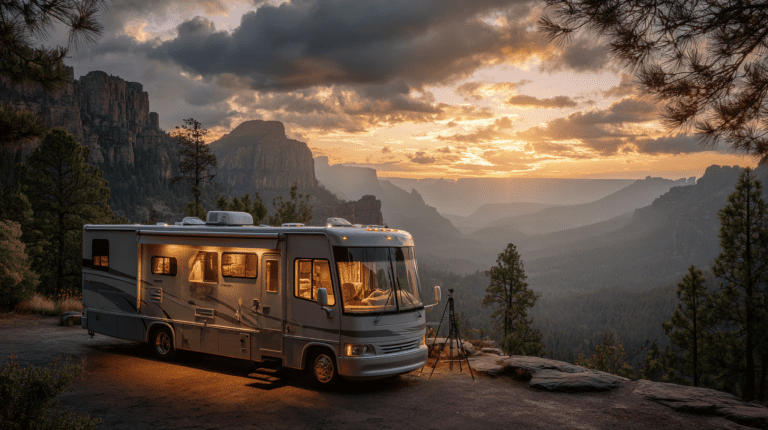
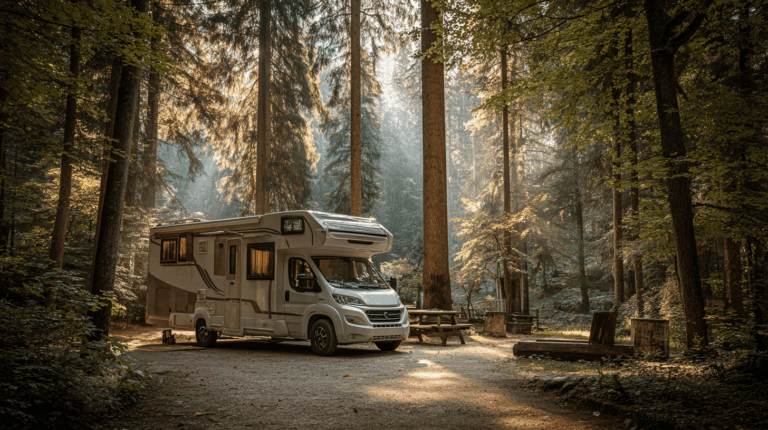
If I were doing this alone, the decision would look very different. Smaller. Simpler. Probably already made. I’d be seriously considering a Class B van — nimble, efficient, self-contained, the kind of setup where you slide open a door at a trailhead and you’re already living the story. The appeal is real. The footprint is manageable. The freedom is immediate.
But I’m thinking about doing this with Penny.
For most of my 50 at 60 journey, she stayed home with a cat sitter while I traveled. It worked. She was well cared for, and the arrangement gave me the flexibility that solo travel on that scale required.
Then, for Season 2, I tried something different.
I rented a Class C and took her along for four states. Before that, I’d done a weekend test rental with her, just to see how she handled it before committing to anything longer. Both experiences taught me things a cat sitter arrangement never could.
Now, with the 63 national parks project taking shape, I’m thinking seriously about making RV travel with Penny the model rather than the exception. Longer stays. Slower pace. A home base she recognizes from one park to the next. That possibility changes the entire RV decision tree.
Heads up. Some of the links here are affiliate links with Amazon and other partners I trust.
You pay nothing extra. I earn a small commission. Everyone wins – and the road stays funded.
This Isn’t Just About Pets
Before we go further, let me widen the frame.
If you’re traveling with a partner who has different comfort thresholds than you, this post is for you. If you’re considering RV life with a dog who needs outside access every few hours, or a parent who requires predictable routines, or even a remote job that demands a quiet, stable workspace — the logic here applies.
Designing travel around another person’s needs isn’t a compromise. It’s the difference between a system that works and one that quietly wears everyone down.
Penny just happens to be mine.
What the Test Rental Actually Taught Me
The weekend trial run before Season 2 was one of the smarter things I did in all of that planning. Not because it confirmed the idea. Because it produced real data.
Penny handled the Class C — but handled it and thrived in it are not the same sentence. She noticed everything. Road vibration. Engine noise. The unfamiliar geometry of a new space. She wasn’t distressed, but she wasn’t settled either. There’s a difference that any pet owner recognizes immediately, even if it’s hard to put into words.
By the four-state Season 2 trip, she’d had more exposure to the RV environment and fared better. The routine helped. Staying in one place for more than a night helped. Waking up in the same space two mornings in a row helped.
That progression… from uncertain to gradually at ease, is the thing I want to build on with the national parks project. Not expect her to adapt overnight, but give the system enough consistency that adaptation actually has a chance.
Noise: The Invisible Stressor
The first thing I think about when evaluating a rig for this next chapter isn’t space. It isn’t temperature. It’s noise.
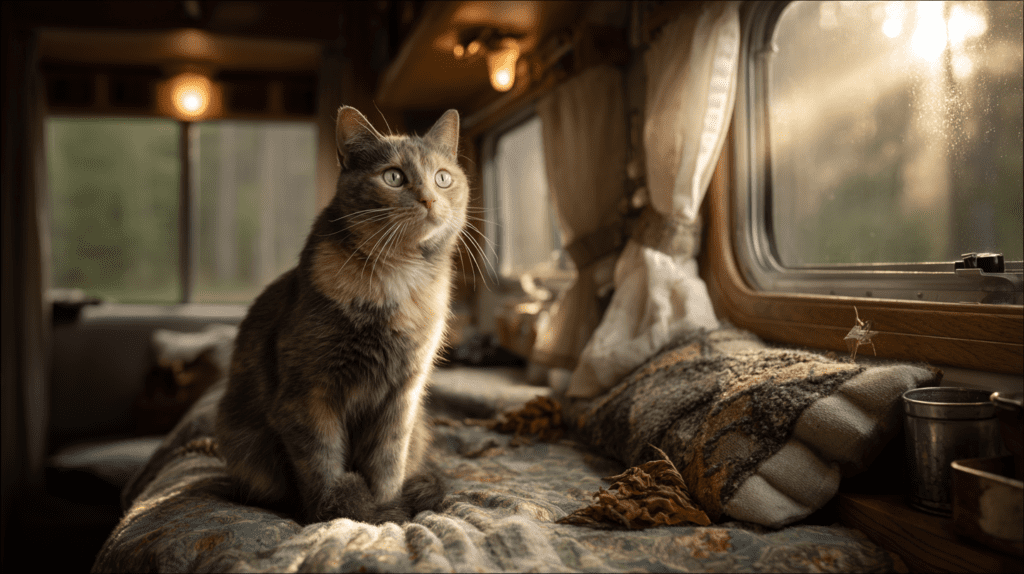
Cats don’t process stress the way humans do. They internalize it. They adapt quietly, but the adaptation has a cost — in behavior, in appetite, in the subtle language of a restless animal that can’t tell you what’s wrong.
Engines. Road vibration. Generator hum. Campground neighbors. Slide-out mechanisms cycling. Wind against the sidewalls at highway speed. Every one of these is a sensory input that registers differently to an animal than it does to the person at the wheel.
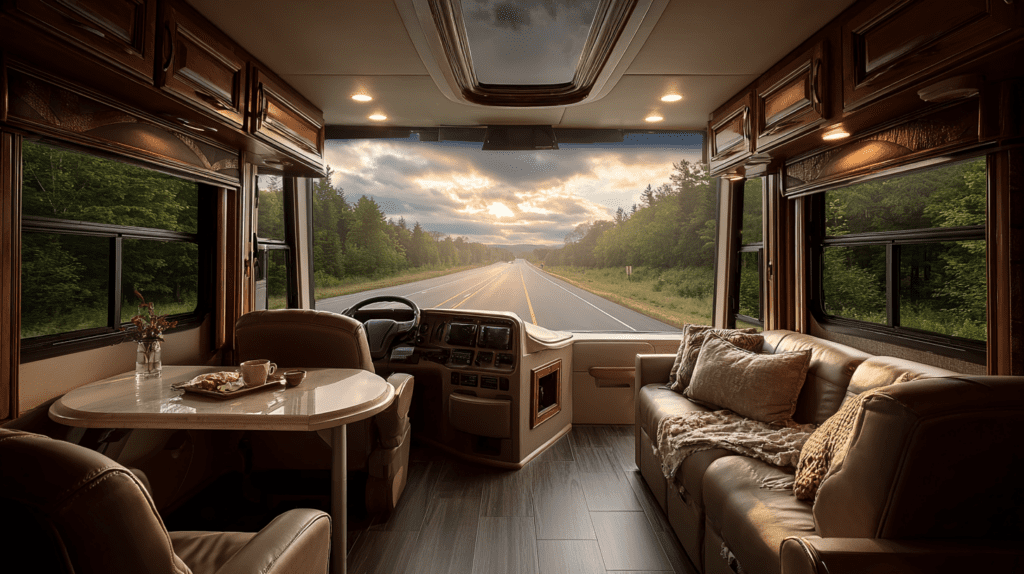
What struck me about the Class A I sat in at the RV show was the insulation. Heavier construction. Less road vibration transmitting through the floor. A quieter cabin feel compared to what I remembered from the Class C rentals. That impression may or may not hold in long-term use, but it registered as a data point worth weighing.
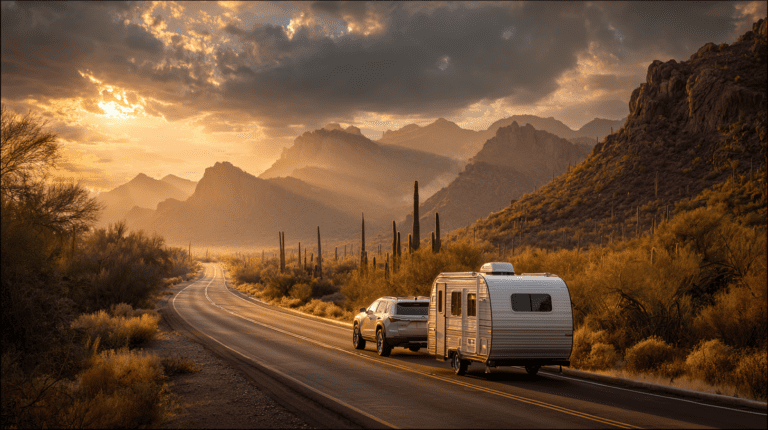
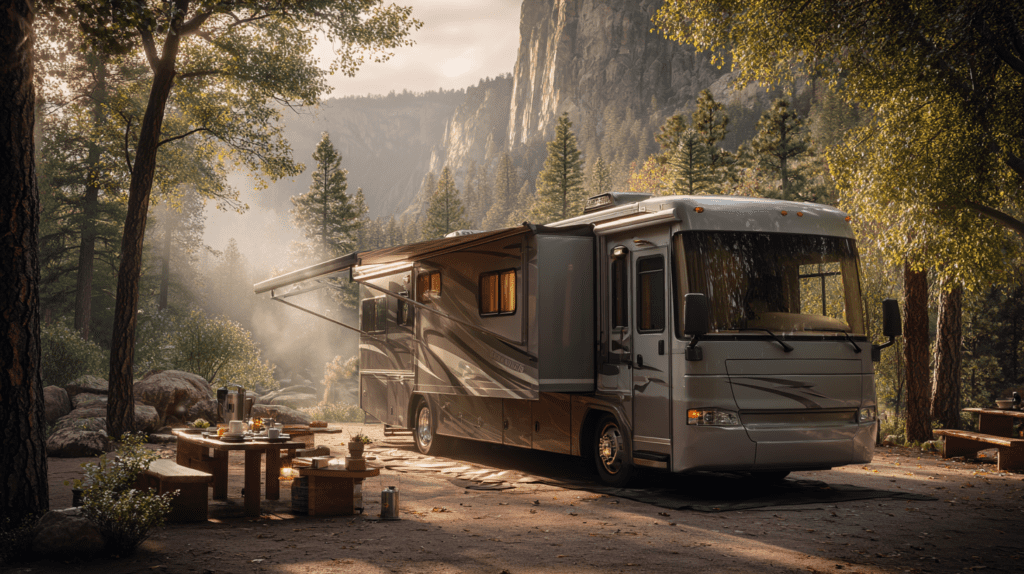
A trailer, once parked and stabilized, offers something different — the engine goes away entirely. If the site is quiet and the hookup is stable, the environment becomes genuinely peaceful. The noise profile of how you travel matters. For whoever travels with you.
Temperature: The Non-Negotiable
This one is straightforward. Cats cannot regulate temperature the way we can, and a closed vehicle in warm weather becomes dangerous faster than most people realize. For me, this is the single factor that removes certain options from serious consideration.
A Class B van with limited climate buffering — beautiful lifestyle, real freedom, but finite in its ability to maintain a stable interior temperature when I’m away from it for hours. In the desert southwest in summer, or in the Florida heat I know well, that limitation isn’t theoretical. It’s a genuine constraint.
The “home base stays plugged in” model, whether trailer or motorhome at a full hookup site, solves this in a way that lets me actually focus on other things. Leave before sunrise. Photograph for three hours. Return to a comfortable, stable environment. That’s the version of this that works. Which means the campground hookup isn’t just a convenience. For this particular travel system, it’s a requirement.
If you’re traveling with a pet and considering boondocking or dry camping as a primary strategy, run the temperature math honestly before you commit to it. Roof vents and battery-powered fans are solutions. They’re not the same solution as shore power.
By the way, I created a section over on my Amazon storefront specifically for those interested in pet travel with some items I used and tested out!
Windows: Territory You Didn’t Know Mattered
Here’s something I didn’t fully appreciate until I started evaluating rigs from Penny’s perspective rather than just my own. Windows matter enormously to cats. Not as a design feature. As territory.
Cats live in vertical and visual space. A wide windshield in a Class A becomes a moving panorama… hours of shifting landscape that functions as genuine environmental enrichment on travel days. Large side windows become sun patches that migrate across the floor through the day, which for a cat is essentially perfect entertainment.
In some trailers, window placement is generous and well-considered. In others it feels like an afterthought — small, high, functional but not habitable in the way a curious animal needs.
When I look at floorplans now, I look at them from two heights. Mine, and hers. They tell different stories about the same space. If you travel with a pet, pay attention to window height and placement before you fall for a floorplan. It affects daily behavior more than square footage does.
Routine: The Variable That Surprised Me Most
What the Season 2 trip taught me more than anything else is that routine is the real currency of pet travel comfort.
Move every single day and you introduce constant disruption… new smells, new sounds, new geometry. Most animals adapt eventually. But eventually is doing a lot of work in that sentence.
Stay two or three days in one place and the environment starts to feel familiar. The litter box is where it was yesterday. The afternoon light comes through the same window. The sounds outside settle into a recognizable background. That’s when a cat stops monitoring and starts resting. Those are different states, and you can see it clearly once you know what to look for.
This is where my mission and Penny’s comfort align rather than compete. I want to linger in the parks — to photograph more intentionally, to stay long enough to see a place change across different light and different weather. She needs the environment to stabilize before she can relax into it.
We want the same thing.
That alignment shapes the entire rhythm of how I’m planning to travel. Not a new campground every night. A slower pace that serves the photography, the storytelling, and the tortoiseshell cat who has, at this point, earned a real say in the matter.
Space and Flow: More Than Square Footage
The last consideration is space, but not in the way most people think about it. It’s not really about square footage. It’s about flow.
Where does the litter box go, and is it separated enough from food and sleep areas? Is there a quiet corner away from the door and the main foot traffic path? Is there floor space to stretch without navigating around gear cases and camera bags? Are there elevated surfaces… because cats think vertically, and a rig with no perch options ignores half the animal’s instincts?
A Class A tends to feel more open. More floor space. More room for the kind of unhurried movement that makes a small space feel livable rather than just survivable. A well-chosen trailer can work too, but the layout requires more deliberate thought about how the space actually functions for a second resident who didn’t get a vote on the floor-plan.
What This Actually Changes
You can fall in love with a rig for entirely rational reasons — driving comfort, storage capacity, price, national park fit — and still make the wrong choice if the person or animal traveling with you can’t settle into it. The Penny factor isn’t sentimental. It’s practical.
It removes the Class B van from serious consideration. It elevates the importance of shore power access. It favors slower movement over frequent relocations. It makes window placement a real filter, not an aesthetic preference. It adds “where does the litter box actually go” to the floorplan evaluation checklist.
None of those are small things when you’re designing a system meant to function for weeks at a stretch across 63 national parks.
The cat sitter arrangement served its purpose well during 50 at 60. But this next chapter is slower, more deliberate, and built around longer stays. That’s a different kind of travel, and it’s the kind where bringing Penny along starts to make real sense.
If you’re considering RV life with a pet, start with a test rental before you commit to anything. Not a weekend if you can help it, a week. Let the animal settle in. Watch what they notice. Watch when they stop noticing.
That’s the data that matters. Then walk every floorplan twice. Once for yourself. Once for them. The rig that passes both evaluations might just be the one worth buying.
About this series: The RV Question is a 12-part exploration of RV life written from the perspective of a photographer and storyteller planning to visit all 63 U.S. national parks. It’s not a buying guide. It’s a thinking guide — for anyone considering a significant change in how they move through the world.