A Photographer’s Return to the Mountain That Defines the Pacific Northwest Sky
When planning a visit to America’s national parks, Washington State offers two experiences that could not be more different from each other — the wild Pacific coast of Olympic and the volcanic summit of Mount Rainier, each extraordinary in its own way, each requiring its own kind of attention. I started my 50 at 60 journey in Washington and visited both. Rainier was first.
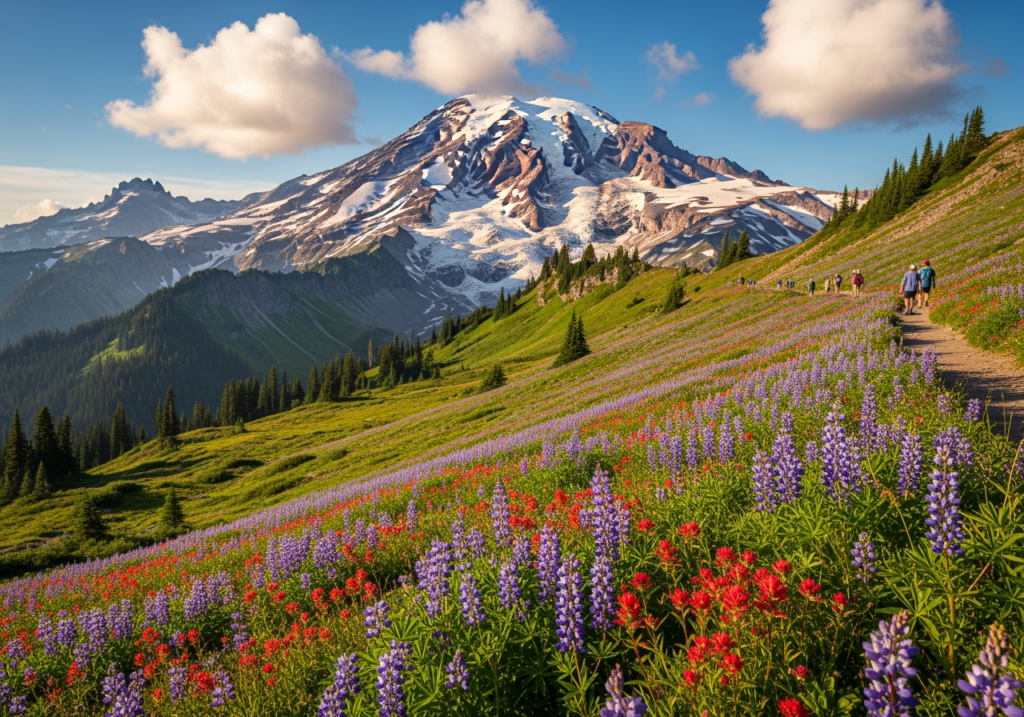
I arrived in late August. The subalpine meadows at Paradise — the iconic wildflower fields below the glaciated summit that define the park’s most famous photography — bloom in July and into early August at their peak. By late August the peak is passing and some of the flowers have already gone to seed. I had seen the images of those meadows so many times — the lupine and the paintbrush and the bistort carpeting the slope below the summit glacier, the mountain reflected in the tarns, the colors running from purple to red to white against the white of the permanent snow — that arriving slightly past the peak felt like showing up to a concert a song or two late. The music was still playing. But I had missed the opening.
What I found instead was something I had not fully anticipated. I stayed at a small lodge near the park with a path leading across the street into the trees, and on the first morning I sat with coffee and watched three deer move through the meadow in the early light as if I were not there at all. The mountain was out — fully visible, the summit clear, the glaciers catching the morning sun. The park in late August, past the wildflower peak, has a quieter and more golden character than the midsummer riot of color. Not what I came for. Not nothing, either.
The return trip is about timing it right. A couple of nights close to the park in the RV — close enough for early morning starts and late evening returns, without the pressure of a schedule that keeps you moving. And the wildflowers at their actual peak, which means being there in late July regardless of what the calendar says about summer.
The Landscape That Draws People Here
Mount Rainier is a stratovolcano — an active one, though its last significant eruptive period ended in the early 19th century — rising 14,411 feet from the surrounding Cascade foothills in a single, almost perfectly conical form that is visible from Seattle, Tacoma, Portland, and much of western Washington on clear days. The mountain is not part of a range in the way the Tetons are; it stands largely alone, its summit rising 8,000 feet above the surrounding terrain, creating its own weather system and generating the precipitation that feeds the 26 named glaciers covering its flanks. It is the most heavily glaciated peak in the contiguous United States.
The park divides broadly into three zones. Paradise, on the mountain’s southern flank at 5,400 feet, is the primary visitor destination — the historic Paradise Inn, the visitor center, and the trailhead access to the subalpine meadows that produce the wildflower photography the park is most famous for. Sunrise, on the northeastern flank at 6,400 feet, is the highest point accessible by paved road in Washington State and the position from which the mountain’s summit and the Emmons Glacier appear largest and most accessible. And the old-growth forest of the lower park — the Grove of the Patriarchs on the Ohanapecosh River, ancient western red cedars and Douglas firs up to a thousand years old — provides the intimate forest photography that the alpine zones cannot offer.
The wildflower bloom is the event that defines the park’s photography calendar and drives its peak season visitation. The subalpine meadows at Paradise receive more snow than almost anywhere else in the world outside polar regions — an average of 645 inches annually — and the flowers bloom in compressed, intense sequence as the snowpack melts through July. Lupine, Indian paintbrush, avalanche lily, western bistort, and the bright yellow of the arnica fill the meadow slopes below the glacier in a display that typically peaks in late July to early August, depending on snowpack and spring temperatures.
The Photographer’s Chase
The wildflower photography at Paradise requires a timing decision before any other planning happens. Check the NPS wildflower updates at nps.gov/mora beginning in late June — the park posts regular bloom condition reports as the season progresses, and the peak window moves year to year with the snowpack. In a heavy snow year the bloom may not peak until mid-August; in a light snow year it can peak in early July. Planning around mid-to-late July as a baseline gives the best probability of finding the meadows in full color without having to book flights months before the conditions are known.
The photography in the Paradise meadows at peak bloom is about positioning relative to the mountain and the light direction. The mountain faces south from Paradise — morning light from the east illuminates the meadow slopes and puts the mountain in side light that builds dimension into the glacial surface. Evening light from the west, lower and warmer, catches the summit in the alpenglow that turns the ice from white to gold to the deep amber of a Pacific Northwest sunset. Both windows are productive; the morning light with the dew still on the wildflowers and the mist moving through the meadow is the more intimate and more unusual image.
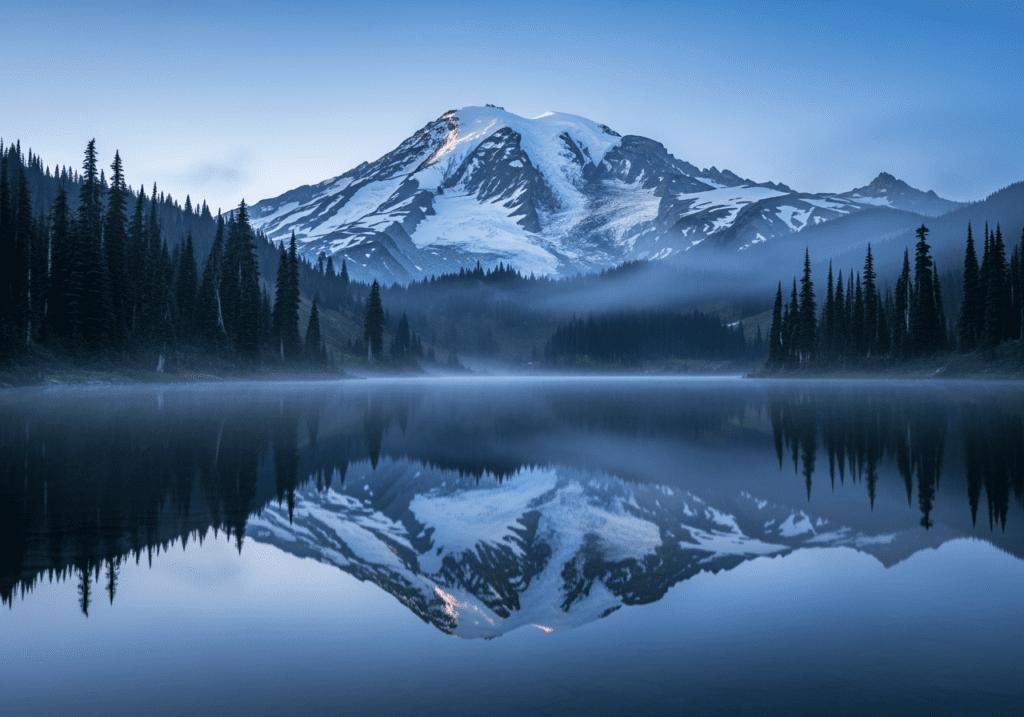
Reflection Lake, on the road between Paradise and the Stevens Canyon entrance, provides the mountain reflection photography that Paradise cannot — a small subalpine lake that, on calm mornings before the wind comes up, reflects the full summit and glacier system in its surface. The window for the perfect reflection is often less than thirty minutes, when the wind is still and the light is right and the surface of the lake is undisturbed. This is the kind of photograph that cannot be manufactured or waited out once the wind arrives. It has to be found in the first light of a clear morning by someone who is already there.
Sunrise, on the northeast side of the mountain, offers the photography that Paradise cannot — a direct view of the Emmons Glacier, the largest glacier in the contiguous United States, and the mountain’s northeast face in the morning light that hits it first. The Emmons Glacier at sunrise, with the first alpenglow on the ice and the shadow still on the valley below, is the Rainier image that the Paradise-focused visitor never finds. The drive to Sunrise adds an hour each way but delivers a completely different mountain and a consistently less crowded experience.
Visiting the Park
Mount Rainier requires a timed entry reservation during peak season — currently required for the Paradise and Sunrise areas from late May through early September on weekends and holidays. Reservations open on recreation.gov in rolling windows; check current requirements at nps.gov/mora before planning. Weekday visits in July and August do not currently require reservations and offer meaningfully less crowded conditions at the major photography locations.
The park road to Paradise is open year-round, with the road clearing of snow typically by late May. The Sunrise road opens in early July and closes in early October, snow dependent. The wildflower season at Paradise overlaps with the Sunrise road open season, making late July and early August the window when the full park is accessible and the bloom is at or near peak.
The mountain is visible from the approach roads on only about 40 to 50 percent of summer days — the Cascades generate significant cloud cover, and Rainier in particular creates its own weather. Lenticular clouds forming over the summit are a sign of incoming weather and a photography subject in themselves — the flat, disc-shaped cloud that wraps the summit like a hat is specific to isolated volcanic peaks and one of the more dramatic sky events the mountain produces.
Where to Stay
Paradise Inn, inside the park at the Paradise area, is the landmark in-park lodging — a 1917 National Historic Landmark with a massive timber-frame great room, stone fireplace, and the kind of mountain lodge character that no contemporary hotel can replicate. The location puts you at the wildflower meadow trailheads without a commute, which for the early morning and late evening photography windows is worth every dollar of the premium. It books out for peak season well in advance; the reservation opening in January is the time to move on it.
National Park Inn at Longmire, at the park’s main entrance on the western side, offers a smaller and more modest in-park option open year-round — useful for shoulder season visits when Paradise Inn is closed. The gateway communities of Ashford, Packwood, and Eatonville provide additional lodging outside the park at various price points, with Ashford being closest to the Nisqually entrance and the most convenient for Paradise access.
For RV travelers, Cougar Rock Campground near Paradise and Ohanapecosh Campground near the Grove of the Patriarchs are the primary in-park options — both reservable through recreation.gov and well positioned for the main photography destinations. Being camped inside the park with an early morning start to Reflection Lake or Paradise requiring no commute is the practical advantage that makes in-park camping worth the reservation effort. The park roads have vehicle size restrictions in certain areas; confirm current limits before routing a larger rig.
If I Were Planning My First Visit
Washington was the first state of the 50 at 60 journey and Rainier was among the first parks — visited in late August, slightly past the wildflower peak, in the early energy of a trip that had not yet slowed down enough to give any single place its full due. The deer in the meadow at the lodge on the first morning were a gift I was present for. The wildflowers at their peak were a gift I was a few weeks early for. Or late for. The timing question is the one I am still working out.
Late July is the answer. Two nights minimum inside the park — Paradise Inn if the budget allows, Cougar Rock Campground if the RV is the vehicle. Check the bloom reports in June and adjust the dates accordingly. Reflection Lake before sunrise on the first morning, in the dark, tripod set, waiting for the mountain to appear in the water below. Paradise meadows through the morning with the dew still on the lupine. Sunrise on the second day for the Emmons Glacier light that the south side of the mountain cannot show.
And coffee in the morning with whatever shows up in the meadow outside. The three deer from the first visit were not part of the plan. They were the best part of the morning. Sometimes the park gives you what you came for and sometimes it gives you something better. Two nights is enough time to receive both.
The Light I’m Curious About
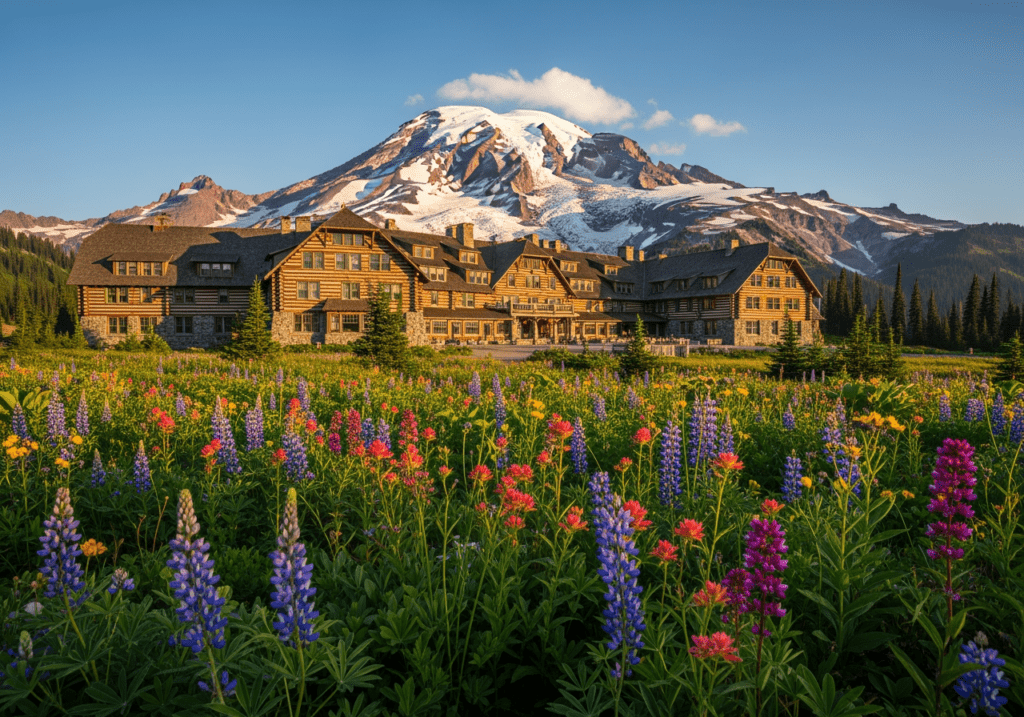
It is the early morning light in the Paradise meadows at peak bloom — specifically the hour before the crowds arrive, when the dew is still on the wildflowers and the mist is moving through the meadow in the low early light and the mountain is out and the lupine is at its deepest purple against the glacier above.
I was at this park in late August and I saw a version of this — the meadows past their peak, the mountain out and extraordinary, the light varying through the day in ways I noticed but did not have the time to fully chase. The late August version of Rainier is beautiful. The late July version, from everything I have seen in other photographers’ work, is something else entirely.
The return trip adjusts the timing by three weeks and changes the whole equation. Same mountain, same meadow, same park. Different light, different color, different version of the place entirely. That is what this project keeps teaching me, park by park: timing is not a detail. At Mount Rainier, timing is the difference between a good visit and the one you came to make.
A Deeper Exploration
This article is part of my ongoing project documenting and photographing all 63 national parks across the United States.
Along the way, I’m creating deeper guides that explore photography locations, travel planning, seasonal light conditions, and personal reflections from the road. Mount Rainier was one of the first parks of this journey and it sits near the top of the return list — the wildflower timing to get right, the reflection lake to find in the right wind, the Emmons Glacier at sunrise still waiting.
Because some mountains do not reveal their full character the first time you visit them. They ask you to come back in the right season, at the right hour, and pay the kind of attention that the beginning of a long journey does not yet know how to give.
One more thing — just between us.
If you’re anything like me, you’re already excited about this park and slightly dreading the parking lot situation. So here are three places I keep in my back pocket for when the crowds get to be a little much — consider this your insider pass.
Norse Peak Wilderness, just east of the park boundary on Highway 410, has ridge views that rival anything inside the park with almost no one on the trail.
Skate Creek Road south of Ashford winds through old-growth river forest that feels like a well-kept local secret — because it is.
And Mineral Lake, about 20 miles southwest of the entrance, offers a quiet Rainier reflection on calm mornings that the Paradise crowd has never heard of. No tour buses. No parking chaos. Just a smaller club of people who did a little extra homework.