The National Parks

  • Finding Light in Kenai Fjords National Park

    I was in the early days of my 50 at 60 journey — Alaska was state number two — and I found myself driving south from Anchorage toward the coastal town of Seward on a morning with no fixed agenda. Seward sits at the head of Resurrection Bay, a narrow fjord cutting into the Kenai Peninsula, and when I arrived I saw a sign for a boat tour departing that afternoon. I booked it on the spot. No research, no planning, no particular expectation beyond getting out on the water.

  • Inside Everglades National Park

    The short version: I live about an hour from one of the most ecologically extraordinary national parks on the planet, and I have essentially not photographed it. That is a failure of proximity. The parks that are closest to home are sometimes the ones we treat with the least seriousness, assuming they will always be there, assuming there is no urgency. The Everglades has been waiting patiently for me to show up at the right hour with the right intention. It is still waiting.

  • Storm Light in Olympic National Park

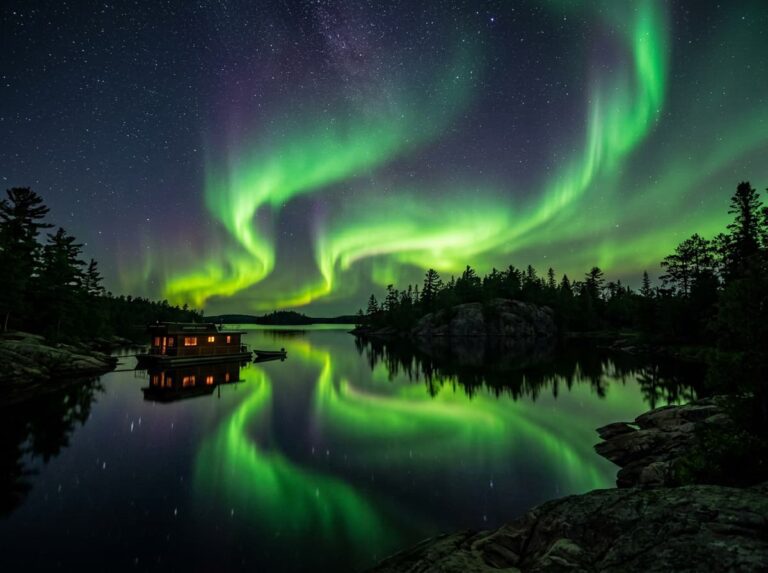
    I was staying at a small inn in Gig Harbor — Washington was the first state of my 50 at 60 journey, the trip that set everything in motion — when the aurora alerts started coming in. I had been aware that a significant geomagnetic storm was building, but what the images showing up online made clear was that this was not an ordinary aurora event. The sky in the photographs was not the typical pale green curtain. It was a deep, saturated red that I had never seen in any aurora image before, a color so vivid and so unusual that it seemed almost artificial. The storm was a G5 — the strongest geomagnetic event in two decades — and it was driving the aurora down to latitudes far south of where it normally appears.

  • Chasing Light in Badlands National Park

    The color of the Badlands is what most visitors remember and most photographs fail to communicate accurately. The formations are not one color — they are dozens. Cream and tan in the upper sedimentary layers, deep burgundy and rust in the iron-rich bands below, lavender and gray in the volcanic ash layers, the whole spectrum shifting continuously as the light angle changes. At midday those colors flatten to a washed-out beige. At sunrise and sunset they deepen and saturate to something that looks almost impossible — the kind of color that makes first-time visitors stop mid-sentence and just look.

  • The Light at Redwood National and State Parks

    Some landscapes become part of our imagination long before we ever visit them. The redwood coast of northern California is one of those — the photographs of the ancient groves, the shafts of light through the canopy, the trees so large that people standing at their base become suggestions of scale rather than human beings. I had those images in my head before I ever drove Highway 101 through Del Norte County.

  • Chasing Light in Death Valley National Park

    As I write this, my social media feed is full of images from Death Valley that look nothing like the park I drove through. The super bloom is happening — the desert floor covered in wildflowers in colors that seem impossible for a place that receives less than two inches of rain in an average year. Gold and purple and white across the valley floor, the Panamint Mountains behind them, the salt flats of Badwater Basin in the distance. Every image is better than the last one. The most spectacular wildflower display since 2016, by most accounts. And I am not there.

  • Finding Light in Cuyahoga Valley National Park

    Cuyahoga Valley is 33,000 acres of forested river valley between Cleveland and Akron — a landscape shaped by the Cuyahoga River, glacial geology, 19th-century canal history, and the kind of dense hardwood forest that the Midwest produces when it has been left largely alone for long enough. It is a park that rewards the visitor who slows down and looks carefully at a landscape that does not announce its beauty dramatically but reveals it in layers. I did not slow down. The return trip is about finding out what those layers are.

  • Chasing Light in Denali National Park

    When planning a visit to America’s national parks, some destinations carry a weight that the others do not. Denali is one of those. The highest peak in North America — 20,310 feet of granite and ice rising from the Alaska Range — has a presence that is felt before it is seen, a scale that the photographs suggest but cannot fully communicate, and a name that carries its own history.

  • First Light at Grand Teton National Park

    The park extends beyond the mountains into the Jackson Hole valley, with Oxbow Bend on the Snake River, the Willow Flats moose habitat, the sagebrush flats of Antelope Flats where bison herds graze with the Tetons behind them, and the string of glacial lakes — Jenny Lake, String Lake, Leigh Lake — along the base of the range. Each location is a different expression of the same mountain and valley system, and each one has its specific light window and its specific wildlife rhythm.

  • Inside Shenandoah National Park

    Some landscapes become part of our imagination long before we ever visit them. Shenandoah works differently. It becomes part of your imagination on the drive in — the moment Skyline Drive begins to climb the Blue Ridge and the valley below starts to fall away and the Appalachian ridgeline opens up on both sides, layered blue on blue on blue into the distance.