I want to tell you about a moment at an RV show that I keep coming back to. Not the price negotiation. Not the walk-through of the living area. Not the slide-outs or the storage bays or the outdoor kitchen that gleamed under the showroom lights. The moment I sat in the driver’s seat.
Everything I thought I understood about this decision shifted in that moment. Not dramatically. Not with fanfare. Just a quiet recalibration that I haven’t been able to unfeel since. That’s what this post is about.

Heads up. Some of the links here are affiliate links with Amazon and other partners I trust.
You pay nothing extra. I earn a small commission. Everyone wins – and the road stays funded.
What the Class C Rental Taught Me First
Before we get to the Class A, I need to go back to the Class C rental — because that experience set the contrast.
I was prepared for a learning curve. What I wasn’t prepared for was how much the driving experience itself would define the whole trip.
The steering felt vague in a way that required constant micro-corrections. The ride transmitted road surface in a way that a car doesn’t. Crosswinds announced themselves clearly and asked for your full attention. None of it was dangerous. None of it was beyond managing. But it was work.
And work, sustained over hours and days and hundreds of miles, accumulates. It doesn’t exhaust you in a single stretch. It wears you down gradually, in a way that you only notice clearly when you step out at the end of a driving day and realize how tightly you’ve been holding everything.
That’s not an indictment of Class C motorhomes. Many people drive them for years and find them perfectly comfortable. But for me, the experience left a mark. It made me understand that driving comfort wasn’t a secondary consideration — it was foundational. If the drive is something you endure, the lifestyle never fully opens up. You find reasons to stay put. The rig accumulates nights in storage. The whole system underperforms.
I carried that realization into every subsequent showroom visit.
“If you haven’t rented yet, Outdoorsy is where I’d start — the experience of driving a real rig on a real road will teach you more than any spec sheet.”
The Moment the Class A Changed Things
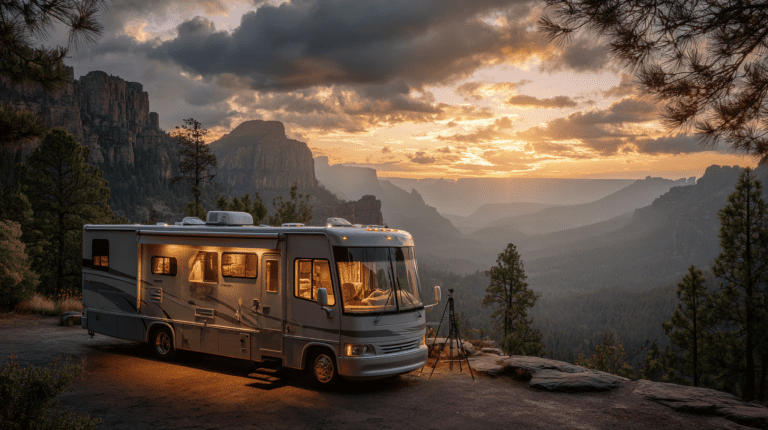
The Hurricane 29L was not the most expensive rig on the floor. It wasn’t the largest. It wasn’t positioned as the flagship of anything.
But when I sat in the driver’s seat, something was immediately different.
The seating position felt grounded rather than perched. The sight lines felt expansive without feeling precarious. The steering wheel sat at an angle that felt like a vehicle rather than an improvised adaptation. The cockpit felt as though someone had thought carefully about the person behind the wheel — not just the person living in the back.
For the first time in any RV I’d sat in, I thought: I could drive this. Not endure it. Drive it.
That distinction matters more than I can adequately explain in words. But if you’ve ever driven a vehicle that felt wrong and then driven one that felt right, you understand it immediately. It’s not about features. It’s about fit.
And fit, between a driver and a machine, is the thing that determines whether the lifestyle is sustainable or merely aspirational.
Beyond the Driver’s Seat
The driving comfort was the revelation. But there were other things about the Class A format that earned genuine consideration once I was past the initial impression.
Interior volume. A Class A offers more floor space, more ceiling height, and more of a sense of genuine habitation than the classes below it. That’s not luxury for its own sake. For someone planning extended stays rather than weekend hops, the ability to move through a space without constant compromise matters. It affects how you work, how you rest, and — for Penny — how much territory feels available.
Outdoor kitchen. I’ll be honest: I initially dismissed this as a showroom gimmick. A slide-out drawer with a burner and a small refrigerator. Who needs it?
But the more I thought about it, the more I understood what it actually changes. An outdoor kitchen doesn’t just add a cooking surface. It shifts the center of gravity of how you inhabit a site. It draws activity outward. It makes the camp feel like camp rather than a parked vehicle. On a cool morning at the edge of a national park with the light doing something extraordinary, the difference between stepping outside to make coffee and retreating inside to do it is not trivial. It’s the difference between being present and being adjacent.
Storage architecture. A Class A typically offers substantial basement storage — the compartments beneath the main living floor that can hold gear without compromising interior living space. For a photographer carrying multiple camera bodies, lenses, tripods, audio equipment, and lighting tools, that separation matters. The gear lives below. The living space lives above. They don’t compete for the same square footage.
The Size That Keeps Making Sense
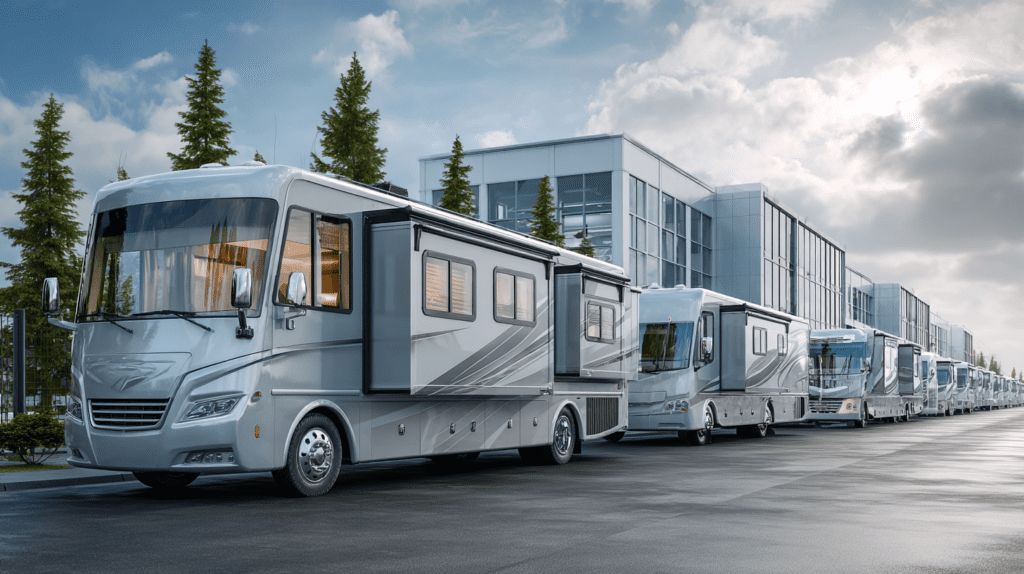
The Hurricane 29L sits at the upper edge of the under-30-foot threshold we’ve talked about throughout this series. That positioning is not accidental, and it’s part of why the rig keeps coming back into my thinking.
Under 30 feet, and the national park campground options remain broadly open. Interior park roads stay navigable. The rig fits where it needs to fit without requiring a secondary planning process for every destination. But 29 feet is also enough space. Enough living room. Enough storage. Enough of a kitchen. Enough window area for Penny to find her patches of light.
It doesn’t try to be a rolling condominium. It tries to be a capable, well-considered basecamp. And that’s exactly the right ambition for the travel I’m planning. Not excess. Sufficiency.
There’s a meaningful difference between those two things, and the rigs that pursue sufficiency thoughtfully tend to be more satisfying over time than the ones that pursue maximum square footage.
The Honest Counterweight
I’ve been making a case here, and it deserves a balancing voice.
The Class A comes with higher purchase price than a Class C or a comparable trailer setup. It comes with a dedicated engine that adds to the maintenance picture. It requires a towed vehicle for the full flexibility this kind of travel demands — which means the two-vehicle system and all the cost that implies.
The driving comfort advantage I experienced in that specific rig may not hold across all Class A models. Chassis, suspension tuning, and cab design vary. The right approach is to drive several before concluding that the format is universally preferable.
And the emotional pull of a beautiful rig is real and worth monitoring. The Class A cockpit felt right in a way that was partly about engineering and partly about desire. Those are different things, and keeping them separate in your own thinking requires honesty.
So I’m not concluding that the Class A is the right answer. I’m concluding that it’s a genuine contender — for specific reasons, grounded in specific experience — and that it deserves to be evaluated seriously rather than dismissed on price alone or embraced on feeling alone.
What This Post Is Really About
There’s a broader principle embedded in this experience that applies whether you’re considering a Class A, a trailer, a Class C, or a van.
Go sit in it. Go drive it. Not a parking lot loop — a highway test drive, if the dealer will allow it. Bring the conditions that matter to you: a long drive day, a mountain grade, a crosswind. Let the vehicle tell you something the spec sheet can’t.
Ultimately, this decision is about sustainability. Not which rig looks best in a campground photo. Not which one has the most impressive feature list. The one that will still feel right after a thousand miles and thirty parks and a dozen different kinds of weather.
That rig is the one worth buying. And you can’t find it without getting behind the wheel.
Ready to Find Your Own Driver’s Seat Moment?
The only way to know is to get behind the wheel. Here are a few ways to start:
Rent before you decide — Outdoorsy puts you in a real rig on a real road. One trip will tell you more than a hundred spec sheets.
When the rig is parked, stay somewhere worth stopping — Harvest Hosts puts you on farms, wineries, and breweries across the country — the kind of overnight that makes the whole lifestyle feel real.
For the nights you fly in instead — Hotels.com covers the destinations where four walls make more sense than a campground.
About this series: The RV Question is a 12-part exploration of RV life written from the perspective of a photographer and storyteller planning to visit all 63 U.S. national parks. It’s not a buying guide. It’s a thinking guide — for anyone considering a significant change in how they move through the world.