What a passing cloud can teach you about the light you’ve been standing in all along.
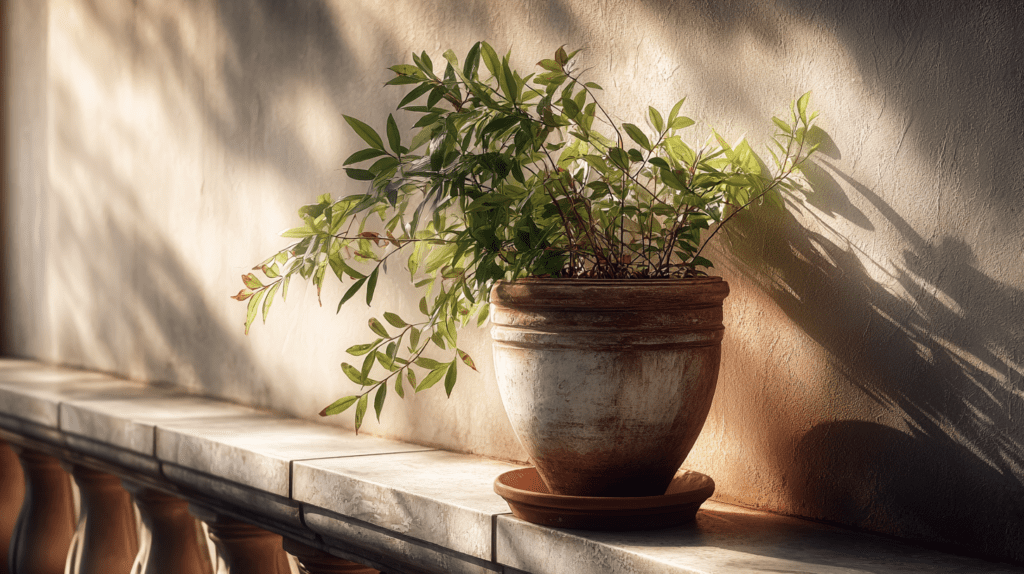
Step outside on a clear morning and find a leaf. Any leaf on a plant, a bush, a tree overhanging the sidewalk. Look at the shadow it throws on the surface behind it.
Sharp edges. Clean lines. The shape of the leaf defined precisely by the angle of the sun. High contrast, hard light, every vein and serration casting its own small shadow. Now wait for a cloud. Not a storm. Not a dramatic sky. Just an ordinary cloud passing in front of the sun for thirty seconds. Watch what happens to that shadow.
It goes soft. The edges blur. The contrast drops. The same leaf, in the same position, in the same morning… but the photograph it would make is completely different. Quieter. More forgiving. A different mood entirely. You just watched something happen that most people walk past every day of their lives.
What Changed
The light source got bigger.
That’s the whole explanation. When the sun is unobstructed, it’s a small, intense, directional source — hard light, sharp shadows, high contrast. When a cloud moves in front of it, the cloud scatters that light in every direction. The entire sky behind the cloud becomes the light source. And a large, diffuse light source wraps around objects instead of striking them. Shadows soften. Edges round off. The world looks like it was lit by someone who knew what they were doing.
Which, in a manner of speaking, it was.
Why This Matters For Photography
Most people put their camera away when clouds roll in. They’re waiting for the sun to come back. They think the light is gone. The light isn’t gone. It changed. And depending on what you’re photographing, it may have just improved dramatically.
Portraits in direct sun are hard. The light is harsh, shadows fall across faces at unflattering angles, and people squint. Move that same portrait under an overcast sky and something opens up. The light wraps. The skin looks different. The whole image breathes.
Landscapes are more complicated. Sometimes you want that hard directional sun, especially at golden hour when the low angle rakes across terrain and reveals texture. But flowers, forests, streams, still water… these often sing under soft light. The colors saturate. The shadows don’t compete with the subject. The question is never whether the light is good or bad. It’s whether the light matches what you’re trying to say.
The Experiment
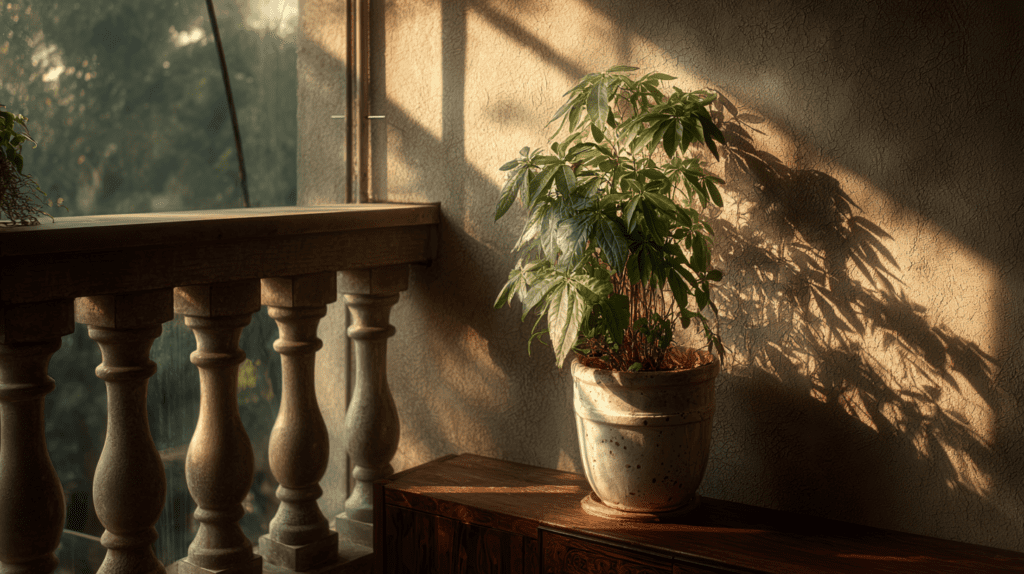
Here’s something worth trying this week. Find a spot. Your backyard, a balcony, a park bench. Something with a plant or a tree nearby, something that throws a shadow on a wall or the ground. Sit there for twenty minutes. Don’t photograph anything yet. Just watch.
Watch what the light does as the sun moves. Watch what a cloud changes. Watch the difference between the shadow at 8am and the shadow at 10am. Watch what happens in the five minutes after the cloud passes and the sun returns. There’s often a moment of transition, a brief window where the light is doing something in between hard and soft, that’s unlike either state.
You’re not waiting for the perfect light. You’re learning what light actually does when you pay attention to it. That’s a different skill than knowing the settings on your camera. And it’s the one that matters more.
Back To The Leaf
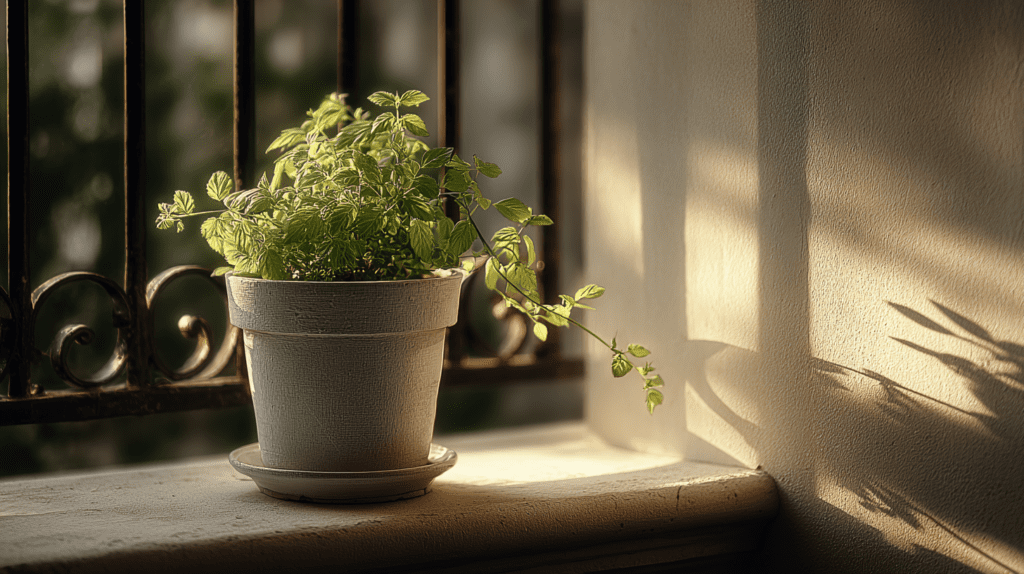
I look at the wall behind the plant on my balcony most mornings. It’s become a kind of daily calibration… a thirty-second read of what kind of light is available and what it might be good for.
Hard shadows: good morning for landscapes with texture, not great for anything delicate. Soft shadows: good morning for almost everything else. No shadows at all: overcast, flat light… fine for certain things, worth noting. No plant, no wall: go back inside and make another coffee.
It sounds simple because it is. The light is always telling you something. The only question is whether you’ve learned to listen.
The cloud didn’t ruin your shot. It offered you a different one.
Start with the shadow. The rest follows.
— Michael