A Photographer’s Return to Montana’s Crown of the Continent — On Foot This Time, Into the Light
Every photographer eventually builds a list of drives they will remember for the rest of their lives. Going-to-the-Sun Road belongs on that list — and not just for the scenery, but for the circumstances that made it possible.
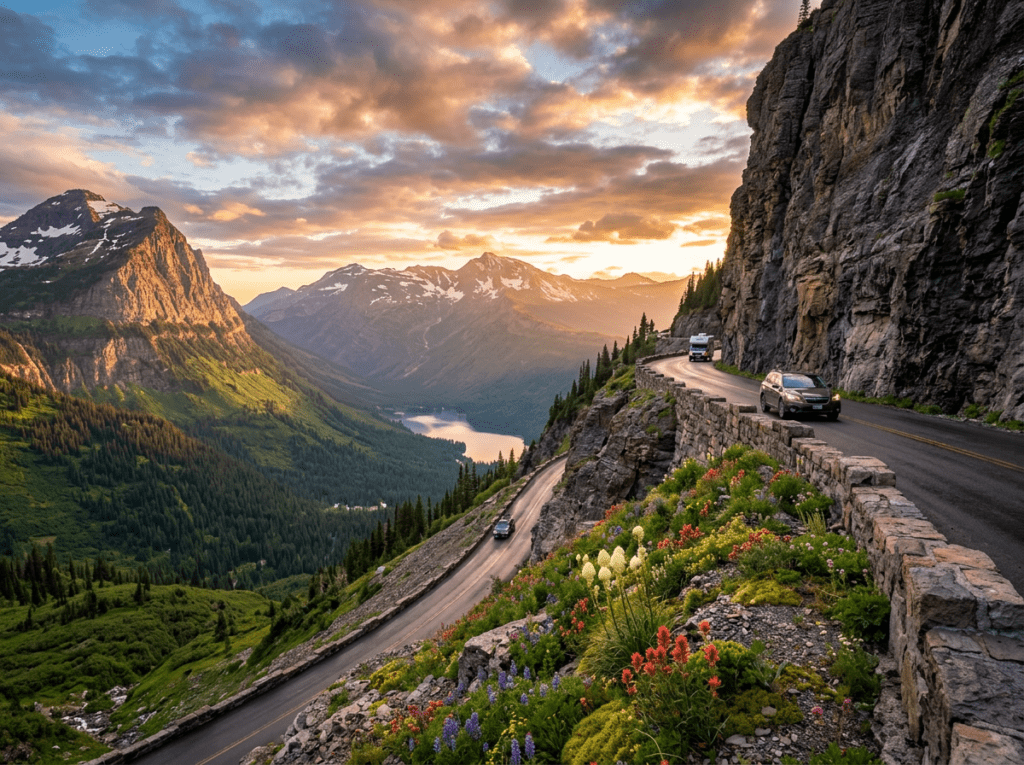
I was at Glacier right after Yellowstone, on a family trip with my ex-wife — who remains one of my closest friends — and our daughter, who lives out of state and whose visits are never as frequent as any of us would like. The three of us had the Going-to-the-Sun Road timed entry pass secured, the road was open — which is not a given, since the full 50-mile crossing from West Glacier to St. Mary only operates during a narrow summer window and closes at the first sign of serious autumn weather — and we drove it together on a clear day with the mountains doing everything they are supposed to do. Logan Pass at the Continental Divide. The Garden Wall rising on one side. McDonald Creek in the valley far below on the other. The kind of drive that makes you quiet in the car because talking seems like it might interrupt something.
What I want to do differently on the return is leave the car. The road showed me what Glacier looks like from 6,646 feet at Logan Pass. The hikes from that pass — the Hidden Lake Overlook trail, the Highline Trail along the Garden Wall — show you what it feels like from inside it. There is a difference between driving through extraordinary light and hiking into it, and the next visit is about the hiking version. That and an RV camp close enough to the park that the early morning starts are practical rather than heroic.
The Landscape That Draws People Here
Glacier National Park covers one million acres of the Northern Rockies in northwestern Montana, straddling the Continental Divide along the US-Canada border. The park is called the Crown of the Continent for good reason — it sits at the hydrological apex of North America, where water flows to three different oceans depending on which side of the Divide it falls. The landscape is shaped by glacial geology on a scale that the name promises and the terrain delivers: U-shaped valleys carved by ice, cirque lakes of an impossible blue-green sitting in the bowls the glaciers left behind, arêtes and horns and hanging valleys that read like a textbook illustration of glacial geomorphology and look nothing like a textbook.
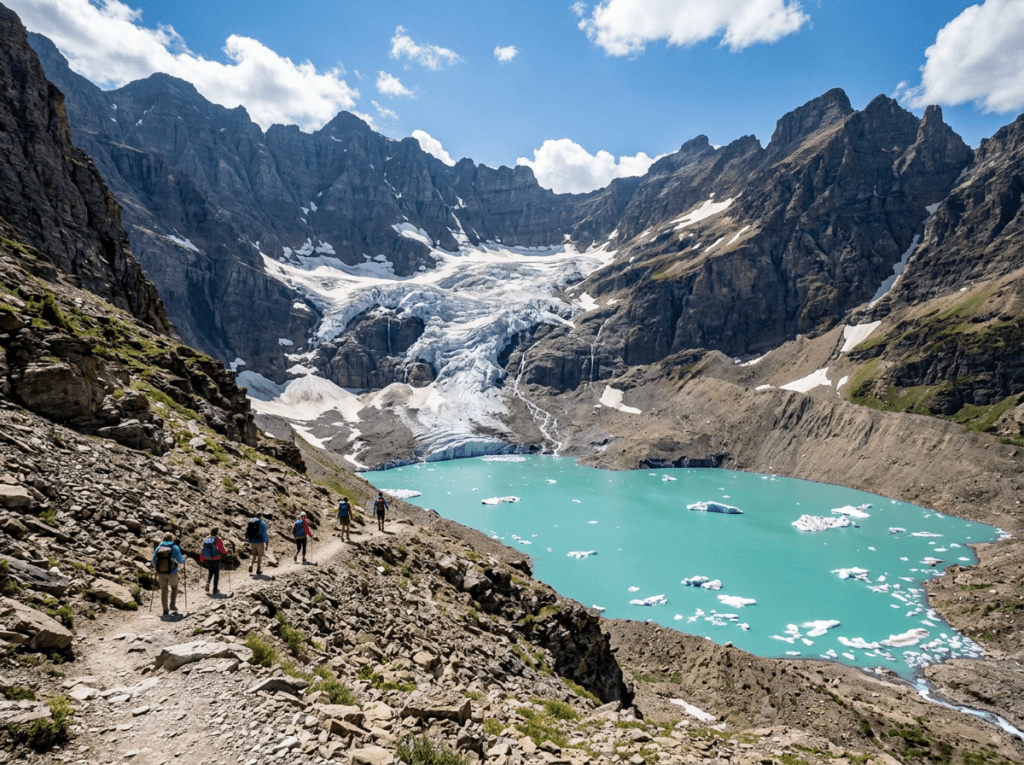
The glaciers that give the park its name are retreating. The park had approximately 150 named glaciers when it was established in 1910. Today fewer than 30 remain by the scientific definition of an active glacier. The Grinnell Glacier, accessible by one of the park’s finest day hikes, has retreated dramatically within living memory — historical photographs at the trailhead show what the glacier looked like in 1900 and what it looks like now, and the comparison is arresting. Photographing the glaciers that remain is an act of documentation as much as landscape photography. They will not be here in the same form for future generations.
The wildlife at Glacier is the full Northern Rockies portfolio — grizzly bears, black bears, mountain goats navigating the cliff faces with casual ease, bighorn sheep on the high ridgelines, moose in the willow thickets of the valley floors, gray wolves in the backcountry. The mountain goats at Logan Pass are the most reliably visible and most photographed — habituated to hikers, present on and around the Hidden Lake Overlook trail from late June through September, close enough for portrait photography with a moderate telephoto.
The Photographer’s Chase
The Going-to-the-Sun Road is both the park’s primary photography subject and its primary access route — a 50-mile engineering marvel completed in 1932 that clings to the cliff faces of the Garden Wall and provides overlook after overlook of the park’s alpine interior from a vehicle. The photography from the road is genuinely strong: the sweep of McDonald Valley from the west side, the vertical Garden Wall rising above the road on the east side, the Logan Pass summit with the peaks visible in every direction, and the descent to St. Mary Lake on the eastern side with the prairie beginning beyond the park boundary. All of this from a car window, which is how most visitors experience it.
The hikes from Logan Pass are where the photography deepens. The Hidden Lake Overlook trail — 2.7 miles round trip with 540 feet of elevation gain across alpine meadows — reaches a cirque lake of extraordinary blue-green below the peaks, with mountain goats regularly present on the slopes above the lake and wildflowers carpeting the meadow in July. The Highline Trail, beginning right at the Logan Pass parking area, traverses the Garden Wall at elevation for 7.6 miles to the Granite Park Chalet — one of the great ridge walks in the national park system, with the park spread below on both sides and the morning light building on the eastern peaks as you move north. This is the trail I want to be on when the light arrives.
The Grinnell Glacier hike — 10.6 miles round trip from the Many Glacier trailhead, with boat shuttles available to shorten the approach — is the most rewarding single day hike in the park for a photographer with the endurance for it. The trail passes Grinnell Lake and Upper Grinnell Lake before reaching the glacier itself, and the iceberg-filled turquoise water of the upper lake with the glacier face above it is one of the most extraordinary natural photography subjects in the lower 48. The color of glacial flour suspended in cold water is a blue that camera sensors struggle to reproduce faithfully and that the eye refuses to believe is natural.
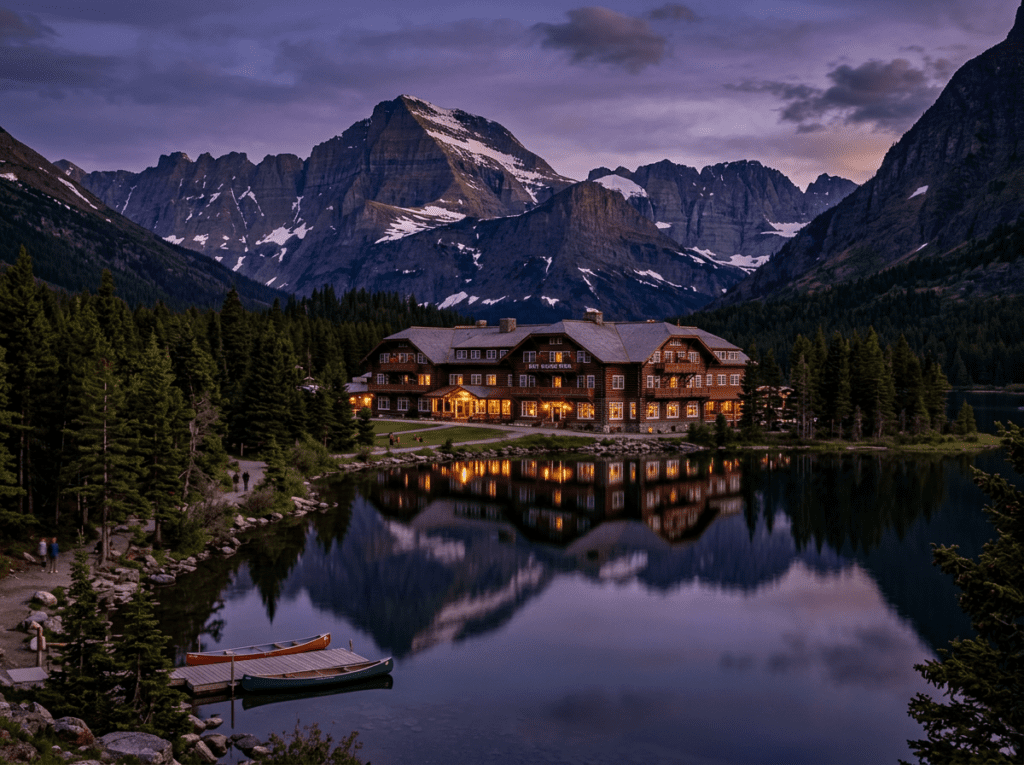
Many Glacier, the park’s northeastern valley, is the wildlife photography section — the hotel-fronted lake, the surrounding peaks, and the willow flats and avalanche slopes that concentrate grizzly activity in July and August. A spotting scope and a long lens from the Many Glacier Hotel deck at dawn, watching the slopes above for bear movement, is the Glacier morning that the Going-to-the-Sun Road crowd never finds.
Visiting the Park
The Going-to-the-Sun Road timed entry reservation is the first planning decision and it governs everything else. During peak season — typically late June through mid-September — private vehicles require a timed entry ticket to access the road between Apgar and the St. Mary Visitor Center. Reservations open on recreation.gov in rolling windows beginning in April; the most desirable early morning entry slots sell out within minutes of becoming available. Check current requirements and opening dates at nps.gov/glac before any other planning.
The full road typically opens by late June when the snowpack has been cleared — the opening date varies by year and is not guaranteed until the NPS completes the plowing operation, which can take into early July in heavy snow years. Building flexibility around the road opening into the trip plan is essential; arriving a week before or after the full opening dramatically changes what is accessible.
July and August are peak season — maximum wildlife activity, full wildflower bloom at alpine elevations, and the highest crowds. September is the transition month: fewer visitors, the first fall color in the lower valleys, the possibility of early snow on the high passes, and the park taking on the quieter character that makes it feel like a different place. The Going-to-the-Sun Road typically closes for the season in mid-October, snow dependent.
Where to Stay
Many Glacier Hotel, on the shore of Swiftcurrent Lake in the park’s northeastern valley, is the landmark in-park lodging — a 1915 Swiss chalet-style property with the peaks of the Continental Divide rising directly behind it and some of the finest wildlife viewing in the park visible from the hotel deck. It books out for peak season well in advance and is worth the planning effort for photographers targeting the Many Glacier wildlife corridor.
Lake McDonald Lodge, on the western shore of the park’s largest lake near the Going-to-the-Sun Road entrance, provides the western side base camp — historic 1913 hunting lodge architecture, lake views, and proximity to the road entry point. Village Inn Motel at Apgar and the Going-to-the-Sun Road corridor lodges round out the in-park options.
West Glacier and Whitefish on the western side, and St. Mary and Browning on the eastern side, provide gateway lodging. Whitefish — a genuine Montana mountain town with strong independent restaurants and lodging — is the most comfortable outside base and about 25 miles from the West Glacier entrance. For RV travelers, Apgar Campground near the west entrance and St. Mary Campground on the east side are the most central options. A critical note: the Going-to-the-Sun Road has a 21-foot vehicle length limit between Avalanche Creek and the St. Mary Visitor Center — larger rigs cannot access the alpine section of the road and must use the shuttle system instead.
If I Were Planning My First Visit
The first visit gave me the Going-to-the-Sun Road with the people I most wanted to share it with. That was the right version of the trip for that moment. The return is built around getting out of the car.
Timed entry reservation secured the moment the booking window opens. Camp or lodge as close to Logan Pass as the reservation system allows — Apgar or St. Mary, with the road in between. First morning on the Highline Trail before the day hikers arrive at the Logan Pass trailhead, moving north along the Garden Wall as the eastern peaks catch the morning light. The mountain goats will be there. The view will be there. The light will be doing what it does at 7,000 feet in the Northern Rockies at dawn.
A full day for the Grinnell Glacier hike from Many Glacier — early start, boat shuttle to shorten the approach, the upper lake and the glacier face in the late morning light before the afternoon clouds build. And an evening at Many Glacier Hotel watching the slopes above the lake for bear movement in the low evening light.
The road showed me what this park looks like. The trails will show me what it is.
The Light I’m Curious About
It is the dawn light on the Highline Trail — the specific quality of first light at 7,000 feet along the Garden Wall, when the eastern peaks catch the alpenglow before the sun clears the Continental Divide and the valley below is still in the blue shadow of pre-dawn.
The Going-to-the-Sun Road showed me this light through a car window at a speed that made stopping feel complicated. The Highline Trail puts you in it on foot, moving at the pace of someone paying attention, with the peaks rising above and the valley dropping away below and the morning doing what mornings do at this elevation — arriving slowly, then all at once.
I drove this park with people I love and I would not trade that trip for any photograph. But the next version is the one where I walk into the light instead of driving through it. Same park. Same mountains. A completely different relationship with both.
A Deeper Exploration
This article is part of my ongoing project documenting and photographing all 63 national parks across the United States.
Along the way, I’m creating deeper guides that explore photography locations, travel planning, seasonal light conditions, and personal reflections from the road. Glacier is the park in this series that most clearly demonstrates the difference between experiencing a place and photographing it — and the value of going back to do both properly.
Because the road showed me what this park looks like. The trails will show me what it is.
One more thing — just between us.
The Going-to-the-Sun Road timed entry is competitive for good reason — but the park is much larger than that corridor and the crowds thin dramatically once you leave it. Here are three places worth knowing when you want the Glacier experience with more room to find your own light.
Two Medicine Valley on the park’s southeastern edge is one of the finest and least visited valleys in the park — a glacial lake ringed by peaks, boat tours, good hiking, and a fraction of the Logan Pass traffic. The light on the Two Medicine Lake at sunrise, with the peaks reflected in the still water, is the Glacier reflection photograph without the crowd.
On the Canadian side of the border, Waterton Lakes National Park forms the other half of the Waterton-Glacier International Peace Park — the same geology, the same wildlife, the same mountain character, with a charming small townsite and almost no American visitors. The Prince of Wales Hotel above Upper Waterton Lake is one of the great mountain hotel views on the continent.
And for a Montana experience just outside the park, the town of Whitefish deserves more than a drive-through — Whitefish Lake at dawn, the historic train depot, and a genuine Montana mountain town that has not yet been entirely consumed by tourism. Worth an evening and a camera before you head into the park.