A Photographer’s First Look at Oregon’s Collapsed Volcano — and the Bluest Water on Earth
Every photographer eventually builds a list of single subjects they most want to photograph — not landscapes, not destinations, but specific things. A particular mountain. A particular canyon. A particular quality of light on a particular body of water. Crater Lake is on that list for a specific reason: the blue.
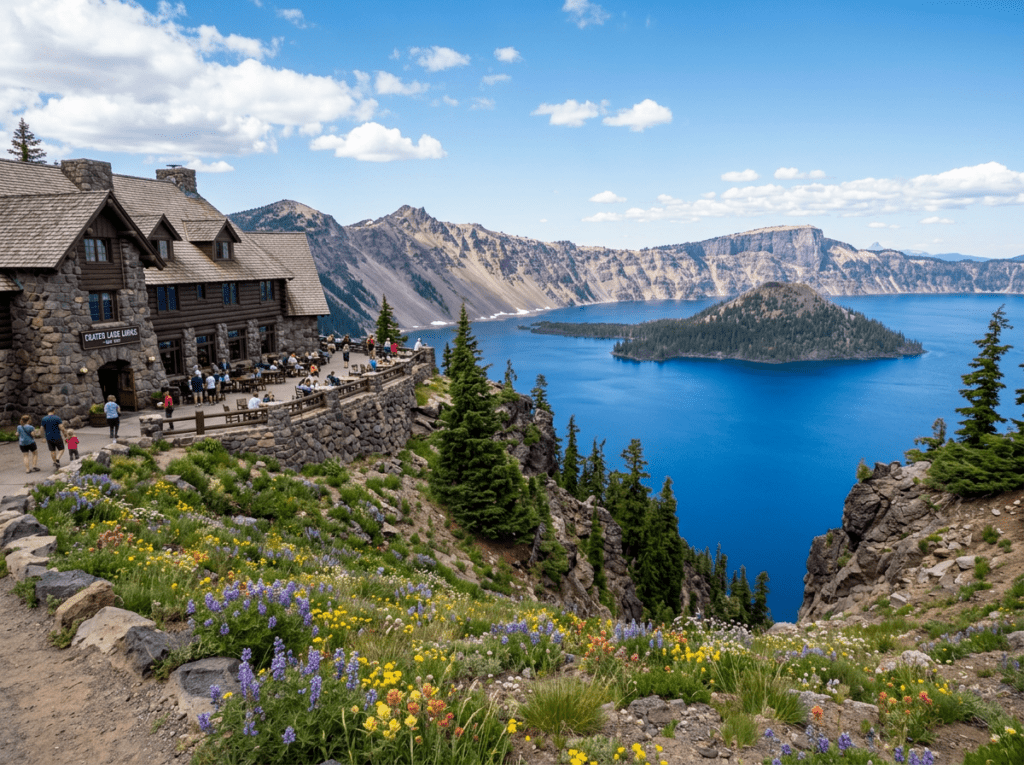
Not blue in the general sense that lakes and oceans are blue. The blue of Crater Lake is a different category of color — a deep, saturated, almost electric indigo that results from the lake’s extraordinary depth and purity. At 1,943 feet, Crater Lake is the deepest lake in the United States and the ninth deepest in the world. It has no inlets or outlets — it is fed entirely by rain and snowmelt and loses water only to evaporation and seepage. Nothing flows into it carrying sediment or dissolved minerals. The water is among the clearest and purest on earth, and that purity allows sunlight to penetrate to extraordinary depths, scattering the blue wavelengths back to the surface in a color that photographers who have stood at the rim describe with a consistency that is almost suspicious: they all say the photographs do not capture it. They all say you have to see it in person to understand what it actually is.
I have not been to Crater Lake. It is one of the parks I most want to correct that about, and the research I have done in preparation has only deepened the anticipation. The lake sits in the caldera of Mount Mazama, a volcano that erupted catastrophically approximately 7,700 years ago and then collapsed into itself, leaving a bowl six miles across and 2,000 feet deep that slowly filled with water over centuries. The Klamath people witnessed that eruption. Their oral traditions describe it. The geology and the human history are both extraordinary — and both visible in a single view from the rim.
The Landscape That Draws People Here
Crater Lake National Park is essentially one subject — the lake — viewed from many angles along a 33-mile rim road that circles the caldera at elevations between 7,000 and 8,000 feet. That sounds limiting until you understand how many ways the lake presents itself depending on light, season, weather, and position. The western rim in morning shadow while the eastern rim catches the first sun. The lake surface in the flat calm of a windless dawn versus the chop of an afternoon breeze. The full moon rising over the caldera rim and reflecting on the still water below. The first snow of October dusting the rim while the lake remains its impossible summer blue. Every position and every condition produces a different lake.
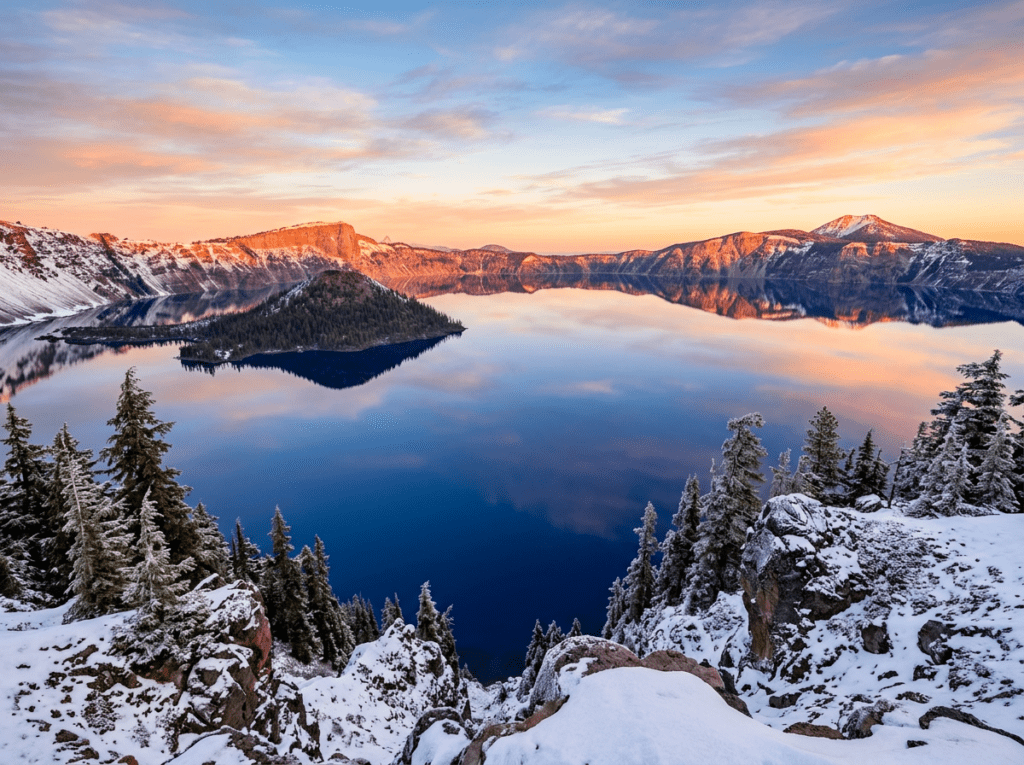
Wizard Island — a cinder cone volcano rising 764 feet from the lake surface near the western shore — is the compositional element that gives the lake its photographic depth. Without it, the caldera would be a circle of blue with no internal scale reference. Wizard Island provides the foreground interest that anchors wide compositions, the middle-ground element that communicates the lake’s scale, and a destination in itself — boat tours to the island operate during summer and allow the only close-range access to the lake surface and the island’s own summit hike.
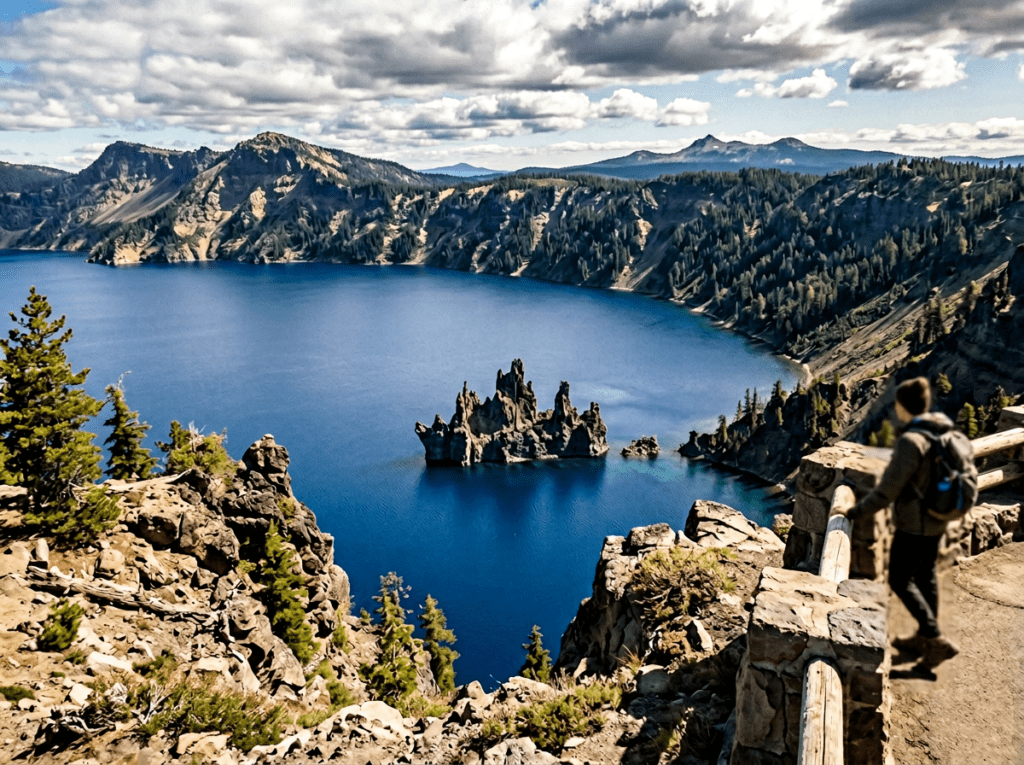
The Phantom Ship — a smaller volcanic rock formation rising from the lake’s southeastern end, its jagged profile resembling a sailing vessel — is the other significant compositional element, visible from the rim overlooks above it and most dramatically from the Sun Notch viewpoint. The Phantom Ship in morning light, with the lake color surrounding it and the caldera walls in the background, is the intimate Crater Lake composition that the wide rim panoramas cannot provide.
The Photographer’s Chase
The blue is the primary subject and the primary challenge simultaneously. The specific indigo of Crater Lake is a color that camera sensors render differently depending on the light conditions, the time of day, and the amount of cloud cover — and the difference between the color as the eye perceives it and the color the camera records is reportedly one of the more frustrating technical experiences in landscape photography. Overcast light produces the most accurate color rendering, as the diffused illumination allows the lake’s natural color to dominate without the sky reflection competing with the water’s own blue. Direct midday sun from a clear sky produces the most saturated but least accurate version — the sky reflection adds cyan to the indigo and produces a color that looks almost too blue to be real. Early morning, before the sky brightens fully and before any wind disturbs the surface, is reported to produce the most balanced and most honest rendering of what the lake actually is.
Watchman Peak is the sunrise position that most Crater Lake photographers prioritize — a 1.6-mile round trip hike from the Watchman trailhead on the western rim, climbing to a fire lookout at 8,013 feet with a 270-degree view of the lake, Wizard Island directly below, and the Cascades extending in every direction. The hike is steep and the elevation gain is significant for an early morning start, but the view from the lookout at sunrise — the eastern rim catching the alpenglow while the western rim is still in shadow and the lake surface below is absolutely still — is by most accounts the finest single photography position in the park.
Cloudcap Overlook, the highest drivable point on the rim at 8,070 feet, provides the most elevated perspective on the lake and the most complete view of the caldera geology — the full bowl visible in a single frame, the lake’s depth implied by the color shift from the shallower rim edges to the profound indigo of the center. The overlook faces east and catches the morning light directly, making it a strong sunrise alternative to the Watchman hike for photographers who want elevation without the trail.
The boat tour to Wizard Island is the photography experience that the rim cannot provide — being at water level inside the caldera, looking up at the rim 1,000 feet above, and photographing the lake from the perspective of someone inside it rather than above it. Tours operate twice daily in summer and require advance reservations through the park concessionaire. The morning tour, departing before the afternoon wind develops on the lake surface, is the better photography option. The island’s summit trail adds a second elevated perspective — looking back across the lake from inside the caldera rather than from the rim.
Visiting the Park
Crater Lake has one of the most dramatic seasonal access situations in the national park system. The rim road receives an average of 44 feet of snow annually — one of the highest snowfall totals of any location in the continental United States — and the full rim circuit is typically closed from mid-October through early July, with the exact dates varying by snowpack. The North Entrance and the northern section of the rim road are the last to open and the first to close. Planning a summer visit requires checking current road conditions at nps.gov/crla before finalizing dates.
July through September is the primary season — the full rim road open, the boat tours operating, the weather dry and manageable. The crowds peak in August; arriving in early July or after Labor Day in September provides meaningful crowd reduction without sacrificing access. The park does not currently require timed entry reservations, though the Rim Village parking area fills early on clear summer mornings.
Winter at Crater Lake is a genuine photography opportunity for those willing to manage the conditions — the lake does not freeze due to its depth and thermal mass, and the sight of the indigo water surrounded by snow-covered caldera walls is one of the most dramatic winter landscapes in the Pacific Northwest. The south entrance and Rim Village remain accessible by vehicle in winter; the rim road is open to cross-country skiing and snowshoeing. This is the version of the park I want to experience on a second visit after the first summer trip establishes what the lake actually looks like.
Where to Stay
Crater Lake Lodge, perched on the rim’s southern edge at Rim Village, is the only in-park lodging and one of the more dramatically positioned hotels in the national park system — the dining room windows look directly across the lake, the lake is visible from many guest rooms, and the distance between the lodge and the rim overlooks is measured in steps. The lodge dates to 1915, has been significantly renovated, and books out for summer season well in advance. The dining room at sunset, with the lake going from blue to gold to purple below the windows, is worth a reservation even if you are not staying at the lodge.
Mazama Village, inside the park about four miles from the rim, offers motel-style cabins and a campground as a more affordable in-park alternative. The gateway towns of Klamath Falls to the south and Medford to the west provide the full range of chain and independent lodging for those based outside the park, though the 60 to 90-minute drive to the rim makes early morning photography starts logistically demanding.
For RV travelers, Mazama Campground inside the park has over 200 sites including some with electrical hookups, reservable through recreation.gov for peak season. Being inside the park for the pre-dawn rim drive is the practical advantage — the early morning light window at Watchman Peak or Cloudcap Overlook requires being on the rim before 5:30am in midsummer, which is a different proposition from inside the park versus from a Klamath Falls hotel. The rim road itself has no specific RV size restrictions, though the park’s mountain roads require careful driving in larger rigs.
If I Were Planning My First Visit
I am planning it, and the first decision is already made: Crater Lake Lodge if availability allows, Mazama Village if not. Being inside the park for the pre-dawn starts is non-negotiable for the photography I am going after.
Early July is the target window — past the peak snowmelt that can make the rim road uncertain, before the August peak crowds, and with the added possibility of lingering snow on the rim that produces the snow-and-blue-water combination that is one of the park’s most distinctive photography conditions. The Watchman Peak hike on the first morning — in the dark, headlamp on, arriving at the lookout before the alpenglow begins. The boat tour to Wizard Island on the second day, morning departure, with the underwater visibility and the inside-the-caldera perspective the rim cannot provide.
And an overcast morning specifically. Every photographer who has stood at this rim mentions the overcast morning as the condition that most accurately renders the lake’s true color — the day that most visitors wish were sunny is the day the camera finally records what the eye has been seeing. I am going to wait for that morning. However long it takes.
The Light I’m Curious About
It is the overcast morning light on the lake — the specific condition that photographers who know Crater Lake consistently describe as the truest rendering of the blue.
Overcast light at Crater Lake eliminates the sky reflection that competes with the lake’s own color on sunny days, and allows the water’s natural indigo — the result of depth and purity rather than reflected sky — to dominate the frame. The lake on an overcast morning is not the postcard version of Crater Lake. It is the real version, and by most accounts it is the more extraordinary one.
I am also curious about the winter version — the lake that doesn’t freeze, surrounded by snow, the indigo water against the white of the caldera walls. That is the Crater Lake that almost no one photographs and that almost everyone who has seen it describes as the most surreal natural color combination they have ever witnessed. The first visit is the summer version to establish what the lake is. The second visit is the winter version to understand what it becomes.
A Deeper Exploration
This article is part of my ongoing project documenting and photographing all 63 national parks across the United States.
Along the way, I’m creating deeper guides that explore photography locations, travel planning, seasonal light conditions, and personal reflections from the road. Crater Lake is the park in this series built around a single subject — one body of water, one color, one caldera — and the question of whether the camera can capture what the eye sees. I intend to find out.
Because some places are defined by a single quality that either survives the photograph or doesn’t. Crater Lake’s blue is the test. I am planning the trip around passing it.
One more thing — just between us.
Crater Lake’s rim road concentrates visitors at the obvious overlooks — Rim Village, Discovery Point, Cloudcap — in a way that leaves some of the finest photography positions remarkably quiet. Here are three places worth knowing when you want the lake with more breathing room.
Sun Notch Viewpoint on the eastern rim — a short walk from a small parking area — provides the best view of the Phantom Ship from above and consistently draws far fewer visitors than the Rim Village overlooks. The Phantom Ship in morning light from Sun Notch is the intimate Crater Lake image most visitors never find.
Just outside the park, Diamond Lake — about 10 miles north on Highway 230 — offers a completely different Oregon lake experience with Mount Thielsen rising above it and almost no national park overflow traffic. The reflection of Thielsen in Diamond Lake at dawn is a strong landscape composition that most Crater Lake visitors drive past without stopping.
And for the winter photography that most people never attempt, the south entrance winter access keeps Rim Village reachable year-round — the lake surrounded by snow, the indigo water against white caldera walls, and virtually no other visitors. That version of Crater Lake belongs to a very small club. Worth joining.