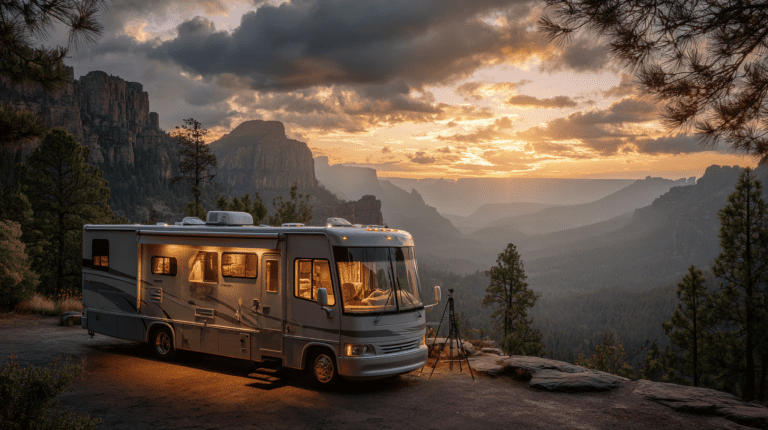
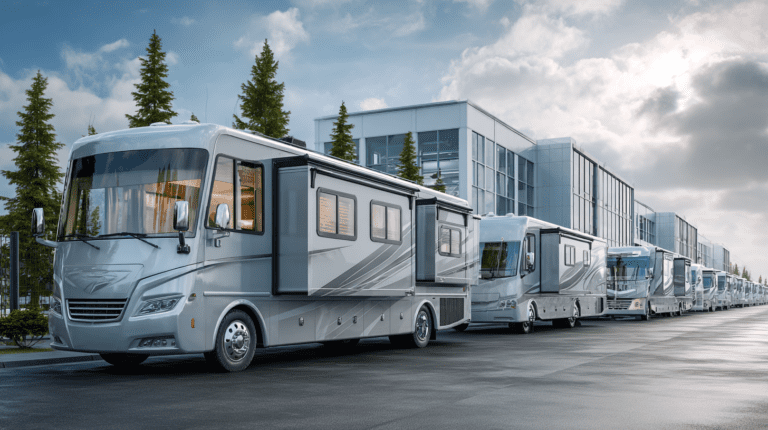
It starts innocently enough. You’re walking an RV show floor, or scrolling listings on a Tuesday night, and a travel trailer catches your eye. Clean lines. Reasonable footprint. And a price tag that, for a brief and optimistic moment, feels almost manageable.
$29,000. That’s doable.
That thought lasts about three seconds. Because the next question arrives immediately, the way it always does when you’re being honest with yourself.
What would I tow it with?
And just like that, the $29,000 trailer isn’t $29,000 anymore.
Heads up. Some of the links here are affiliate links with Amazon and other partners I trust.
You pay nothing extra. I earn a small commission. Everyone wins – and the road stays funded.
The Expanding Equation
This is the moment most people don’t see coming, not because they’re careless, but because the RV industry is very good at presenting units in isolation. You price the trailer. You imagine the lifestyle. The system cost stays quietly off to the side.
Let’s bring it into the room.
A capable tow vehicle, something you’d feel genuinely confident driving long distances, through crosswinds, and into mountain grades, runs $40,000 to $55,000 depending on what you’re looking at. Add that to the trailer and you’re already north of $70,000 to $80,000 before you’ve spent a single night anywhere.
But the math doesn’t stop there.
If you buy a truck or SUV capable of towing a trailer, you’re also buying the vehicle you’ll use for everything else… grocery runs, town errands, trailhead access. That part makes sense. But here’s where it gets interesting: if you eventually move toward a motorhome, that same vehicle becomes what you tow behind it. The everyday runabout. The explorer while the home base stays parked.
Which means you may be buying your second vehicle first.
Once that clicks, the equation grows again, but it also gets clearer. Because you’re no longer pricing a trailer. You’re pricing a system.
Not ready to price the full system yet? Outdoorsy is where I’d start — rent different classes, test different configurations, and let the real numbers reveal themselves before any paperwork changes hands.
Pricing the System, Not the Unit
This reframe changed everything for me.
A system includes:
- The primary rig (trailer, Class C, or Class A motorhome)
- The second vehicle (tow vehicle or toad)
- Insurance on both
- Storage when you’re not traveling
- Fuel, which is not a small number
- Maintenance – and with an RV, there’s always maintenance
- Depreciation, which we’ll come back to because it deserves its own honest conversation
When you add it up that way, the gap between a “budget” trailer setup and a mid-range motorhome setup narrows considerably. They may look like different price brackets on the showroom floor. They often aren’t, once the full system is on the table.
That’s not an argument against trailers. It’s an argument for clarity before commitment.

The Comfort Variable Nobody Talks About
Here’s something the math alone won’t tell you.
When I rented a Class C motorhome a while back, I remember the drive more than the campsites. The steering felt vague. Crosswinds announced themselves. It wasn’t unbearable, but it wasn’t something I’d describe as relaxing, and relaxed driving matters when you’re putting real miles on.
Then I sat in the driver’s seat of a Thor Hurricane 29L at an RV show.
Something shifted.
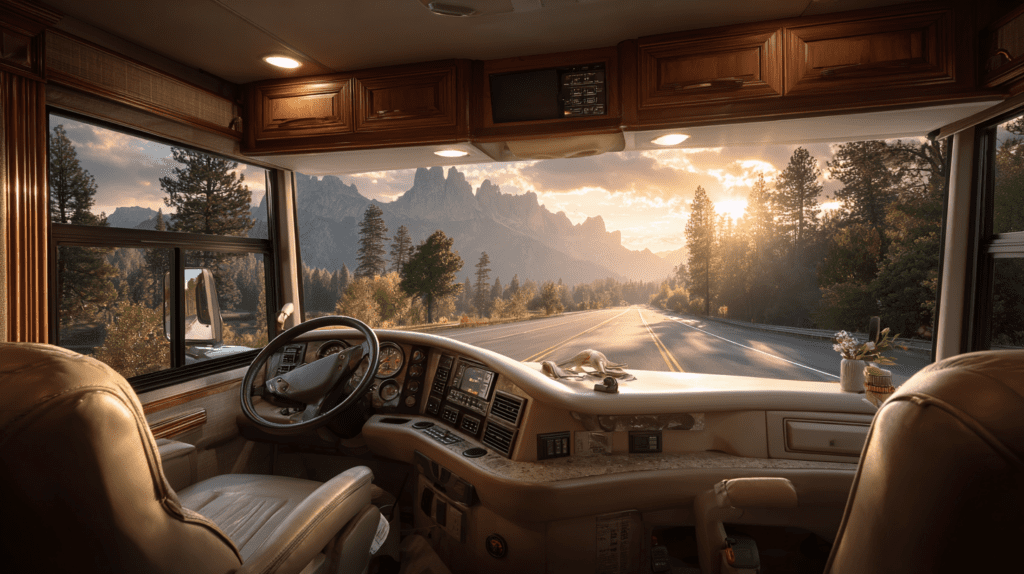
The seating position felt grounded. The visibility felt commanding without feeling precarious. The cockpit felt intentional… more like a vehicle, less like a truck cab grafted onto a house. For the first time, I thought: I could drive this comfortably. For hours. Repeatedly.
That realization matters more than the floorplan.
Because if the drive is something you endure rather than something you settle into, the lifestyle never gets off the ground. You’ll find reasons not to go. The rig will sit. And a sitting rig is an expensive piece of math with nowhere to be. Comfort behind the wheel isn’t a luxury consideration. It’s a sustainability one.
The Cat Recalibrates Everything
If Penny weren’t part of this, I’d be looking seriously at a Class B van. Small, nimble, efficient — the kind of setup where the whole operation fits in a parking space and you’re never more than thirty seconds from being ready to move.
But I want Penny to travel with me this time arround. And that changes the calculus in one specific, non-negotiable way.
When I’m out before sunrise — at a trailhead, at a viewpoint, chasing light — she needs a stable environment. Consistent temperature. Quiet. Familiarity. The kind of predictability that a hotel room with its unpredictable interruptions and foreign smells can’t really provide.
That means the home base needs to stay parked and plugged in while I explore. Which means I need two functional pieces no matter which direction I go. Either a trailer with a tow vehicle, or a motorhome with something towed behind it.
There’s no version of this that gets simpler. Once that became clear, the pricing math became more honest, and the decision more grounded.
If you’re planning to travel with a pet, a partner, or anyone else whose comfort is part of your responsibility, run that variable early. It will reshape the entire conversation.

The Number That Actually Matters
Most people fixate on the purchase price. It’s the biggest number, so it feels like the most important one. It isn’t. The number that actually matters is cost per night.
Here’s how to find it: add up your total annual cost of ownership — estimated depreciation, insurance, storage, and a reasonable maintenance budget — then divide by the number of nights you honestly expect to use the rig in a year. The result tells you what each night of that lifestyle actually costs, independent of the sticker.
Sometimes the number is lower than you expected. Sometimes it isn’t. But it’s real, and real is useful. It lets you ask a better question than “Can I afford this?” It lets you ask: “Is this experience worth that number to me?”
For high-use travelers — people putting in 90, 100, 120 nights a year — ownership math often starts to make sense. For occasional users, the honest cost per night can make a strong case for renting strategically and skipping ownership entirely. We’ll go deeper on that in the next post.
If you are just beginning your research, the RVs & Campers for Dummies by Christopher Hodapp and Alice Von Kannon might be a great place to start. I will also personally be checking out The Rivers National Parks Bible by Mike and Claire Davis when planning this National Parks journey!
What the Math Is Really Telling You
The point of running these numbers isn’t to talk yourself out of anything. It’s to walk into the decision with your eyes open. The $29,000 trailer is a real option. So is the Class A that costs four times as much. So is the decision to rent for a season and not own anything yet.
None of those paths is wrong. But all of them look different once the full system cost is visible. Price the system. Not the unit. Know the cost per night before you know the model year.
And if the math and the mission align — really align, not just on paper, then you’ll know.
About this series: The RV Question is a 12-part exploration of RV life written from the perspective of a photographer and storyteller planning to visit all 63 U.S. national parks. It’s not a buying guide. It’s a thinking guide — for anyone considering a significant change in how they move through the world.
Books Worth Reading
Ready to Explore Your Options?
Before the math becomes a purchase, here are a few resources worth having:
Run the numbers on renting first — Outdoorsy lets you test different rigs across different price points before any ownership math becomes permanent. Real trips, real costs, real data.
Find a storefront worth browsing — I keep a running list of gear, books, and tools that actually earn their place on the road in my Amazon storefront. Updated as the journey develops.
When four walls make more sense than a campsite — Hotels.com covers the nights when comfort and location matter more than the rig outside.