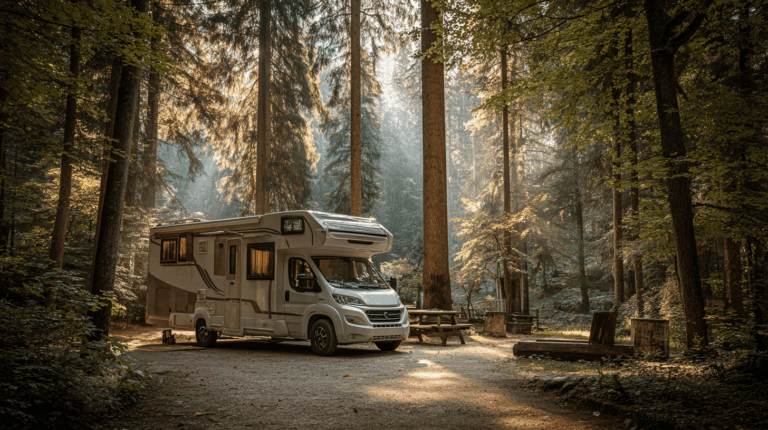
There’s a predictable arc to how most people enter RV life.
Curiosity builds slowly. Then something tips it – a road trip, a conversation, a particularly good campfire – and the curiosity accelerates. Research begins. YouTube rabbit holes. Forum deep dives. Showroom visits. And then, somewhere in that momentum, a purchase happens. The leap from interested to owner often skips the most valuable step in the entire process. Living in one first.
Heads up. Some of the links here are affiliate links with Amazon and other partners I trust.
You pay nothing extra. I earn a small commission. Everyone wins – and the road stays funded.
Renting Is Not a Compromise
Let’s clear that up immediately, because the word “renting” sometimes carries a reluctant energy — like it’s the thing you do when you can’t afford to buy, or when you’re not quite ready to commit. That’s the wrong frame entirely.
Renting, done intentionally, is research. It’s the most honest form of due diligence available to anyone considering a significant lifestyle investment. You’re not settling for the rental experience. You’re using it to stress-test the ownership decision before it costs you six figures and a storage unit fee.
The showroom can tell you how many slide-outs a rig has. A week on the road tells you whether the layout actually works for the life you’re building. Those are very different kinds of information.
The Rental Landscape Is Broader Than You Think
Most people, when they imagine renting an RV, picture a quick weekend experiment in a large, slightly battered fleet vehicle from a national rental company. That option exists — and it serves a purpose — but the rental market has expanded considerably.
Peer-to-peer platforms like RVshare and Outdoorsy now connect travelers directly with private RV owners. This means you can often rent newer, better-maintained rigs in a wider range of styles… including the specific classes you’re actually considering buying. Want to spend a week in a Class A before committing to one? You can probably find one on either platform within a reasonable radius.
National rental fleets like Cruise America offer standardized Class C units that are useful for a baseline experience, even if the specific model isn’t your target. The point isn’t to fall in love with the rental. The point is to understand the rhythm.
Regional dealers are an underused option. Some will quietly arrange extended rentals, particularly in slower seasons, especially if you position the conversation honestly: you’re evaluating before purchasing. Dealers who want your long-term business have reason to work with you.
The rental option that matches your actual target rig, not just “an RV”, is worth the extra effort to find.
There are peer-to-peer platforms where individuals rent out their own rigs — Outdoorsy being one of the largest and most well-reviewed. There are national rental fleets with standardized units. There are regional companies with newer inventory.
The Weekend Test Teaches You Almost Nothing
Here’s the uncomfortable truth about a three-day rental. It’s long enough to feel exciting. It’s not long enough to feel real.
A weekend tells you whether you like the idea of RV life. A week starts to show you the edges. Two weeks begins to reveal the actual texture of it — where clutter accumulates, how the driving fatigue builds, whether your travel companion settles in or stays unsettled, which storage decisions you made on day one that you’d undo on day five.
The questions a longer rental answers are the ones that matter most:
- Does the layout support how you actually move through a day, or does it fight you?
- Is the driving experience sustainable over real distances, or does it wear on you?
- Does your travel companion — human, canine, or feline — genuinely adapt, or merely tolerate?
- Does the lifestyle energize you after a week, or does it quietly exhaust you?
None of those questions have honest answers after 72 hours.
Many rental companies offer weekly and monthly rates that are meaningfully lower per night than the daily rate. A 30-day rental, if you can arrange it, is arguably the most valuable single step you can take before signing a purchase agreement. Think of it as tuition — and compare that cost against the depreciation on a rig you might decide isn’t right for you after six months of ownership.
The tuition is cheaper.

What I Learned From My Class C Rental
When I rented a Class C a while back, I came away with something more useful than enthusiasm. I came away with data.
I learned that driving comfort matters more to me than I’d anticipated. The ride felt stiffer than expected. Crosswinds were present in a way that required attention. It wasn’t a dealbreaker — but it was information. It’s part of why, when I eventually sat in the driver’s seat of a Class A, the difference registered immediately and clearly.
I also learned something about Penny. She traveled well enough — but “well enough” and “genuinely settled” aren’t the same thing. Window placement matters to her. Noise levels matter. The ambient hum of a campground hookup versus a generator matters. None of that showed up in any spec sheet. All of it showed up in a week on the road.
That rental didn’t tell me which rig to buy. It told me what to look for. Which is more valuable.

The Rent-to-Buy Conversation
Worth knowing: some dealerships offer rent-to-buy programs, where a portion of your rental cost can be applied toward a purchase if you decide to move forward.
Terms vary and not every dealer offers it, but it’s a conversation worth having — especially if you’re seriously evaluating a specific unit. The practical benefit is financial. But the psychological shift it creates may matter more.
Instead of asking “Do I want this?” from the outside looking in, you’re asking “How did this actually work for me?” from the inside looking out. That’s a fundamentally better question to be answering.
Many companies offer weekly and monthly rates. Outdoorsy is a good place to start that conversation — search by class, length, and availability window before committing to anything.
The Honest Case for Renting Longer
If your travel plans are still forming — if you’re not yet certain how many nights a year you’d realistically use an RV, or which style of travel suits you — renting for a season before buying anything isn’t hesitation. It’s calibration.
For me, the idea of another intentional rental while the 63 national parks plan takes shape feels less like delaying the decision and more like informing it. The mission is still sharpening. The right platform should emerge from that clarity, not race ahead of it.
If you’re at a similar point, genuinely curious but not yet certain, a few weeks on RVshare or Outdoorsy might answer more questions than another afternoon on a dealer lot.
Browse what’s available in your region. Filter by the class you’re actually considering. Read the owner reviews carefully… they often reveal the operational realities that listings don’t mention. hen go live in one for a while.
The purchase decision will be clearer on the other side.
Ready to Start With a Rental?
The smartest first step is usually the simplest one — get in a rig before you buy one. Here’s where to start:
Find your test rig — Outdoorsy has peer-to-peer rentals across every class of vehicle. Class C, Class A, trailers, vans — search by location and date and see what’s actually available near you.
Stay somewhere worth the stop — Harvest Hosts puts you on farms, wineries, and working landscapes across the country. Add a membership to your rental trip and the experience starts to feel like the real thing.
When a campsite isn’t available — Hotels.com covers the nights when four walls make more sense than a campground.
About this series: The RV Question is a 12-part exploration of RV life written from the perspective of a photographer and storyteller planning to visit all 63 U.S. national parks. It’s not a buying guide. It’s a thinking guide — for anyone considering a significant change in how they move through the world.