If you’ve followed this series from the beginning, you’ve walked the same loops I have. From voice memos on quiet morning walks to RV show floors to napkin math to national park size restrictions to the specific moment a driver’s seat changed my thinking about what comfort actually means on the road.
We’ve covered a lot of ground. Slowly, on purpose. And now we’re here. Not at a purchase announcement. Not at a dramatic reveal. At a checkpoint — which is exactly where I said we’d end up when this series began.
Let me tell you honestly where I stand.
What I Know Now That I Didn’t Know Then
When I started recording these thoughts on morning walks, I was carrying a vague question and a lot of unexamined assumptions. I assumed the decision was primarily financial. It isn’t. The financial piece matters, but it’s downstream of the mission, and getting the mission right is what makes the financial piece land correctly.
I assumed bigger meant better. It doesn’t. Under 30 feet is not a compromise. It’s a strategy. The rigs that fit where I want to go are more valuable than the ones that don’t, regardless of what they offer in living space.
I assumed driving comfort was something you adapted to. You don’t, not really. You accommodate it. There’s a difference. Accommodation accumulates fatigue. Comfort accumulates miles.
I assumed the cat factor was a footnote. It isn’t. Penny’s comfort shapes the system in ways that eliminated certain options entirely and clarified others. That’s not a sentimental observation. It’s a design constraint — and design constraints, taken seriously, produce better decisions.
And I assumed this was a purchase decision. It might not be. Not yet.
What the Series Actually Did
I want to name something that happened in the writing of these posts that I didn’t fully anticipate.
The act of thinking out loud — publicly, slowly, without rushing to a conclusion — changed the quality of my thinking. Not because an audience was watching. Because the commitment to being honest in writing forces a kind of clarity that private research doesn’t always produce.
When you write something down and publish it, you can’t hold two contradictory positions simultaneously the way you can in your own head. You have to choose. You have to follow the logic where it leads rather than where you want it to go.
The logic of this series led somewhere I didn’t entirely expect. It led toward patience.
Not hesitation. Not fear of commitment. Patience… the kind that comes from understanding that the mission is long and the platform should serve it, not race ahead of it.
Where the Thinking Has Landed
Here’s what I’m leaning toward, stated as clearly as I can manage.
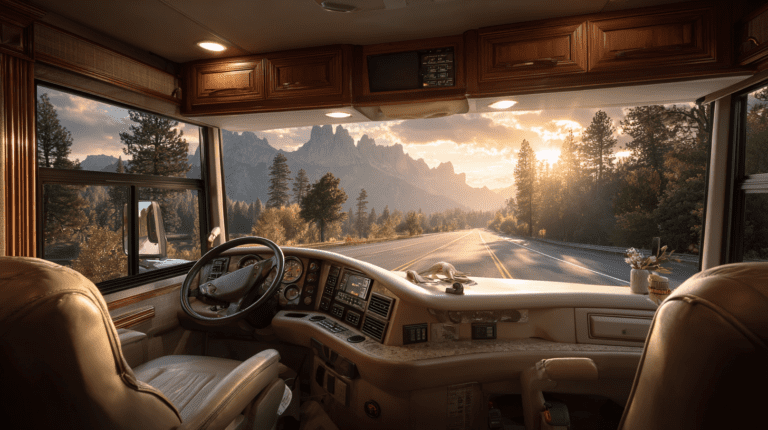
The Class A format, specifically in the under-30-foot range, aligns better with the way I want to travel than any other configuration I’ve evaluated. The driving comfort is real. The space supports the creative workflow. The basement storage solves the gear problem. The size keeps the national park doors open.
The used market is where I’m likely to find the best value when the time comes. Someone else has already absorbed the steepest depreciation. A well-inspected, well-maintained three-year-old rig at a lower entry point is probably smarter than a new one bought under show-floor conditions.
The two-vehicle system is not optional for this mission. Whatever form it takes, a small Jeep or SUV that works both as a toad and as an explorer — it’s part of the plan, not an afterthought.
And the timing is not now.
The 63 national parks project is real and it’s building momentum. The travel rhythm will clarify over the next several months. The right rig, watched for patiently in the used market, is more likely to appear on the right terms if I’m not under pressure to act. Another intentional rental or two will answer the questions that research can’t.
None of that is indefinite deferral. It’s a sequenced approach. Mission first. Platform second. Purchase third.

What I Still Don’t Know
Honesty requires naming these too.
I don’t know how many nights per year I’ll realistically travel once the parks project is fully underway. The number I imagine and the number that actually develops may be different. That number matters more than almost anything else in the ownership calculation.
I don’t know whether Penny will settle fully into extended RV travel or whether she’ll reach a threshold beyond which the road stops agreeing with her. The Season 2 experience was encouraging. Four states is not sixty-three parks.
I don’t know whether the Class A format I experienced in one rig on one afternoon will hold up across different models and different driving conditions. The right response to that is more test drives, not more research.
And I don’t know, with any certainty that is, how this next chapter will actually unfold. That uncertainty used to feel like a problem. It doesn’t anymore. It feels like the appropriate condition for someone standing at the beginning of something.
What This Series Was Really About
I want to say something to the reader who followed all of this. Whether you’re considering an RV or not, the process of this series is the thing worth keeping.
Define the mission before you choose the vehicle. Price the system, not the unit. Let comfort be a sustainability question, not an indulgence. Test before you commit. Know whether you sleep better owning or accessing. And give yourself permission to be in a transitional season without treating that transition as a problem to be solved urgently.
The RV question is really a life question. How do I want to move through the next decade? What platform best supports that rhythm? And am I making this decision from clarity or from the emotional pull of a showroom on a sunny afternoon?
Those questions don’t only apply to recreational vehicles. They apply to almost every significant decision a person makes in a season of change. That’s why this series has always been more about the thinking than the thing.
The Road Ahead
The 63 national parks are waiting.
Not impatiently. Parks don’t have schedules. They have seasons, and weather, and light that changes by the hour. They’ll be there whether I arrive in a Class A this year or a rental next spring or something I haven’t fully envisioned yet.
The engine will start when the timing is right. The mission is already underway. And Penny, as I write this, has found the best patch of morning light in the room, the one that moves across the floor just fast enough to be interesting and just slowly enough to be worth staying in.
She’s been doing that since before any of this began. She’ll be doing it on the road too I am quite sure :).
Heads up. Some of the links here are affiliate links with Amazon and other partners I trust.
You pay nothing extra. I earn a small commission. Everyone wins – and the road stays funded.
Still Thinking It Through?
If this series has you sitting with your own version of these questions, here are a few ways to keep the exploration moving:
Try before you decide — Outdoorsy is where intentional rental starts. Let a real trip answer the questions research can’t.
Find a different kind of overnight — Harvest Hosts puts you on farms, wineries, and working landscapes across the country. A good way to feel the lifestyle before you commit to the platform.
When the road leads somewhere without a campsite — Hotels.com is there for the nights that call for something different.
About this series: The RV Question is a 12-part exploration of RV life written from the perspective of a photographer and storyteller planning to visit all 63 U.S. national parks. It’s not a buying guide. It’s a thinking guide — for anyone considering a significant change in how they move through the world.