A Photographer’s Return to the High Country — and the Light Above Treeline That Changes Everything
Every photographer eventually builds a list of landscapes they hope to return to. Not the first visit — the return. The one where you know enough about the place to stop being a tourist and start being a photographer.
I have been to Rocky Mountain National Park before. I remember the scale of it — Trail Ridge Road climbing above the treeline into a tundra landscape that feels more like Alaska than Colorado, the elk in the meadows at Moraine Park in the golden hour, the way the mountains reflect in Bear Lake on a still morning before the day hikers arrive. I remember being moved by all of it. What I don’t remember doing is slowing down enough to find the specific light that makes this particular landscape different from every other mountain park I have visited.
That is what this project is for. Not collecting parks but returning to them with a different intention — patient, unhurried, willing to wait for the light rather than just pass through it.
Rocky Mountain National Park sits at the top of the continent. The light up here is thinner, sharper, and more changeable than anywhere in the lower park system. It rewards that patience in ways I am only beginning to understand.
The Landscape That Draws People Here
Rocky Mountain National Park covers 415 square miles of the Front Range of the Colorado Rockies, straddling the Continental Divide at elevations ranging from 7,860 feet at the lowest valley floor to 14,259 feet at the summit of Longs Peak. Trail Ridge Road — the highest continuous paved highway in the United States, cresting at 12,183 feet — crosses the park from Estes Park on the eastern side to Grand Lake on the western side, and the 11 miles above treeline along its route constitute one of the most extraordinary drives in the national park system.
The park divides broadly into three photographic zones. The montane valleys — Moraine Park, Horseshoe Park, Kawuneeche Valley on the western side — provide the wildlife-rich meadow photography that the high country cannot: elk grazing at dawn, beaver ponds reflecting the peaks above, aspen groves going gold in September and October. The subalpine zone, from roughly 9,000 to 11,500 feet, produces the classic lake-and-peak compositions — Bear Lake, Nymph Lake, Dream Lake, Emerald Lake — that most visitors come specifically to find. And the alpine tundra above treeline, accessible along Trail Ridge Road, offers a completely different landscape: exposed, wind-scoured, vast, and photographed by far fewer visitors than the valley destinations below.
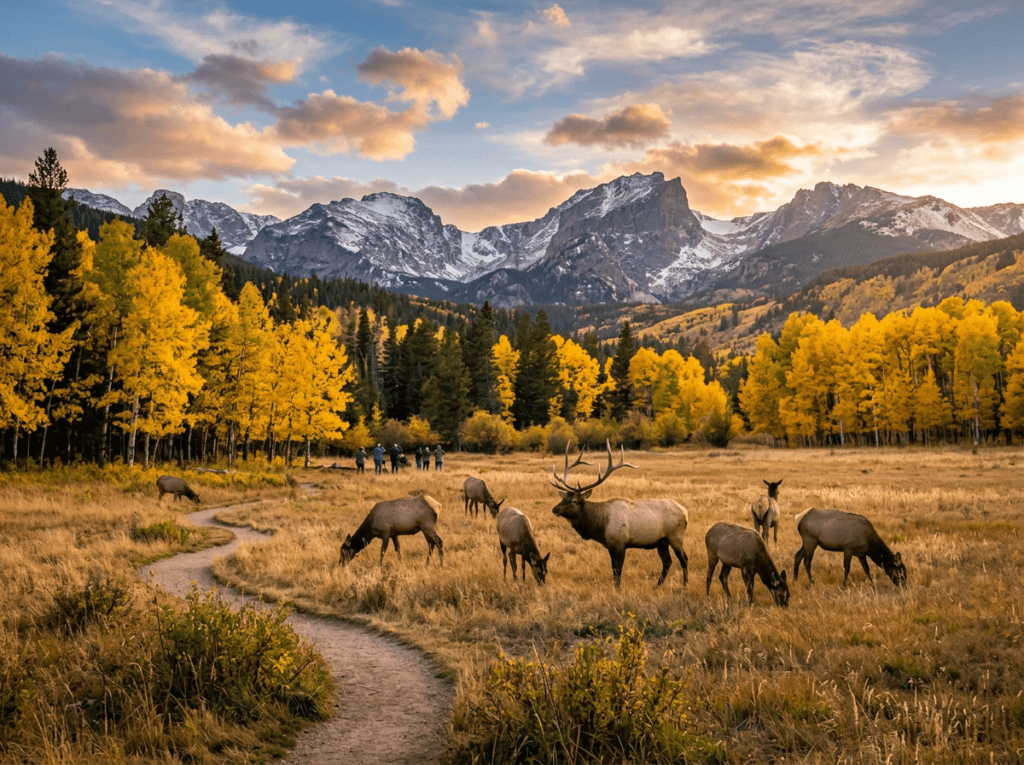
The elk rut in September and early October is one of the great wildlife photography events in the national park system — bulls bugling at dawn in the meadows below the peaks, antlers catching the first light, the behavior dramatic and close enough for a mid-range telephoto. For photographers who have never experienced it, the Moraine Park and Horseshoe Park meadows in the first two weeks of October are as rewarding as any wildlife destination in North America.
The Photographer’s Chase
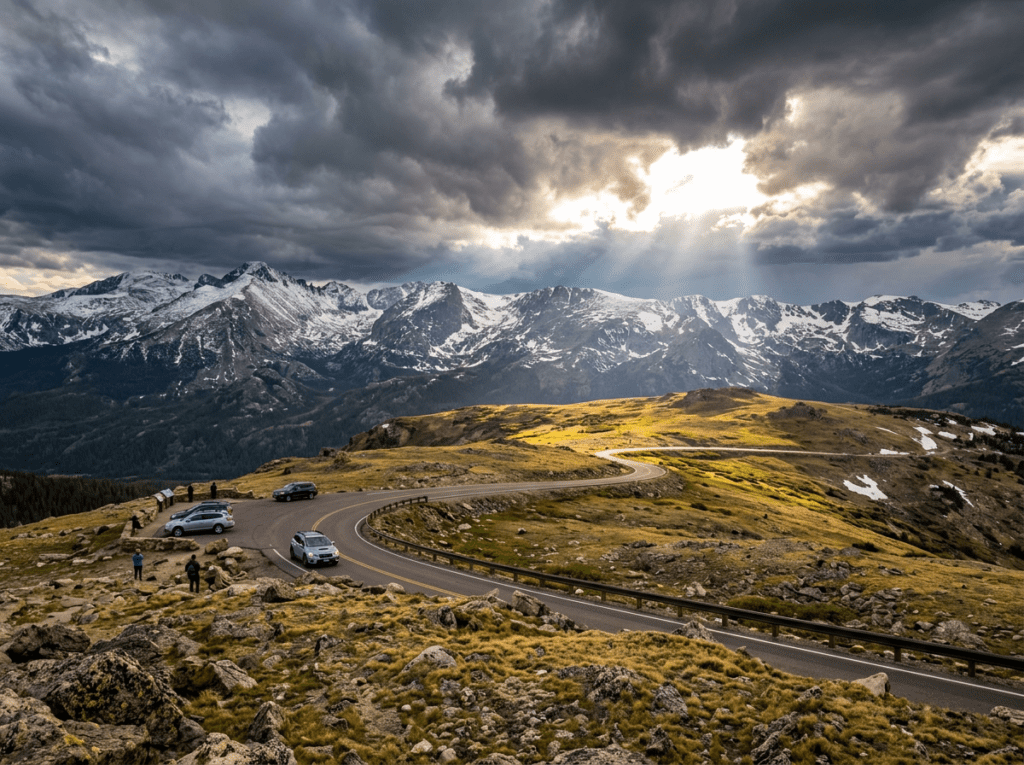
The light above treeline on Trail Ridge Road is the photography that most visitors to Rocky Mountain miss entirely. The standard visitor experience is to drive the road, stop at the overlooks, and continue through — a perfectly reasonable way to see the tundra landscape. The photographer’s version is different: park at the Rock Cut or Tundra Communities trailhead, walk out onto the tundra on foot, and wait for the afternoon storm light that builds over the Continental Divide virtually every summer afternoon and much of the shoulder season.
The storm light above treeline is the image I am most eager to return for. Afternoon thunderstorms build over the peaks with remarkable speed at 12,000 feet — a clear sky at noon becomes a dramatic cloudscape by 2pm, and the light that breaks through the storm cells and illuminates sections of the tundra while the rest stays in deep shadow is some of the most dramatic and most specific landscape light in the Rocky Mountain system. The exposure on open tundra at that elevation during an electrical storm is real and requires attention to the weather and a clear exit plan. But the light, in the window before the storm arrives and in the break after it passes, is extraordinary.
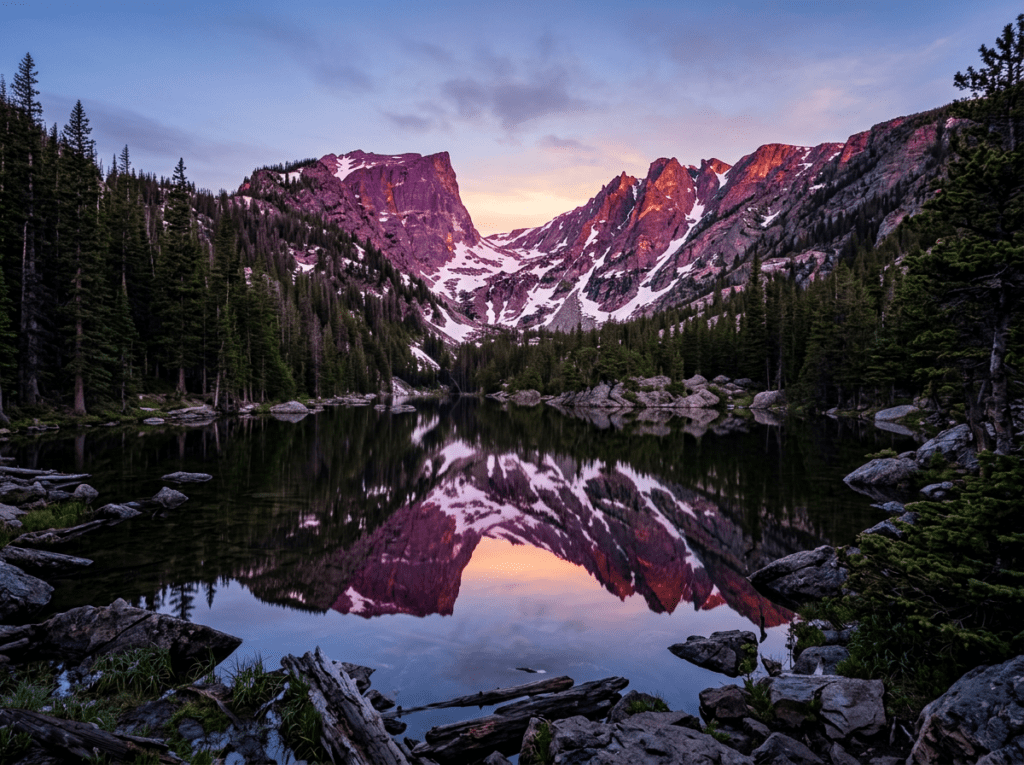
The Bear Lake corridor is the other primary photography target — a network of short trails connecting a series of glacial lakes with direct views of Hallett Peak and Flattop Mountain. Dream Lake is the signature composition: a relatively short hike from the Bear Lake trailhead, the lake framed by spruce and fir with the peaks rising directly above, the reflection in still morning water before the wind comes up. I photographed this on my first visit and I know exactly what I did wrong — I arrived too late, the wind had already broken the reflection, and I settled for a competent but uninspired image. The return trip is about arriving before sunrise and having the composition ready before the light and the stillness are both present at the same time.
The fall aspen photography is the third major subject — the aspen groves on the eastern slopes of the park, particularly along Bear Lake Road and in the Horseshoe Park area, peak in late September and produce the gold-on-evergreen-on-granite color combination that defines Colorado fall photography. A telephoto lens compressing the aspen color against the rocky peaks behind produces a more interesting image than the wide-angle grove shot that most photographers attempt.
Visiting the Park
Rocky Mountain requires a timed entry reservation during peak season — typically late May through mid-October — for entry into the Bear Lake Road corridor and the park’s main entrance. Reservations open on recreation.gov months in advance and the Bear Lake corridor slots in particular go quickly. The timed entry system has meaningfully reduced the parking chaos that characterized the park before its introduction. Check current requirements and reservation windows at nps.gov/romo before finalizing trip dates.
The elk rut window — roughly September 10 through October 10 — is the single most compelling reason to visit for wildlife photographers, and it overlaps productively with the early fall aspen color. This two-week overlap in late September is the park’s photography sweet spot: elk in the meadows at dawn, aspen color on the slopes, tundra storm light in the afternoon, and the early autumn chill that makes being above treeline manageable.
Trail Ridge Road typically opens in late May and closes in mid-October, snow dependent. The western side of the park around Grand Lake is less visited than the Estes Park side and offers a quieter approach to some of the same high country, with the Kawuneeche Valley providing excellent elk and moose photography in a less crowded setting than Moraine Park.
Where to Stay
There is no in-park lodging at Rocky Mountain — the closest option is the YMCA of the Rockies, a sprawling conference and lodge complex just outside the Beaver Meadows entrance that offers cabin and lodge accommodation in a setting that feels inside the park even if it technically is not. Estes Park, the primary gateway town on the eastern side, has an extensive lodging range from independent mountain lodges to chain hotels, all within a few miles of the park entrance. For photographers targeting the Bear Lake sunrise, being in Estes Park means a 4am departure is practical.
Grand Lake on the western side is the quieter base camp option — a small mountain town with genuine character and direct access to the Kawuneeche Valley wildlife corridor and the western Trail Ridge approach. Staying on the western side and driving Trail Ridge Road from west to east puts you moving toward the morning light rather than away from it.
For campers, Moraine Park Campground is the largest and most centrally located, open year-round and positioned directly in the elk rut meadows. Glacier Basin Campground provides the closest camping to the Bear Lake corridor. Both are reservable through recreation.gov and fill quickly for peak season. RVs up to 35 feet are accommodated at both, though the mountain roads to some sites require careful navigation in larger rigs.
If I Were Planning My First Visit
I would go in late September. The elk rut, the early aspen color, the tundra storm light, the Bear Lake reflections — all of it converges in a ten-day window that is as complete a photography experience as Rocky Mountain offers.
I would be at Dream Lake before sunrise on the first morning — earlier than I was the first time, with the composition already decided and the tripod set up in the dark. Waiting for the alpenglow rather than arriving in the middle of it. That is the correction I owe this lake.
Then Moraine Park at dawn for the elk. A long lens, a low position, the meadow still cold and the bulls still active before the day warms and the light goes flat. And in the afternoon I would drive Trail Ridge Road and park at the Rock Cut and walk out onto the tundra and watch the storm build over the Divide. I would not leave when the clouds started to look serious. I would stay until I understood what the light was going to do — and then I would make that photograph.
The Light I’m Curious About
It is the storm light on the tundra.
Specifically the moment after an afternoon thunderstorm has passed over the Continental Divide and the clouds are still dramatic and moving and the sun finds a gap and sends a shaft of light down onto the tundra — illuminating a section of the high alpine plateau while the peaks around it stay dark under the cloud cover. At 12,000 feet, with the full sweep of the Rocky Mountain front range visible in every direction, that light does not arrive gently. It arrives like something that means it.
I was in this park before and I drove Trail Ridge Road in the middle of a clear afternoon and thought I understood it. I did not understand it. I understood what it looks like when nothing interesting is happening. The return trip is about being there when something interesting is happening — and at 12,000 feet in Colorado, that usually involves weather.
A Deeper Exploration
This article is part of my ongoing project documenting and photographing all 63 national parks across the United States.
Along the way, I’m creating deeper guides that explore photography locations, travel planning, seasonal light conditions, and personal reflections from the road. Rocky Mountain is one of the parks I am most motivated to return to with a camera and a clearer intention — the first visit showed me what it was. The next visit is about understanding what it can be.
Because some landscapes don’t give you their best light the first time. They make you come back for it.
One more thing – just between us.
Trail Ridge Road draws the bulk of Rocky Mountain’s visitors along its 48-mile crest and the pull-outs fill quickly on summer mornings. Here are three places where the park reveals itself more quietly.
The Wild Basin area in the park’s southeastern corner is the waterfall and wildflower section that most visitors coming from Estes Park never find — Calypso Cascades and Ouzel Falls accessible on a trail that climbs through the montane forest with almost none of the Trail Ridge crowd density. The basin in early July, when the wildflower bloom is at peak and the waterfalls are running full from the snowmelt, is some of the finest subalpine landscape photography in the park.
For the elk photography that Rocky Mountain is famous for, the Moraine Park meadow at dawn during the September rut is the specific condition that elk photographers travel from across the country to experience — the bull elk bugling across the meadow in the low morning light, the frost on the grass, the aspens beginning to turn gold on the slopes above. No other time of year and no other location in the park concentrates that combination of light and behavior and color in the same frame.
And for the Colorado mountain town experience that makes the park visit more than just the drive, the town of Grand Lake on the park’s western entrance — quieter and more genuinely Colorado than Estes Park — sits on the shore of Colorado’s largest natural lake with the Never Summer Mountains above and provides the western approach to Trail Ridge Road that sees a fraction of the eastern entrance traffic. Worth the extra drive for the light on the lake at dawn and the character of a mountain town that the tourism industry has not yet fully consumed.