A Photographer’s Return to Alaska — From the Water, From the Land, and This Time With Bear Spray
When planning a visit to America’s national parks, some destinations surprise you completely. Kenai Fjords was not on my careful itinerary. It happened on a drive.
I was in the early days of my 50 at 60 journey — Alaska was state number two — and I found myself driving south from Anchorage toward the coastal town of Seward on a morning with no fixed agenda. Seward sits at the head of Resurrection Bay, a narrow fjord cutting into the Kenai Peninsula, and when I arrived I saw a sign for a boat tour departing that afternoon. I booked it on the spot. No research, no planning, no particular expectation beyond getting out on the water.
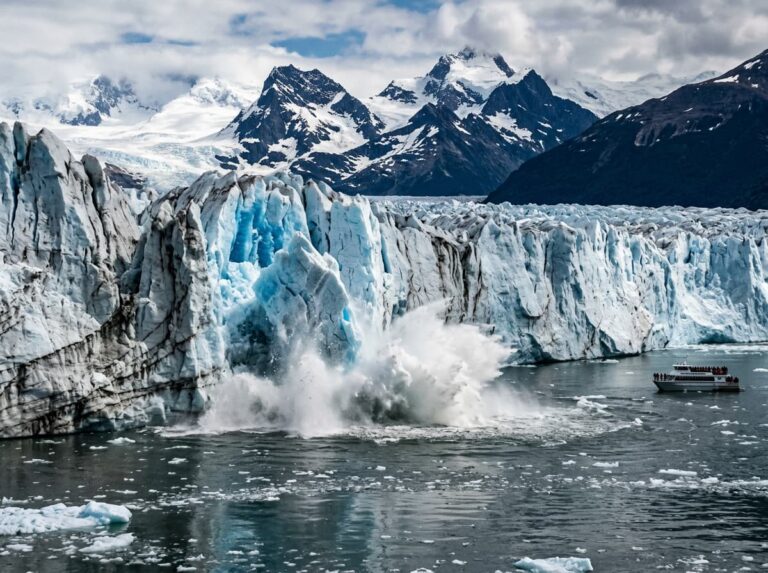
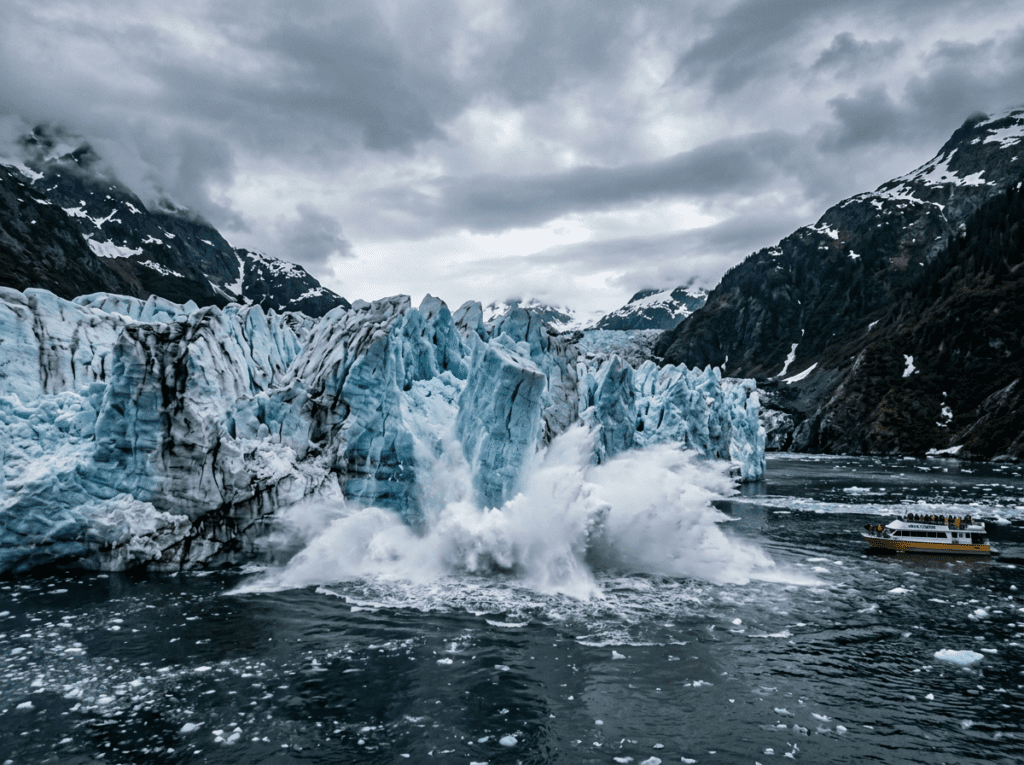
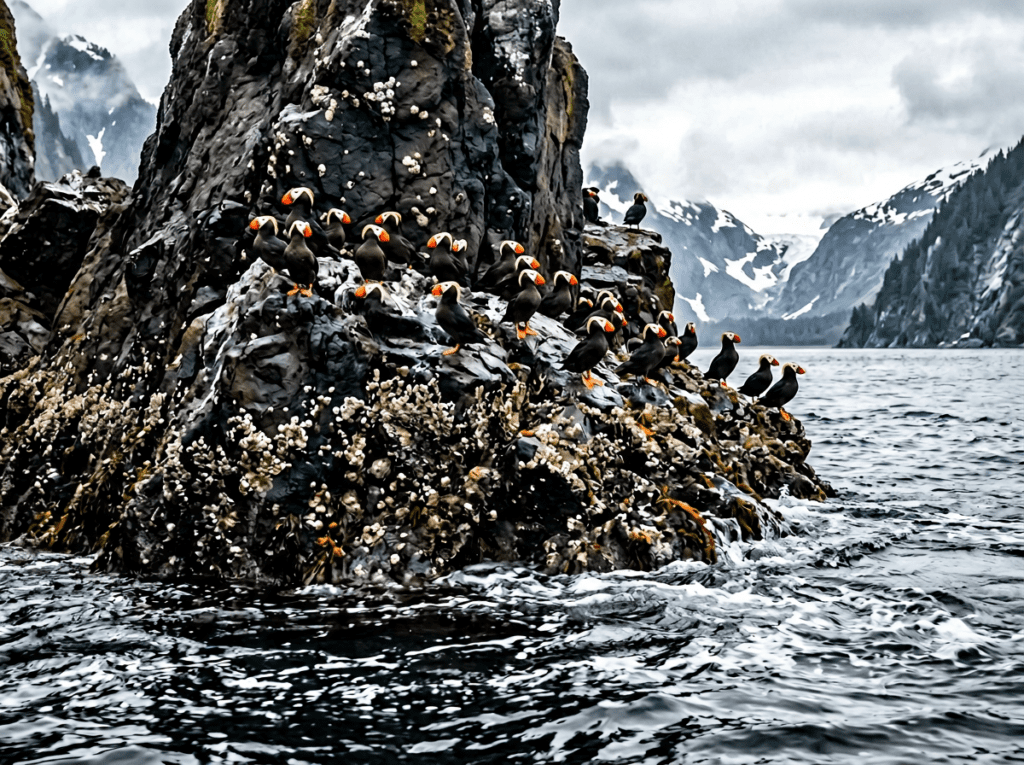
That spontaneous afternoon boat tour turned out to be the highlight of that entire season of travel. Possibly of the whole 50 at 60 journey. Humpback whales surfacing close enough to feel the displacement of water. Tufted puffins on rock outcroppings, improbable and perfect. Bears on the coastal shoreline watching the boat with the mild curiosity of animals that have nothing to fear. And then the glacier — the calving face of a tidewater glacier, blue-white and ancient, dropping sections of ice into the water below with a sound like a rifle shot and a wave that rocked the boat. I stood on the deck with a camera and tried to do justice to all of it. I am not sure I succeeded. But I was there, and that counted for something.
The land visit was less triumphant. I hiked partway down a well-marked trail, came across some fresh bear scat in the middle of the path, did a quick calculation involving my solo status and the complete absence of bear spray on my person, and made the executive decision to turn around and walk back to the trailhead at a pace that could generously be described as brisk. Alaska has a way of clarifying your priorities.
The return trip has a clearer plan. Boat tour — definitely. Land exploration — also definitely, but with the appropriate equipment and a little less improvisation.
The Landscape That Draws People Here
Kenai Fjords National Park covers nearly 670,000 acres of the southern Kenai Peninsula — a landscape defined by the collision of ice, ocean, and mountain in proportions that are difficult to comprehend from a map. The Harding Icefield, one of the largest icefields in the United States, blankets the park’s interior at elevations above 3,000 feet — a remnant of the last ice age covering nearly 700 square miles, feeding more than 40 named glaciers that flow down from it toward the sea. The tidewater glaciers that reach the ocean are the most dramatic expression of this — active, calving, constantly changing, and accessible by boat from Seward in a way that makes Kenai Fjords one of the most accessible glacier experiences in the national park system.
The coastline the glaciers have carved is the fjord landscape that gives the park its name — steep-walled inlets, sea stacks, rocky outcroppings, and protected coves where the marine wildlife concentrates in densities that exist nowhere else in the lower 48. The waters of Resurrection Bay and the outer coast support humpback and orca whales, Steller sea lions, harbor seals, sea otters, Dall’s porpoises, and a seabird population that includes tufted and horned puffins, murres, kittiwakes, and the pigeon guillemot. For wildlife photographers, the boat tour into the fjords is not a scenic cruise. It is a working session.
The land portion of the park — the trails accessible from Seward and the Exit Glacier area — provides the terrestrial counterpoint to the marine experience. Exit Glacier is the most accessible glacier in Alaska, reachable on foot from the Kenai Fjords Visitor Center, and the hike to the Harding Icefield overlook above it is one of the most dramatic day hikes in the national park system — a strenuous climb through forest and alpine terrain to the edge of a landscape that looks like the surface of another planet.
The Photographer’s Chase
The boat tour is the non-negotiable starting point and it is worth booking the longest version available — the full-day tour that reaches the outer coast and the Northwestern Fjord section of the park, rather than the shorter Resurrection Bay tour. The outer coast is where the tidewater glacier faces are largest, the marine wildlife densest, and the landscape most remote. Several operators run tours from Seward; Major Marine Tours and Kenai Fjords Tours are the primary options, and both have naturalist guides whose knowledge of where the wildlife concentrates on a given day is worth more than any research you can do in advance.
Wildlife photography from a boat requires a different discipline than land photography. The platform is moving, the subjects are unpredictable, and the light on the water is often flat and overcast — which is actually better than harsh sun for the seal and sea lion haul-out photography, where the diffused light reveals the texture and color of the animals without the blown-out highlights that direct sun creates. A fast shutter speed is the priority — 1/1000th of a second or faster for the whale surfacing shots, where the moment lasts two seconds and the spray around the blowhole is the detail that makes the image. A 100-400mm zoom gives the flexibility to go from the wide fjord landscape to the close wildlife subject without changing lenses on a rocking deck.
The Exit Glacier photography on land is the most accessible and the most technically manageable of the park’s photography subjects. The glacier is a 20-minute walk from the visitor center and the trail system provides multiple vantage points along the lateral moraine — the rocky ridge deposited by the glacier’s advance — that allow close approach to the ice face without entering restricted zones. Historical markers along the trail show where the glacier’s edge stood in previous decades, documenting the retreat in a way that is both photographically interesting and genuinely sobering. The blue of the glacier ice — the deep crevasse blue that occurs where the ice is dense enough to absorb the red wavelengths of light — is the color that most Exit Glacier photographs fail to capture accurately. It requires shade, not direct sun, and a position that puts you looking into the ice rather than across the top of it.
The Harding Icefield Trail is the land photography commitment of the park — 8.2 miles round trip with 3,500 feet of elevation gain, climbing from the forest floor to the edge of the icefield itself. The view from the top, looking out across a white expanse that extends to the horizon with nunataks — isolated mountain peaks — rising from the ice surface, is the kind of view that resets your sense of scale completely. It is a serious day hike requiring preparation, weather awareness, and bear spray. I will have the bear spray this time.
Visiting the Park
Kenai Fjords is accessible from late May through September for most visitors — the boat tours operate in this window, the Harding Icefield Trail is snow-free from June through September, and the marine wildlife activity peaks in July and August when the salmon runs draw the humpbacks and orcas into the bay in concentrated numbers. The Exit Glacier area is accessible year-round and is one of the few Alaska national park experiences available in winter, though the Harding Icefield Trail is snow-covered and requires winter mountaineering experience outside the summer window.
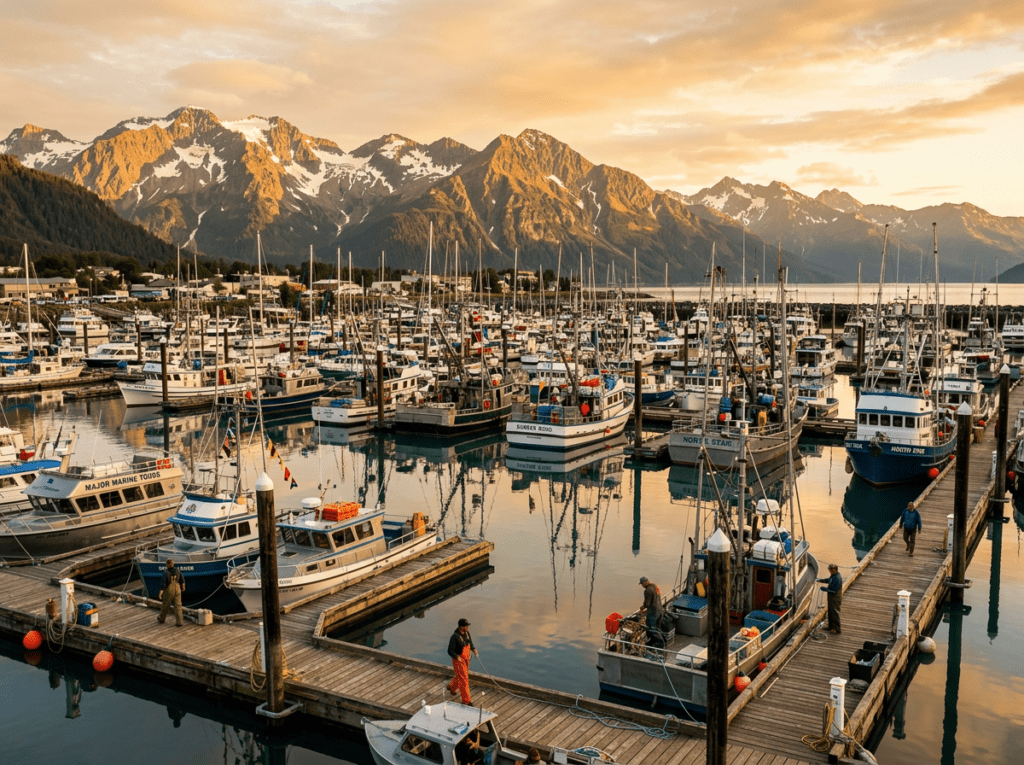
Seward is the gateway — a genuine Alaskan fishing and tourism town with real character, not a manufactured gateway community. The small boat harbor is where the tour operators are based and where the fishing boats come and go, and the atmosphere of the harbor in the early morning before a tour departure has a working-Alaska energy that the more polished gateway towns of the lower 48 cannot replicate. Book boat tours in advance for peak season — July and August tours fill weeks ahead, and the full-day outer coast tours have limited capacity.
The drive from Anchorage to Seward on the Seward Highway is 127 miles of some of the most scenic road in Alaska — Turnagain Arm, the mountain passes, the Kenai River corridor. Allow three hours and plan stops. The highway itself is a photography trip, not just a transit route.
Where to Stay
Seward has a good range of lodging for its size — the Van Gilder Hotel downtown is a historic 1916 property with character that most chain properties cannot approximate. The Harbor 360 Hotel sits directly on the small boat harbor with water views and walking distance to the tour operators. Several bed and breakfasts in the residential neighborhoods above town provide a quieter, more local experience.
For the Exit Glacier area specifically, the Kenai Fjords Glacier Lodge — a remote wilderness lodge accessible only by boat or floatplane, operated inside the park on Pedersen Lagoon — is the most immersive in-park lodging experience available. It is expensive and requires advance planning, but it places you inside the park with no road access and no day visitors, with the glacier and the wildlife entirely to yourself in the early morning and evening hours. For a photographer who wants to be at the glacier face at dawn without a commute, it is the right answer.
Exit Glacier Campground, a walk-in primitive campground near the glacier, is the most accessible in-park camping and puts you at the glacier trailhead for early morning starts. RV travelers base in Seward, where the city campground at the small boat harbor provides full hookup sites with harbor views — a strong option that keeps you close to the morning boat tour departures.
If I Were Planning My First Visit
The first visit has already been made, spontaneously and imperfectly and memorably. The return looks like this.
Two full days in Seward minimum. Day one on the water — the full-day outer coast tour, departing early, camera ready from the moment the harbor mouth opens into Resurrection Bay. Whale surfacing shots practiced and ready. Puffin positions noted on the way out to be worked on the return. The glacier face approached as slowly and as closely as the captain will allow, with the long lens ready for the calving and the wide angle ready for the scale.
Day two on land — Exit Glacier in the morning before the day visitors arrive, working the ice face in the shade light that reveals the blue, then an afternoon push up the Harding Icefield Trail as far as conditions and energy allow. Bear spray on my person. Not negotiable. The trail I turned around on the first visit is still there and I intend to finish it this time, properly equipped and with a realistic sense of what the Kenai Peninsula wilderness asks of solo hikers.
And I would spend one evening at the harbor as the fishing boats return — the working Alaska harbor light in the long Alaskan summer evening, when the sun stays up until 11pm and the golden hour lasts three hours and the boats come in with the day’s catch and the crew’s exhaustion visible in the way they move. That is not the national park. That is the town that lives next to it. But it is part of the story of this place, and it is worth an hour and a camera.
The Light I’m Curious About
It is the icefield light.
Not the glacier at sea level, which I have seen. The view from the top of the Harding Icefield Trail, looking out across 700 square miles of ice in the Alaskan summer light at elevation — the nunataks rising from the white surface, the sky doing whatever the Alaska sky does at that altitude, and the complete absence of any reference point that reminds you what century you are standing in. The icefield looks the way it looked before people arrived in Alaska. It will likely look the same after we are gone. Standing at the edge of it in the long evening light of an Alaskan summer, when the sun is still high at 9pm and the ice surface catches it at an angle that turns the white into gold — that is the light I turned around and missed.
I turned around because I was alone and unprepared and the bear scat on the trail was a reasonable argument for caution. I respect that decision. But I intend to make the other decision next time, with the right equipment and a companion and the bear spray that should have been there the first time.
Some photographs require a second attempt. This one requires arriving prepared enough to deserve it.
A Deeper Exploration
This article is part of my ongoing project documenting and photographing all 63 national parks across the United States.
Along the way, I’m creating deeper guides that explore photography locations, travel planning, seasonal light conditions, and personal reflections from the road. Kenai Fjords was the park that turned a spontaneous afternoon into the highlight of a season — and one of the clearest reminders this project keeps offering that the best experiences are sometimes the ones you didn’t plan.
Because sometimes the right trip starts with a sign in a harbor town and a last-minute boat ticket. And sometimes it ends halfway down a trail with a very good reason to turn around and a mental note to come back better prepared.
One more thing – just between us.
The boat tour from Seward delivers the full Kenai Fjords experience efficiently and the wildlife it produces is genuinely extraordinary. But here are three ways to go deeper into the Kenai Peninsula landscape that most boat tour visitors never reach.
The Exit Glacier area — the only road-accessible section of the park — provides the close-range glacier photography that the boat tour sees only from a distance. The Harding Icefield Trail climbs from the glacier to the icefield above in one of the most demanding and most rewarding day hikes in Alaska — the full icefield visible from the upper trail in a view that contextualizes the glacier below as the small edge of a vastly larger ice system. The historic marker posts along the trail record where the glacier terminus stood in previous decades, and the distance between them tells the retreat story more honestly than any sign.
For the Seward experience that frames the park visit, the Seward waterfront and small boat harbor in the early morning before the tour boats depart is a fishing harbor photography session with the Kenai Mountains above and the Resurrection Bay below — the Alaska working waterfront character that the park visit cannot provide.
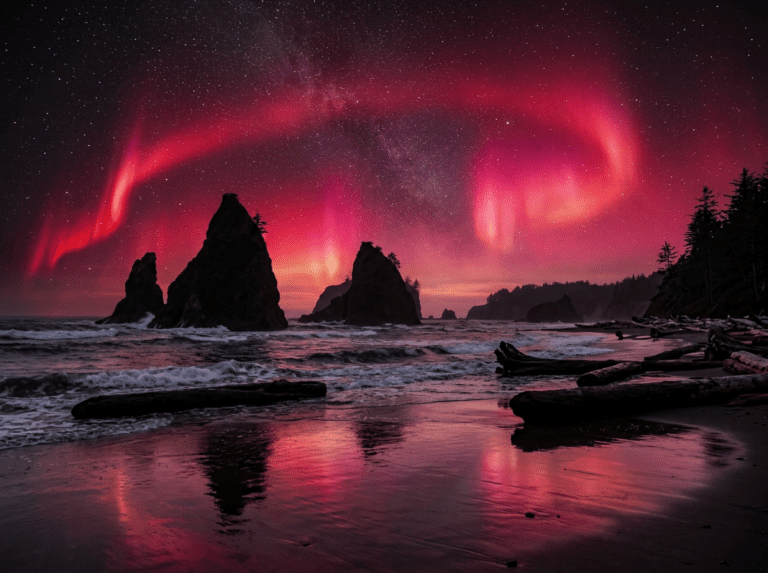
And for the aurora photography that this latitude and this darkness enable in late summer and fall, the Resurrection Bay shoreline south of Seward provides the open northern horizon and the bay surface reflection that produces the northern lights photography most Kenai Fjords visitors never think to plan for. Check the Kp index. The Alaska sky delivers.