A Photographer’s First Look at the Hoodoo Amphitheater and the Light That Makes It Extraordinary
Some landscapes become part of our imagination long before we ever visit them.
Bryce Canyon is one of those. The photographs stop you… thousands of rust-colored spires rising from the amphitheater floor, frosted with snow in winter, glowing amber in the last minutes of afternoon light, packed so densely they seem like something a mind invented rather than something water and frost carved out of a plateau over three million years. You look at the images and think: that cannot be a real place. Then you read that it is, that you can stand on the rim and look down into it, and something shifts.
What shifts, I think, is the understanding that geology has a sense of theater.
Bryce Canyon National Park is technically not a canyon at all. It is a series of natural amphitheaters carved into the eastern edge of the Paunsaugunt Plateau… a high, cold place in southern Utah where frost cycles chip and crack the limestone into hoodoos, those tall thin spires that give Bryce its identity. The park sits at 8,000 to 9,000 feet of elevation, which means the light is different here than anywhere else in the Utah parks circuit. Thinner air, sharper contrast, colors that seem almost amplified. For photographers, that elevation is the first thing worth understanding.
The Landscape That Draws People Here
The Bryce Amphitheater is the heart of the park. Almost like a horseshoe-shaped bowl visible, it is visible from the rim overlooks at Sunrise Point, Sunset Point, Inspiration Point, and Bryce Point. These four overlooks sit within two miles of each other along the rim road, and between them they offer every angle on the hoodoo city below. Most visitors see Bryce from the rim and leave. That is one way to experience it.
The other way, my favorite way, is to descend into it.
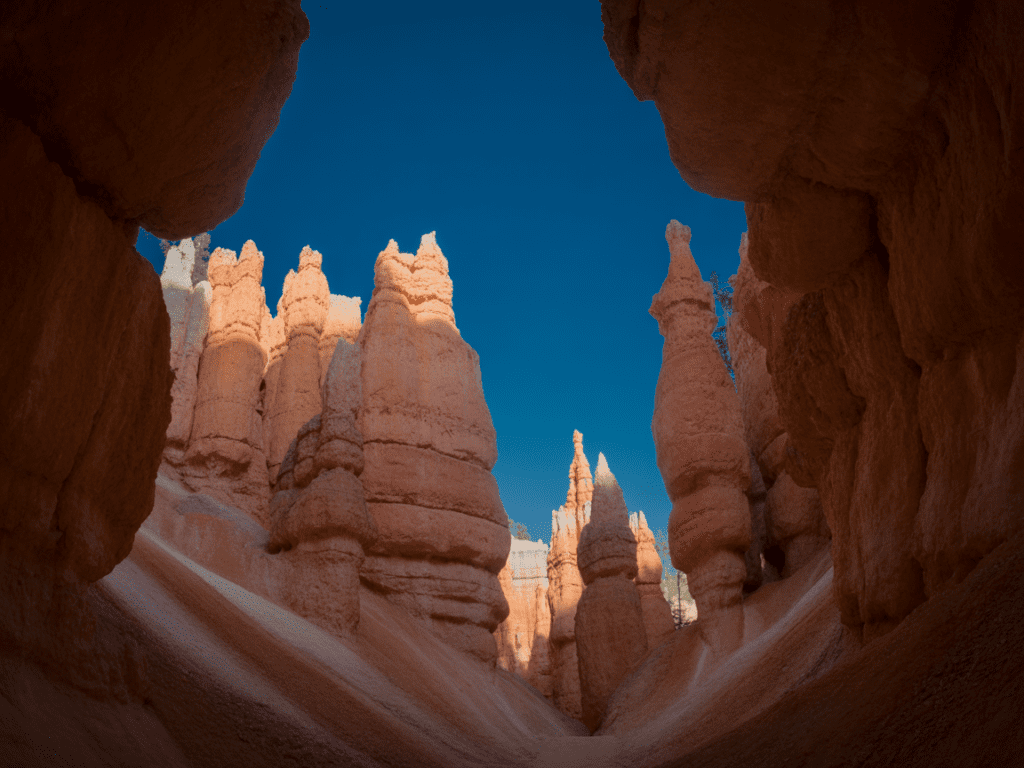
The Navajo Loop and Queen’s Garden trails drop into the amphitheater floor and wind between the hoodoos at ground level. The perspective change is total. From the rim, the hoodoos read as texture across a wide bowl. From inside them, they become individual characters… each one shaped differently, colored differently, casting a different shadow at a different hour. The famous Wall Street section of the Navajo Loop descends through a narrow slot between two-hundred-foot fins of rock where the sky narrows to a strip above. It is one of the most remarkable short walks in the national park system, and the photography from inside it is fundamentally different from anything the rim can offer.
The Photographer’s Chase
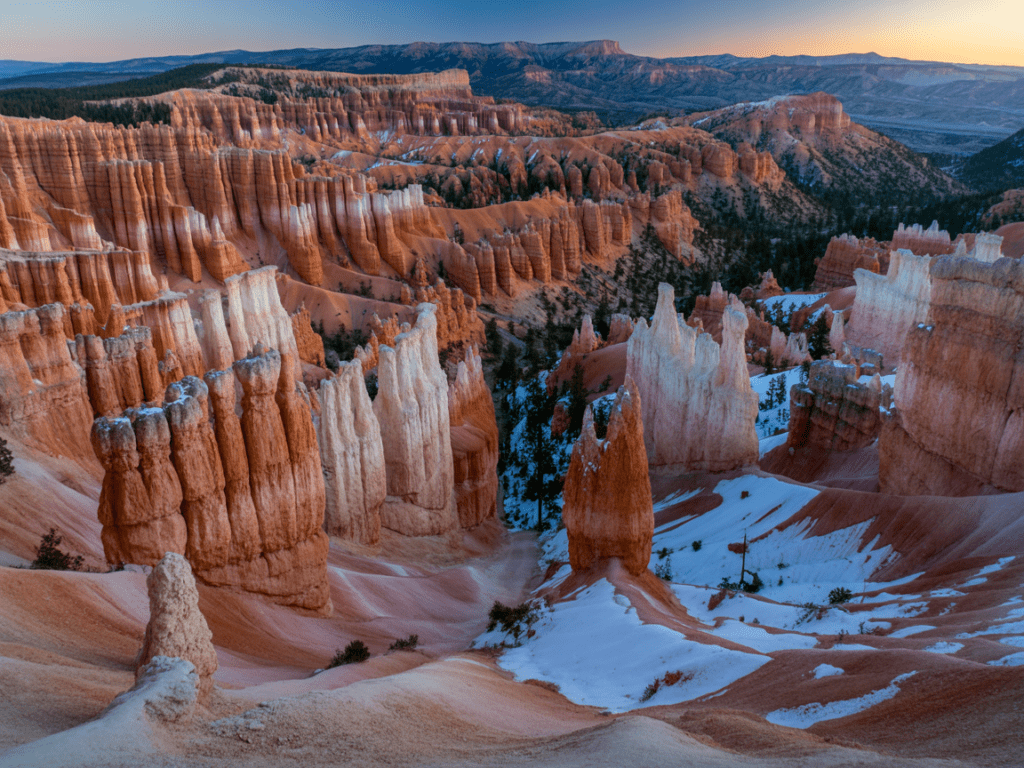
The word that keeps coming up when photographers describe Bryce Canyon light is raking. Early morning light in the amphitheater arrives from the east at a low angle, traveling horizontally across the hoodoo field rather than descending from above, and it illuminates the east-facing surfaces of the spires while leaving the west-facing sides in deep shadow. That contrast… warm orange lit face against cool blue-purple shadow… is the image that defines Bryce Canyon photography. It exists for perhaps an hour after sunrise before the sun climbs high enough to flatten everything.
The snow amplifies all of it. Bryce Canyon receives more snow than almost any other destination in the American Southwest, and the combination of white snow on the hoodoo caps against the orange and red of the limestone below produces a color contrast that no other season can match. Winter at Bryce, December through February. is genuinely cold and occasionally requires snowshoes to access the rim overlooks. The crowds reduce to almost nothing. The light on a clear winter morning, with fresh snow on the formations and the air sharp and still, is some of the finest landscape photography light in the entire park system.
From inside the amphitheater, the photography changes character entirely. The hoodoos become foreground subjects rather than distant texture. Shooting upward from the canyon floor, with a wide lens and the spires rising against the sky above, communicates a scale and intimacy that the rim overlooks… beautiful as they are… cannot produce. The Queen’s Garden trail in particular winds through the densest section of the hoodoo formations, and the light that finds its way between the spires in the morning hours creates pockets of illumination against shadow that reward slow, patient photography.
Visiting the Park
Bryce Canyon is one of the more manageable parks in the Utah circuit for first-time visitors. The rim road connects the major overlooks, the shuttle system runs between them during peak season, and the primary photography targets are concentrated enough that three well-structured days covers the essential ground. There are no permits required for standard day hiking (at the time of writing this). The Navajo Loop and Queen’s Garden combination trail is the essential walk and requires no advance reservation. Check the official park guides of course for up to date information.
The elevation matters in both directions. At 8,000 to 9,000 feet, the air is thin enough that hikers accustomed to sea level will notice it on the descent into the amphitheater and more on the climb back out. The trails are not technically difficult, but the elevation adds effort. Allow more time than the mileage suggests. The reward for that effort, being inside the hoodoo field in the morning light, is worth the calculation.
For seasonal timing: late September through October brings fall color to the ponderosa pine forest surrounding the rim, reduced crowds, and the low-angle autumn light that is ideal for the hoodoo raking effect. June brings wildflowers in the meadows below the rim. Winter, for photographers willing to manage the cold and the road conditions, offers the snow-on-hoodoo combination that is Bryce Canyon’s most distinctive photographic condition.
Where to Stay
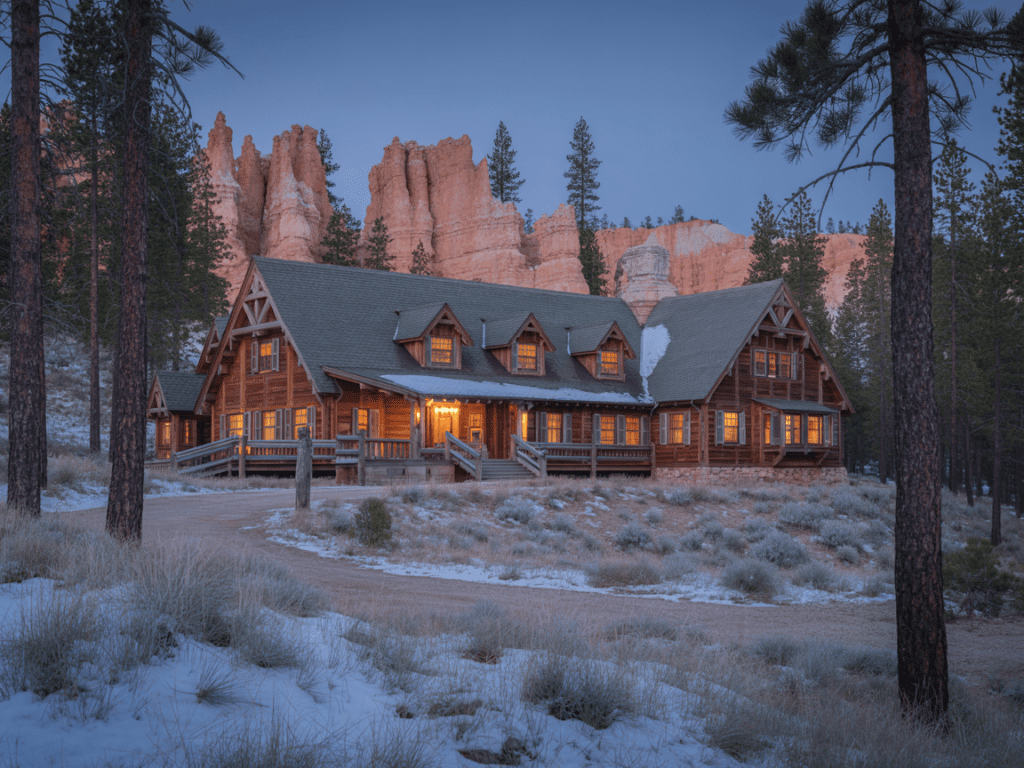
The Lodge at Bryce Canyon sits inside the park near Sunset Point and is the closest lodging to the rim overlooks. Like Zion Lodge, being inside the park changes the morning experience entirely – the distance between your bed and the rim at first light is measured in walking minutes, not driving time. Book well in advance for peak season.
Just outside the park entrance, the towns of Bryce Canyon City and Tropic offer a range of lodging options. Ruby’s Inn, a sprawling western-themed complex right at the park boundary, has been the default outside option for generations of visitors and remains a reliable choice. Bryce Canyon Resort and a handful of smaller properties in Tropic, about eleven miles east, offer more character at lower prices.
For RV travelers, North Campground and Sunset Campground sit inside the park near the rim. These are some of the best-positioned campground sites in the Utah parks system. North Campground is open year-round, which makes it the choice for winter photography visits. Reservations through recreation.gov are essential for peak season. RVs up to 35 feet are generally accommodated, though some sites have tighter configurations. Again, always check the official park website for up to date information.
If I Were Planning My First Visit
I would arrive the evening before and walk to Sunset Point as the light went low. Not to shoot, but just to look. To understand the scale of the amphitheater in person for the first time, to let my eyes adjust to what it actually is before I put a lens to it.
The next morning I would be at Sunrise Point before first light. The name is not an accident… it is the east-facing overlook that catches the earliest raking light across the hoodoo field, and the thirty minutes around actual sunrise, when the light moves from the pale blue of pre-dawn to the first warm gold of the sun clearing the horizon, is the window the serious photography happens in. I would have the tripod set up and the composition decided before the light arrived.
Then I would descend into the amphitheater. The Navajo Loop down through Wall Street, across to Queen’s Garden, and back up to the rim is a loop of about three miles. I would take four hours on it. The photography from inside the formations… shooting upward, shooting between the spires, finding the pockets of raking light that reach the canyon floor at mid-morning… is the part of Bryce Canyon most visitors miss entirely. I don’t want to miss it.
essential when the best light arrives before most people are awake.
The Light I’m Curious About
It is the winter light I keep coming back to.
Fresh snow on the hoodoo caps. The orange and red of the limestone beneath. The morning sun arriving low from the east and raking across formations that are half white and half rust, casting shadows that are almost purple in the thin high-altitude air. The crowds gone. The park quiet in the way that only cold and snow can make a busy place quiet. That combination… the color contrast, the light angle, the solitude…. is the image I am most curious about at Bryce Canyon.
Bryce Canyon receives more snowfall than almost anywhere else in the Southwest. That is not an obstacle. For a photographer, it is an invitation.
The 63 parks project is built around chasing exactly this kind of light. It’s built around finding and planning for the specific, seasonal, sometimes inconvenient light that a place offers when you go at the right time and stay long enough to find it. Bryce Canyon in winter is near the top of that list.
A Deeper Exploration
This article is part of my ongoing project documenting and photographing all 63 national parks across the United States.
Along the way, I’m creating deeper guides that explore photography locations, travel planning, seasonal light conditions, and personal reflections from the road. Bryce Canyon sits in the heart of the Utah parks circuit, paired with Zion to the southwest, it forms one of the great one-two combinations in American landscape photography.
I’ve stood at that rim before. But I was a different version of myself then… moving too fast to really see it. I’m going back.
One more thing — just between us
Bryce Canyon is compact and the rim overlooks concentrate the crowds in a way that can make a summer weekend feel tight. Here are three alternatives worth knowing about when you want the hoodoo experience without the shoulder-to-shoulder setup.
Kodachrome Basin State Park — about 25 miles southeast on Cottonwood Canyon Road — has its own extraordinary sandstone spires and almost no one visiting them. The name alone tells you the photography potential.
Red Canyon in the Dixie National Forest sits right on Highway 12 between Bryce and Panguitch — a miniature hoodoo landscape in deep red that you drive through on the way to the park and most people treat as a photo-from-the-car moment rather than a destination. Stop. Get out. The formations are excellent and the crowds are essentially zero.
And within the park itself, the Under-the-Rim Trail drops below the canyon floor and puts you inside the hoodoo formation in a way that no rim overlook can replicate — most visitors never go below the rim at all, which makes the trail a genuine solitude option within a busy park. Even a partial descent for an hour changes the experience entirely.