A Photographer’s Return to the Rim — and the Stars Above the Mile-Deep Canyon
Some landscapes become part of our imagination long before we ever visit them. The Grand Canyon is perhaps the most extreme version of that in the American experience — a place so photographed, so described, so deeply embedded in the national visual vocabulary that arriving at the South Rim for the first time carries the strange weight of recognizing something you have never actually seen.
And then you look down into it. And none of the photographs prepared you.
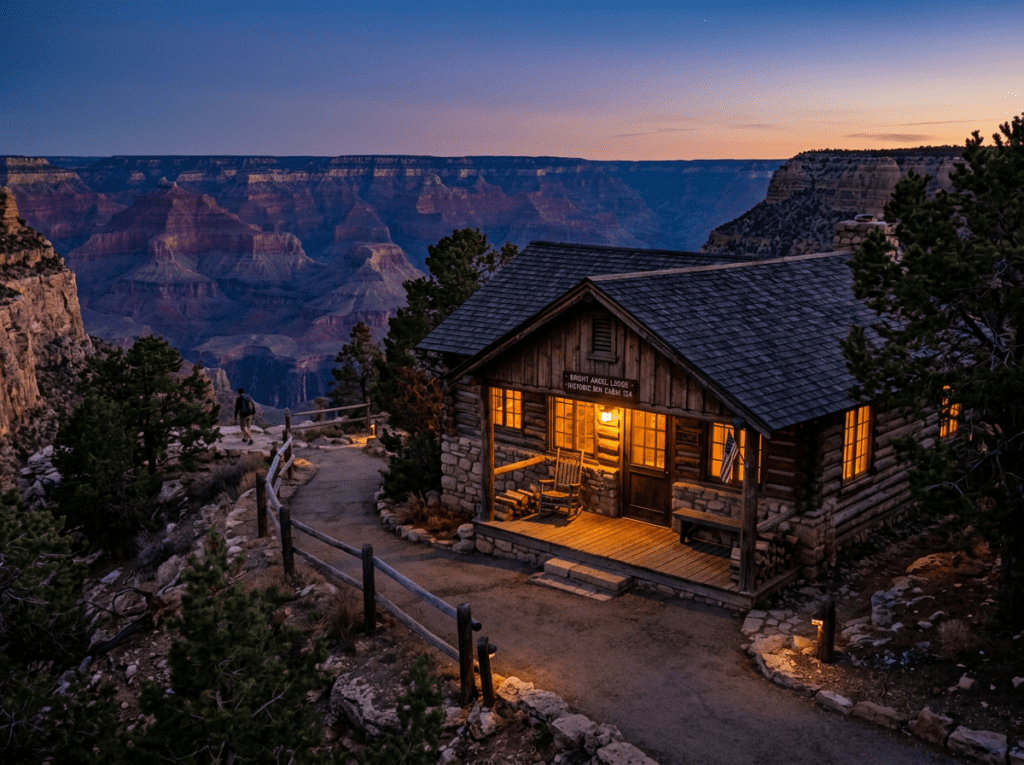
I have stood at that rim. I stayed in one of the historic cabins right on the South Rim, a boutique little space that felt more like a carefully considered tiny home than a lodge room, close enough to the rim that crossing the parking lot put me at the edge of the canyon in under two minutes. That proximity changed the trip in ways I didn’t fully appreciate until I was home and looking at the images. Being that close to the canyon at first light, at last light, and in the middle of the night when I walked the trail down into the darkness to photograph the Milky Way from inside the canyon walls… that is a different experience from driving to an overlook and driving away.
The return visit is about understanding what I found on that first trip and going deeper into it. Literally, if necessary.
The Landscape That Draws People Here
The Grand Canyon is 277 miles long, up to 18 miles wide, and a mile deep. The Colorado River runs through the bottom of it, visible from the South Rim as a thin silver ribbon more than 5,000 feet below. The layered geological formations reading from rim to river are a timeline of the earth’s history — two billion years of rock exposed by six million years of erosion, each stratum a different color and a different era. The Kaibab limestone at the rim is 270 million years old. The Vishnu schist at the river is nearly two billion years old. Standing at the rim and looking down is not just looking at a canyon. It is looking at time.
The South Rim is the primary visitor destination — accessible year-round, with the Grand Canyon Village historic district, Bright Angel Lodge, and a string of overlooks along Hermit Road and Desert View Drive providing access to the canyon from multiple angles and elevations. The North Rim, higher and cooler and accessible only from mid-May through mid-October, offers a completely different perspective on the canyon — looking south across the full width of it, with the South Rim visible in the distance. The two rims are ten miles apart as the crow flies and 215 miles apart by road.
The canyon’s scale creates a fundamental photography challenge: how do you communicate the depth of something a mile deep? A wide angle from the rim reads as a painting… beautiful but flat. The answer, counterintuitively, is often to go into it. Even a partial descent — down the Bright Angel Trail to the first rest house or the second — changes the photography entirely. The rim above you, the canyon walls rising on both sides, the river still invisible far below: the depth becomes legible in a way the overlook cannot produce.
The Photographer’s Chase
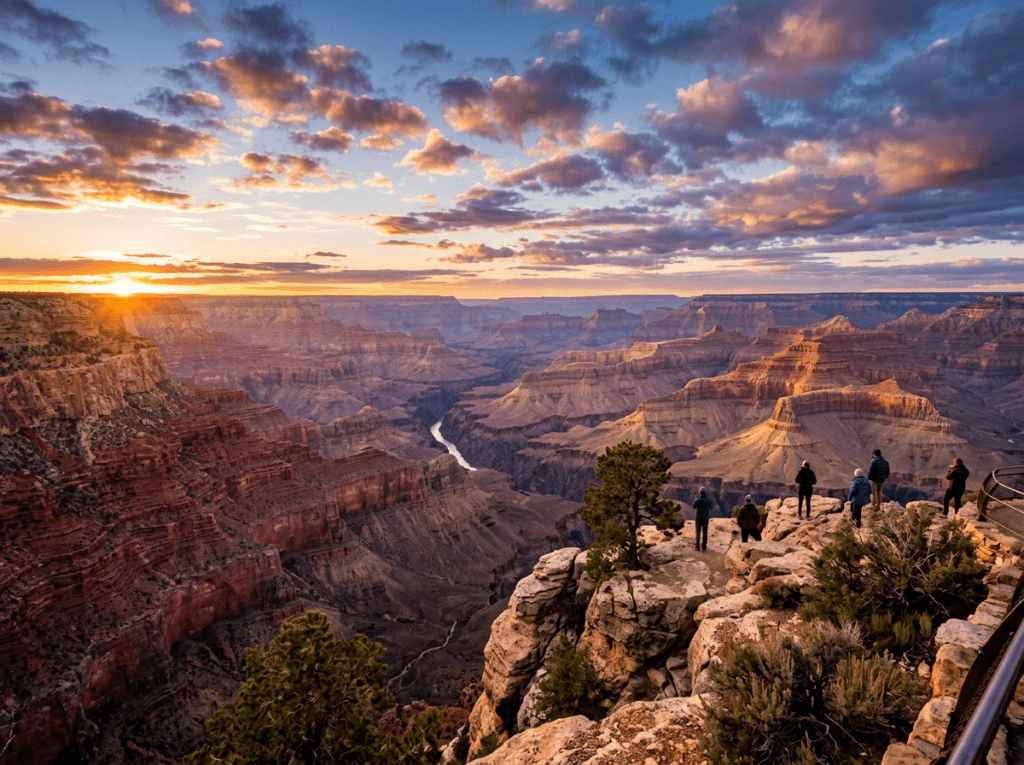
The Grand Canyon photography that most visitors make is the rim shot — wide angle, canyon filling the frame, the Colorado River as a visual anchor in the distance. It is a strong image and it is a strong image for good reason: the layered color of the geological formations at sunrise and sunset, when the low-angle light rakes across the canyon walls and builds shadow and dimension into each stratum, is genuinely extraordinary. Mather Point and Yavapai Point for sunrise, Hopi Point and Mohave Point along Hermit Road for sunset — these are the established positions and they are established because they work.
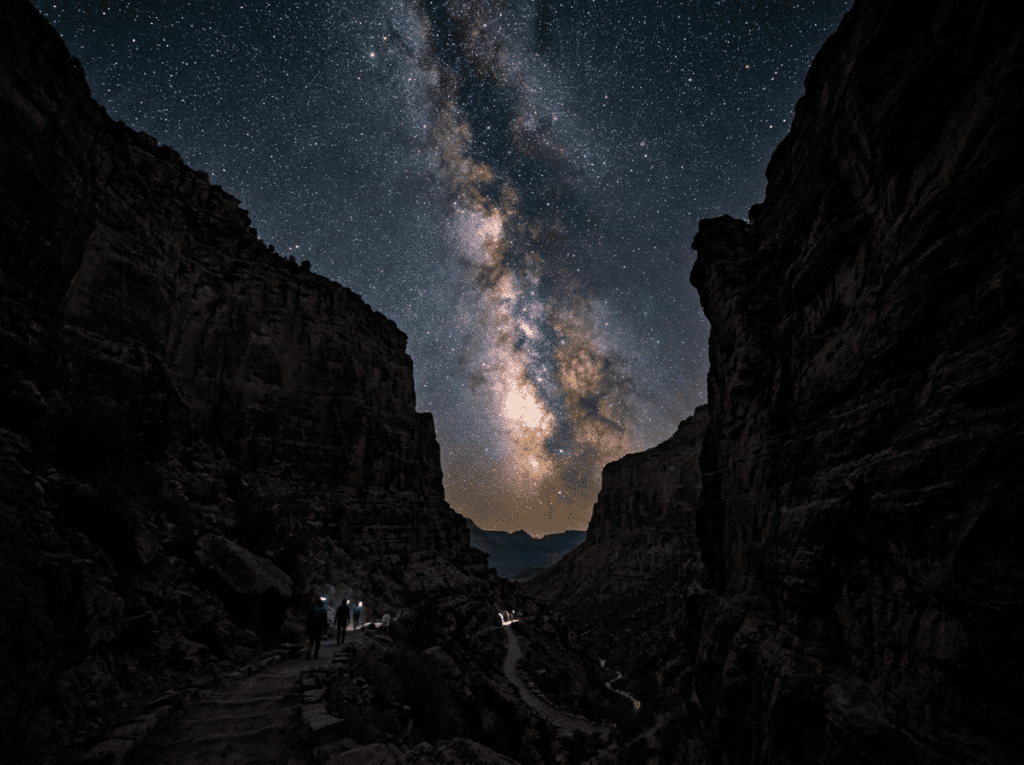
But the photography I keep thinking about is the night sky from inside the canyon. The Grand Canyon is an International Dark Sky Park, one of the largest dark sky preserves in the world, and the combination of the canyon walls framing the sky above and the complete absence of light pollution produces astrophotography conditions that are among the finest on the continent. The Milky Way rising above the canyon rim, seen from partway down the Bright Angel Trail, with the canyon walls as foreground and the galaxy spanning the narrow strip of sky above… that is the image I went looking for on my first visit and found, imperfectly, in the dark on a trail I didn’t know well enough. The return trip is about doing it properly.
Desert View, at the eastern end of the South Rim drive, is the overlook that most visitors skip in favor of the more convenient western viewpoints… and that makes it one of the quieter rim photography positions for sunrise. The Watchtower at Desert View, a 1932 stone structure designed by architect Mary Colter, provides an elevated perspective on the canyon and the Colorado River below that the ground-level overlooks cannot match. The structure itself is a photography subject… the stonework, the interior murals, the view from the tower balcony through the canyon to the east.
The light in the canyon changes so rapidly at sunrise and sunset that the practical photography window is measured in minutes rather than hours. The formations go from gray to pink to deep orange to the full warm color of direct sun in the space of twenty minutes at sunrise, and the best light is not at the moment of sunrise itself but in the five minutes before, when the alpenglow touches only the highest rim and the canyon below is still in deep blue shadow. That contrast — warm rim above, cool shadow below — is the image most photographers at the Grand Canyon miss because they are already shooting when it arrives.
Visiting the Park
The South Rim is open year-round and the most accessible entry point for most visitors. The park operates a free shuttle system along the South Rim corridor during peak season — Hermit Road is closed to private vehicles from March through November, and the shuttle is the only way to reach the western viewpoints along that route. The shuttle runs from before sunrise to after dark, which makes it practical for photography use.
Spring and fall are the strongest photography seasons. March through May offers mild temperatures on the rim and the possibility of snow on the formations — a dusting of snow on the upper canyon walls against the warm red of the Redwall limestone below is one of the more extraordinary color combinations the canyon produces. September and October bring lower crowds and the low-angle autumn light that does the most interesting things to the geological striations. Summer is manageable on the rim but the inner canyon temperatures regularly exceed 110 degrees — any trail descent requires serious water planning.
The dark sky photography is best in the new moon window — the five days before and after a new moon when the sky is darkest. The NPS Astronomy program offers ranger-led star programs at the rim during summer and fall. For photographers planning a night sky session on the Bright Angel Trail, descend in daylight first, know the terrain, bring a headlamp with a red-light setting to preserve night vision, and check the ranger station for any trail conditions or closures before going out after dark.
Where to Stay
Rim-side lodging is the clear choice for photographers and it books out a year or more in advance for peak season. The historic cabins at Bright Angel Lodge sit right on the canyon rim — close enough that crossing a small parking area puts you at the edge of the canyon in under two minutes. Some cabins have direct rim views from the window. The proximity changes the trip in a way that is difficult to overstate: being able to walk to the rim in darkness for the pre-dawn setup, to step outside at midnight for the Milky Way, to catch the last alpenglow without a drive — this is what rim lodging provides and why it is worth planning for a year in advance.
El Tovar Hotel, the grand historic lodge at the rim built in 1905, is the premium option — remarkable architecture, excellent dining, and a position at the rim that has been the Grand Canyon’s landmark lodging for more than a century. Kachina and Thunderbird Lodges offer more modern accommodations directly on the rim at a slightly lower price point. All rim lodging is operated by the park concessionaire and reservable up to 13 months in advance at grandcanyonlodges.com.
For RV travelers, Trailer Village RV Park at the South Rim is the only in-park option with hookups — a short walk from the rim trail and the village. Mather Campground nearby offers tent and RV sites without hookups. Both book well in advance for peak season through recreation.gov. Tusayan, the gateway town just outside the south entrance, has additional private campground options with full hookups.
If I Were Planning My First Visit
I would book rim lodging first — a Bright Angel cabin or whatever is available closest to the rim — and build the trip around that proximity. The ability to be at the canyon edge before dawn, in the middle of the night, and in the five minutes after sunset without a commute is the single most valuable logistical decision for a photography trip here.
On the first morning I would be at Mather Point before the alpenglow — tripod set, composition ready, waiting for the light to arrive rather than arriving with it. Then I would walk at least partway down the Bright Angel Trail. Not to reach the river — that is a multi-day commitment. But far enough below the rim to change the photography entirely, to feel the canyon walls rising above me and understand the depth in a way the overlook cannot communicate.
And on a moonless night I would go back down that trail with a headlamp and a tripod, far enough below the rim to have canyon walls on both sides, and I would photograph the Milky Way from inside the canyon. I did this on my first visit and it was imperfect and I want to do it again. Some images are worth returning for until you get them right.
The Light I’m Curious About
It is the pre-dawn alpenglow — the specific five minutes before sunrise when the highest rim catches the first warm light while the canyon below stays in deep blue shadow.
On my first visit I was at the rim at sunrise and I thought I was early enough. I was not early enough. The alpenglow that precedes the sunrise — the warm pink-gold that touches only the highest formations while everything below them is still the blue of pre-dawn — is a separate and more interesting light condition than the sunrise itself, and it is gone by the time most photographers have their cameras out. I have a photograph from that first morning that is competent and well-composed and completely misses the best light by about eight minutes.
Eight minutes earlier. That is the correction the Grand Canyon is waiting for me to make.
A Deeper Exploration
This article is part of my ongoing project documenting and photographing all 63 national parks across the United States.
Along the way, I’m creating deeper guides that explore photography locations, travel planning, seasonal light conditions, and personal reflections from the road. The Grand Canyon is the park in this project that humbles me most — not because it is difficult to photograph, but because it is impossible to photograph completely. Every visit shows you something new. Every image you make reveals three more you didn’t.
Because some places are not destinations. They are a practice. You return to them the way you return to anything worth understanding — with more patience each time, and the honest admission that you are still learning how to look.
One more thing – just between us.
The South Rim overlooks handle most of the canyon’s five million annual visitors efficiently and the famous views earn every photograph taken of them. Here are three places where the canyon reveals itself to the visitor willing to look sideways.
The Desert View Watchtower at the eastern end of the South Rim — 25 miles from the main visitor center — is a 1932 Mary Colter-designed stone tower built on the canyon rim that provides a completely different visual relationship with the canyon than the central overlooks. The eastern canyon from the tower’s upper level, with the Colorado River visible and the Painted Desert extending beyond the canyon to the northeast, is a view that the Mather Point crowd never sees. The tower itself is one of the finest pieces of architecture in the national park system and a photography subject in its own right.
For the canyon experience that requires genuine commitment, the North Rim — accessible only from mid-May through mid-October on a 215-mile drive from the South Rim — receives about 10 percent of the canyon’s total visitors and sits 1,000 feet higher, producing a different canyon geometry and a cooler, forested character that the South Rim’s pinyon-juniper landscape cannot provide. The Point Imperial and Cape Royal overlooks on the North Rim offer the finest elevated canyon photography in the park.
And for the Milky Way photography that drew a memorable late-night canyon hike during a previous visit, the Lipan Point dark sky position near Desert View — away from the central rim lighting — is where serious astrophotographers position for the canyon-and-galaxy compositions on moonless nights. The canyon in that darkness, lit only by starlight, is the Grand Canyon that the daytime crowd never experiences.