A South Florida Photographer’s First Look at the Most Remote National Park in the Continental United States — and It’s in His Own State
Some landscapes become part of our imagination through their inaccessibility. Dry Tortugas National Park sits 70 miles west of Key West in the Gulf of Mexico — no roads, no bridges, no ferry for vehicles, no way to drive there under any circumstances. It is technically in Florida. It is practically one of the more logistically demanding destinations in the national park system. And I live in West Palm Beach.
The Dry Tortugas joins the Everglades and Biscayne in the growing catalog of this project’s most embarrassing oversights — extraordinary national parks within my home state that I have not visited properly. At least the Everglades has the excuse of mosquitoes and the Biscayne has the excuse of requiring a boat. The Dry Tortugas requires both a boat and genuine logistical planning, and the result is a park that most Floridians have never visited despite it being, technically, in their own backyard.
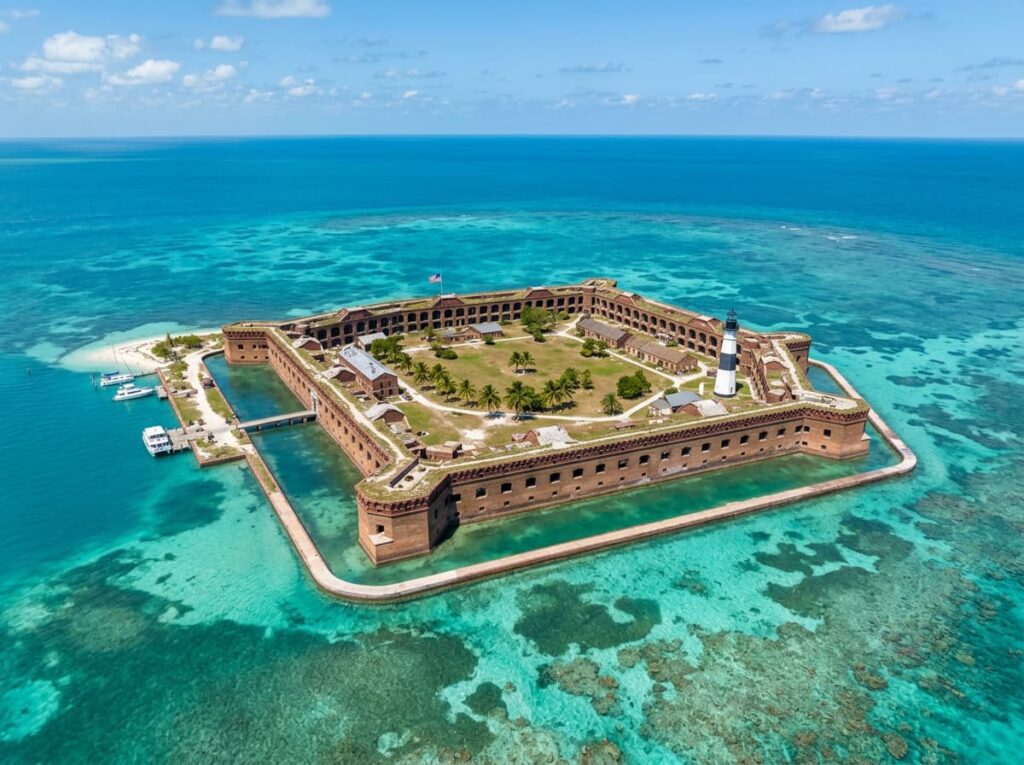
The park protects seven small coral islands — the largest being Garden Key, where the massive Civil War-era Fort Jefferson stands in the middle of the Gulf of Mexico — along with 100 square miles of open water, coral reef, and seagrass beds. The fort is one of the largest masonry structures in the Americas, built from 16 million bricks on an island that has no fresh water, no natural resources, and no practical reason for existing other than the strategic control of Gulf shipping lanes that the 19th century considered worth the effort. The combination of the fort’s extraordinary architecture, the surrounding turquoise Gulf water, the coral reef, and the bird life makes Dry Tortugas one of the most visually distinctive parks in the entire system — and the difficulty of getting there means it is experienced by only about 75,000 visitors a year, making it one of the least visited parks in the continental United States.
The Landscape That Draws People Here
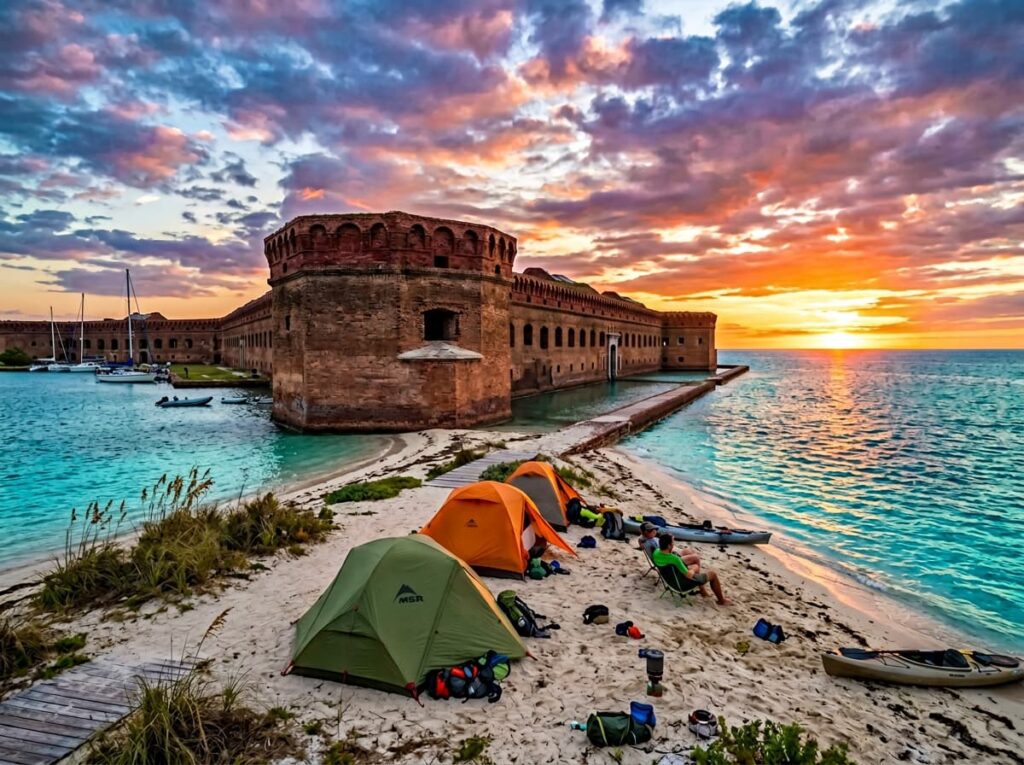
Fort Jefferson dominates Garden Key and defines the visual identity of the park. The hexagonal fort covers nearly the entire 16-acre island, its walls rising 50 feet from the waterline, the moat surrounding the outer walls still intact. Construction began in 1846 and continued for 30 years, never quite completing the original design — the fort was never finished and never fired a shot in combat. It served as a Union military prison during the Civil War, most famously housing Dr. Samuel Mudd, the physician convicted of conspiracy in the Lincoln assassination. The fort’s photography is architectural at its most monumental — the scale of the masonry, the arched casemates, the spiral staircases, and the view from the upper ramparts across the Gulf in every direction with no land visible to the horizon.
The waters surrounding the fort and the other Tortugas keys are among the clearest in Florida — the distance from any mainland development means minimal runoff and minimal light pollution, and the visibility underwater can exceed 100 feet on calm days. The coral reef along the southern and western edges of the park supports the same Caribbean reef ecosystem as Biscayne and the Florida Keys, with the added protection of extreme remoteness that keeps fishing and boat traffic minimal. Sea turtles — the green and loggerhead species that gave the islands their name — nest on the beaches of the outer keys and are regularly visible in the surrounding waters.
Bush Key, adjacent to Garden Key, hosts one of the largest sooty tern colonies in North America from February through September — up to 80,000 birds nesting on a single small island in a density that produces a sound and a visual spectacle that the word ‘colony’ inadequately describes. The bird photography during the nesting season, from the Garden Key shoreline looking across to the tern colony, is one of the most unusual wildlife photography subjects in the Florida park system.
The Photographer’s Chase
The seaplane arrival is the first photography opportunity and arguably the most dramatic one — the approach to Garden Key from the air, with the turquoise water shifting from deep blue to the shallow sand-bottom green of the moat, the fort’s hexagonal plan visible from above in a way that the ground level cannot reveal, and the landing in the harbor beside the fort walls. Key West Seaplane Adventures operates flights from Key West; the 40-minute flight provides the aerial perspective on the fort that no other arrival method can. For a photographer, the seaplane window seat on the approach is worth the premium over the ferry fare.
The fort photography is the primary above-water subject — and it operates on the same light logic as every architectural subject in this series. The morning light from the east illuminates the fort’s eastern walls and the moat surface simultaneously, and the first hour after sunrise, before the ferry day-trippers arrive and the fort fills with visitors, is when the architectural photography is most productive. The arched casemates in morning light, the spiral staircase in the interior courtyard, and the view from the upper ramparts across the Gulf with no land visible in any direction — these are the images that communicate what Fort Jefferson actually is and where it sits.
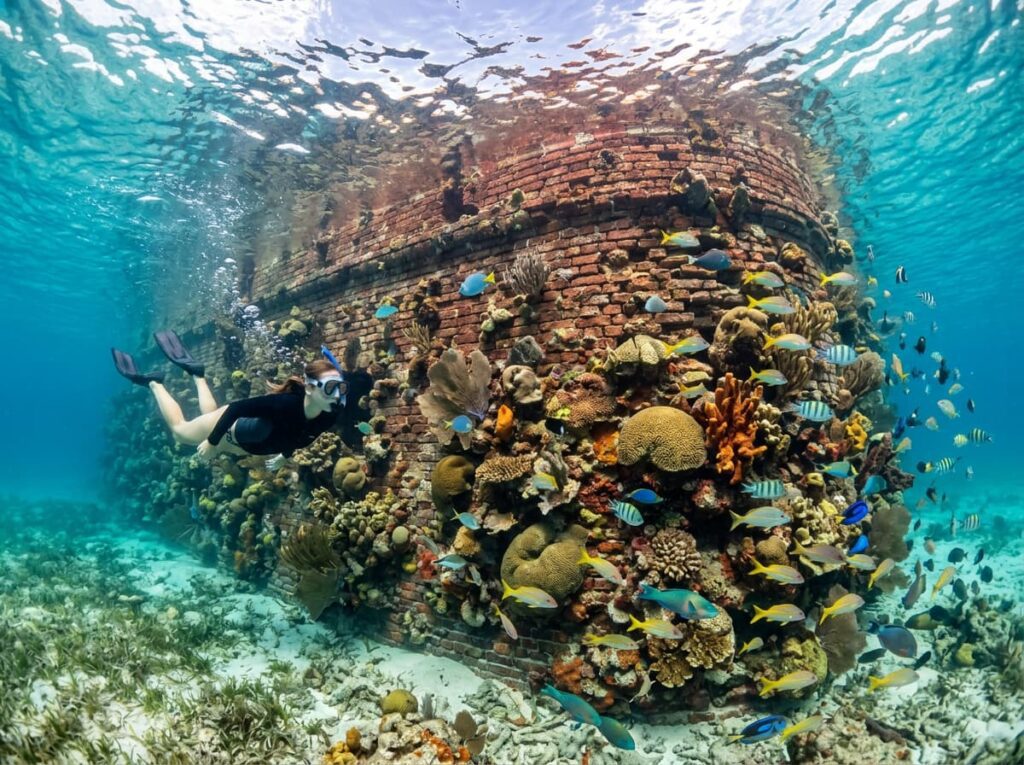
The underwater photography at Dry Tortugas is the subject that overnight camping makes possible in a way the day trip cannot. The ferry day-trippers arrive around 10:30am and depart around 3pm — the window before arrival and after departure is when the snorkeling around the fort walls and along the moat is undisturbed. Camping on Garden Key allows pre-dawn and post-sunset water access that the day visit cannot. The moat wall, colonized by coral and fish in the decades since the fort fell into disuse, is a specifically architectural underwater photography subject — the brick and mortar of a Civil War fortification hosting a reef ecosystem in water clear enough to photograph with ambient light.
The sunset from the fort ramparts is the other camping advantage — the Gulf sunset from 50 feet above the waterline, with no land visible in any direction and the fort’s brick walls glowing in the last light, is a sunset that the day-tripper boards the ferry before seeing. Being there for it requires spending the night on the island. The logistics of camping at Dry Tortugas — everything packed in, everything packed out, fresh water carried from Key West — are the price of admission for that sunset and for the dawn that follows it.
Getting There — The Only Two Options
There are exactly two ways to reach Dry Tortugas National Park and an RV is not one of them. The Yankee Freedom III high-speed catamaran ferry departs Key West at 8am daily and arrives at Garden Key around 10:30am, with departure from the island at 3pm and return to Key West around 5:30pm — a full day trip that provides about four hours at the fort. The ferry includes breakfast, lunch, snorkeling equipment, and a ranger tour of the fort. Tickets book out weeks in advance for peak season; reserving early is essential. The ferry also transports campers and their gear for overnight visits.
Key West Seaplane Adventures operates floatplane flights in small aircraft — typically four to ten passengers — departing from Key West and landing in the Garden Key harbor. The half-day trip (approximately four hours at the park) and full-day trip options are available. The flight is approximately 40 minutes each way and provides the aerial perspective on the fort and the surrounding reef that the ferry cannot. The seaplane is significantly more expensive than the ferry but delivers the arrival experience — landing on the Gulf beside a Civil War fort on a coral island — that is genuinely unlike any other national park arrival in the system.
Overnight camping on Garden Key requires arriving by ferry with all supplies — fresh water, food, camping equipment — as the island has no facilities beyond composting toilets. The campground holds a limited number of sites and permits are required, reservable through recreation.gov. The camping experience at Dry Tortugas — the isolation, the fort at night, the Gulf sunrise — is one of the more extraordinary overnight experiences available in the national park system and is worth the logistical complexity for photographers willing to manage it.
Where to Stay
On the island itself, the Garden Key campground is the only accommodation — primitive tent camping with no hookups, no fresh water, no shade structures. Everything required for the stay must be carried from Key West on the ferry. The reward is the island after the day visitors leave: the fort in the late afternoon light, the Gulf sunset from the ramparts, the star photography with no light pollution in any direction over open water, and the dawn before the next ferry arrives. For a photographer, that time window is the entire argument for camping.
Key West is the base for all non-camping visits — the departure point for both the ferry and the seaplane, and a destination in its own right. Old Town Key West, Duval Street, the Hemingway House, and the Mallory Square sunset celebration are the Key West experience that most visitors come for; spending a night in Key West before an early ferry departure makes the logistics practical. The Casa Marina and the Marker 88 properties are the standout Key West lodging options; the island has no shortage of guesthouses, boutique hotels, and vacation rentals across all price ranges.
For the drive from West Palm Beach — about 3.5 hours to Key West via US-1 through the Keys — the trip naturally passes through John Pennekamp State Park in Key Largo, the Florida Keys National Marine Sanctuary, and the full length of the Overseas Highway, which is itself one of the great scenic drives in Florida. Allowing a full day for the drive down, overnight in Key West, and a second day for the Dry Tortugas ferry makes the pacing manageable and the drive worthwhile rather than a means to an end.
If I Were Planning My First Visit
The seaplane on the way in, the ferry on the way out — or vice versa. The aerial perspective on the arrival and the leisure of the catamaran return. Both modes of transport in a single trip, the full Dry Tortugas experience compressed into a day.
If the camping logistics align — and they require advance planning that a spontaneous visit cannot accommodate — an overnight stay on Garden Key would change the trip from a day excursion to something more substantial. The fort after the day visitors depart. The Gulf sunset from the ramparts. The dark sky over open water with no light pollution within 70 miles. The dawn before the next ferry. Those hours belong to campers only and they are worth the planning.
The underwater housing in the water around the fort moat — the recertification that the Biscayne post motivated now put to use in water that is among the clearest in Florida. And the sooty tern colony on Bush Key if the February through September nesting season aligns — 80,000 birds on a small island, audible from Garden Key, visible from the shoreline. The bird photography that nobody thinks to plan for when they book a Civil War fort visit.
Seventy miles from Key West. About four hours from home. In my own state. No more excuses.
The Light I’m Curious About
It is the fort at dawn — the specific light on the eastern brick walls in the first minutes of direct sun, before the ferry arrives and the island fills with visitors, when the only people on Garden Key are the campers who stayed the night and the park rangers.
16 million bricks on a coral island in the middle of the Gulf of Mexico, built by a country that was not yet divided and finished by a country that had nearly destroyed itself, abandoned and left to the tropics and the birds and the reef that grew slowly around its foundations. In the first light of a Florida morning, with the Gulf going from gray to gold and the fort walls catching the low eastern sun and the sooty terns beginning their daily circuit above Bush Key across the channel — that is the Dry Tortugas image that the day-tripper ferries to the 10:30am arrival never sees.
Getting there requires planning that a day trip from West Palm Beach cannot accommodate. It requires the overnight permit, the camping gear, the fresh water carried from Key West, the willingness to be somewhere genuinely remote for a night. It is worth every bit of that effort. The light at dawn on a Civil War fort in the middle of the Gulf of Mexico is the light that has been waiting 70 miles off Key West for someone to show up early enough to find it.
A Deeper Exploration
This article is part of my ongoing project documenting and photographing all 63 national parks across the United States.
Along the way, I’m creating deeper guides that explore photography locations, travel planning, seasonal light conditions, and personal reflections from the road. Dry Tortugas completes the Florida national park trilogy in this series — the Everglades, Biscayne, and now the Tortugas — three parks in my home state that between them cover freshwater marsh, coral reef, and open Gulf in one of the most biologically and historically extraordinary corners of the country.
Because no roads lead there. No bridges. No RV access under any circumstances. Just a ferry or a seaplane and the willingness to go somewhere that most people, even the ones who live in Florida, have never been.
One more thing — just between us.
Dry Tortugas is already about as insider as a national park gets — 75,000 visitors a year to a park that is genuinely difficult to reach. The insider tip here is about maximizing what the trip delivers beyond the fort itself.
Loggerhead Key — the largest island in the park, about three miles west of Garden Key — is accessible only by private boat or kayak and receives almost no visitors. The historic Loggerhead lighthouse, built in 1858, stands on a coral island with the finest reef in the park surrounding it and almost nobody ever goes there. Private boat access or a kayak rental from the camping area opens the lighthouse and the reef to photographers who want the Dry Tortugas completely to themselves.
For the birding that most fort visitors overlook, the Bush Key sooty tern colony — visible from the Garden Key shoreline during nesting season — is the wildlife spectacle most day-trippers walk past on the way to the fort without understanding what they are hearing. 80,000 birds. The sound alone is worth standing at the shoreline for ten minutes.
And for the Key West experience that frames the whole trip, the Mallory Square sunset celebration the evening before departure is the ritual that Key West has been performing every night for decades — street performers, crowds, the sun dropping into the Gulf. Touristy, yes. Worth doing once before you spend the next evening watching the same sunset from a fort rampart 70 miles offshore. The comparison is instructive.