A Photographer’s First Look at Utah’s Vast Canyon Wilderness and the Light That Has No Bottom
Every photographer eventually builds a list of landscapes they hope to experience at least once. Most of those landscapes are defined by a single subject — a waterfall, an arch, a mountain reflected in a lake. Canyonlands National Park is defined by something harder to photograph and more difficult to describe: sheer, overwhelming scale.
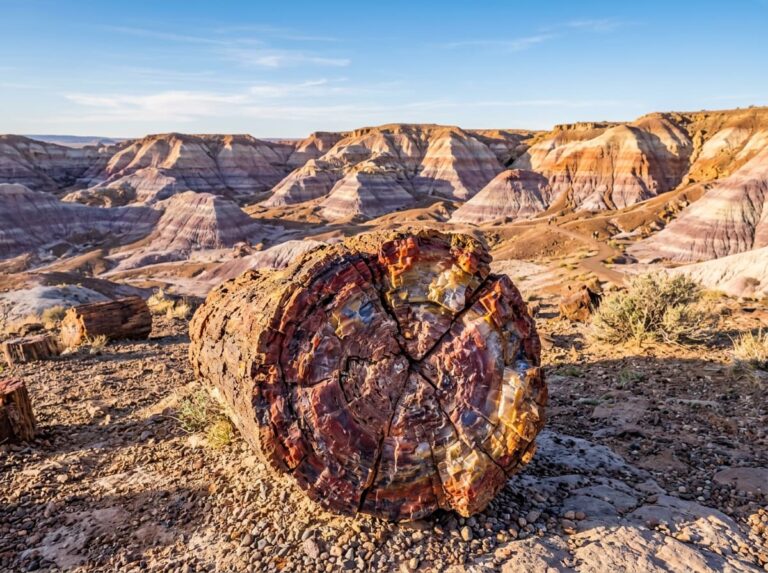
The Colorado and Green Rivers have spent millions of years carving a canyon system in southeastern Utah that covers 527 square miles of mesas, buttes, spires, and canyon walls dropping a thousand feet to the rivers below. There is no single iconic subject here the way there is at Arches or Bryce. There is instead a landscape that seems to recede forever in every direction — layered geological time made visible, the Colorado Plateau stripped down to its bones.
Canyonlands is the park in the Utah cluster that most rewards stillness. You cannot see it well from a moving vehicle. You have to stop, stand at a rim, and let your eyes do the slow work of comprehending what is actually in front of you. That comprehension — the moment when the scale finally lands — is the thing I am most looking forward to experiencing through a lens.
The Landscape That Draws People Here
Canyonlands divides into three districts, each with its own character and its own access. Island in the Sky — the most visited district, a broad mesa perched above the canyon confluence — is the photographer’s primary destination and the most accessible from Moab, about 40 miles north. The Needles district, in the park’s southeast corner, offers close-range canyon hiking through a landscape of colorful sandstone spires. The Maze, in the west, is one of the most remote and inaccessible places in the continental United States — a backcountry destination requiring high-clearance four-wheel drive and serious wilderness self-sufficiency.
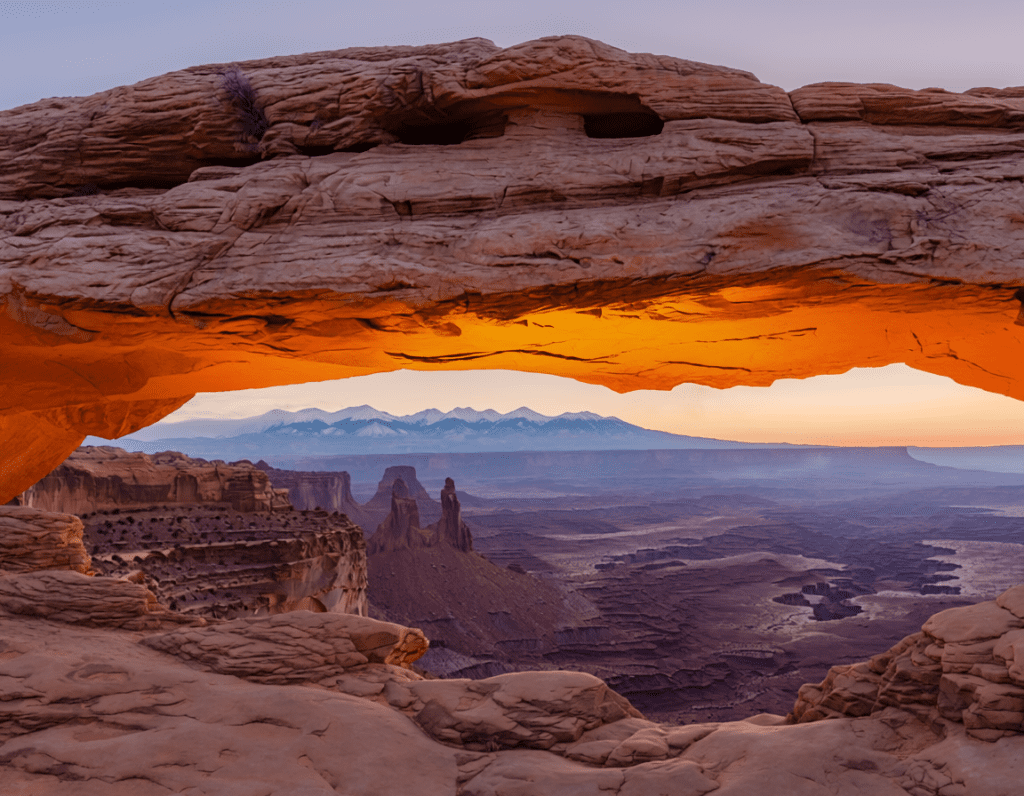
Island in the Sky is where most visitors — and most photographers — begin. The district sits atop a broad, flat mesa at 6,000 feet, and its rim overlooks drop vertically to the White Rim some 1,200 feet below, with the canyon floor another 1,000 feet below that. The Colorado and Green Rivers are visible from the overlooks as distant ribbons of reflected light far below. Mesa Arch, a small sandstone arch on the Island in the Sky rim, has become one of the most photographed sunrise locations in the American West — the arch frames the canyon below and the La Sal Mountains beyond, and in the first light of morning the underside of the arch catches the reflected sunrise glow from the canyon walls below, going from orange to gold to a deep amber in the span of a few minutes.
That Mesa Arch sunrise is the iconic shot. But Canyonlands, more than any other park in the Utah cluster, rewards the visitor who looks past the iconic shot and simply stands at the rim and waits.
The Photographer’s Chase
The fundamental photography challenge at Canyonlands is communicating depth. The canyon is so vast that a wide-angle lens — the instinctive choice for a big landscape — can actually flatten it, turning a thousand feet of vertical relief into something that reads as a painted backdrop. The solution, counterintuitively, is often the telephoto lens. Compressing the canyon layers with a 200mm or longer focal length stacks the geological formations against each other, making the depth readable as a series of distinct planes rather than a single undifferentiated expanse.
Mesa Arch sunrise is the non-negotiable starting point. The hike from the trailhead is half a mile on flat ground, and the arch itself is small enough to reach easily in the dark with a headlamp. The photographers who arrive first claim the positions directly behind the arch, shooting through it with the canyon below framed by the sandstone opening above. The underside glow — the reflected sunrise light bouncing off the canyon walls far below and illuminating the arch from beneath — lasts perhaps ten minutes. It is one of the most reliably spectacular sunrise events in the national park system, and it happens every clear morning. Arrive 45 minutes before sunrise. Bring a tripod.
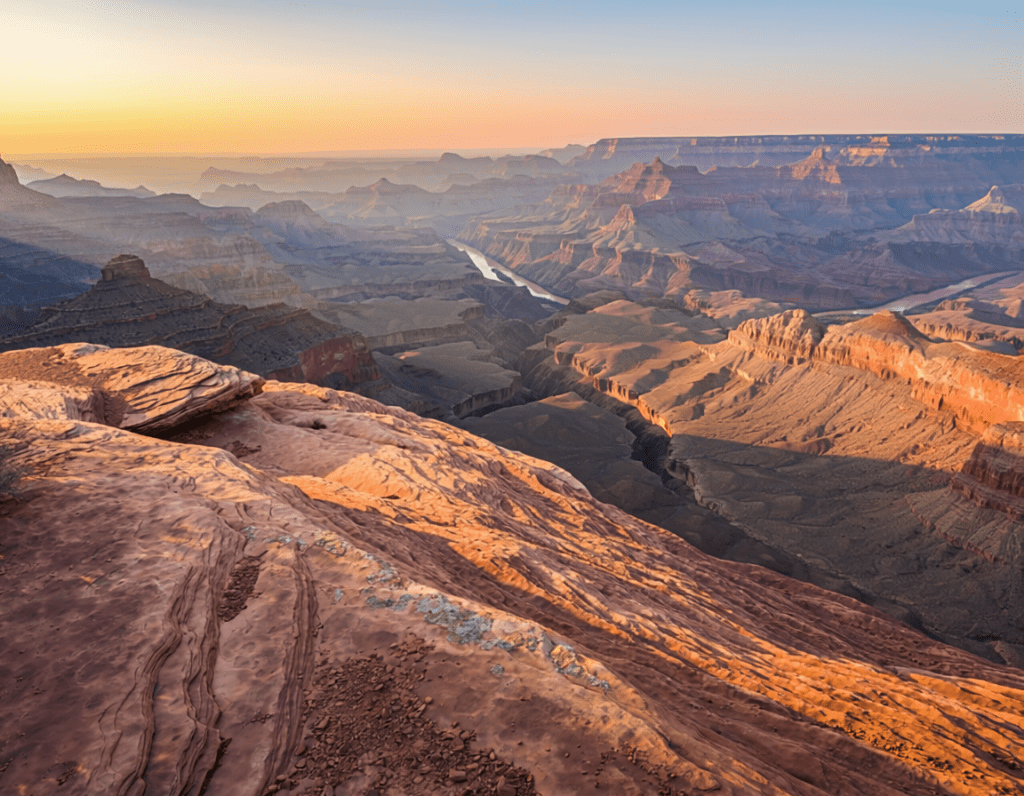
Beyond Mesa Arch, the Grand View Point overlook at the southern tip of Island in the Sky is the most complete expression of Canyonlands’ scale — a 360-degree panorama that shows the full extent of the canyon system in every direction, with the White Rim road visible as a thin line a thousand feet below and the distant Henry Mountains on the horizon. The afternoon light here, when the low sun begins to rake across the canyon from the west, builds shadow and dimension into the geological layers in a way the morning light cannot. Come for Mesa Arch at sunrise. Return to Grand View Point for the last hour before sunset.
Storm light is the wild card that every serious Canyonlands photographer hopes for. When a weather system moves through the Colorado Plateau and breaks apart, the light that comes through the gaps in the cloud cover — shafts of sun illuminating specific sections of the canyon while the rest stays in deep shadow — produces the kind of dramatic, unrepeatable images that no amount of planning can manufacture. You can only be there, and be ready.
Visiting the Park
Canyonlands is the least crowded of the four Utah parks in this cluster, and it shows. The Island in the Sky visitor center and the main overlooks see significant traffic, but the sense of solitude at the rim — especially early morning and late afternoon — is something that Zion and Arches cannot offer at peak season. There are no timed entry reservations currently required for Island in the Sky, which makes spontaneous early morning visits practical in a way that Arches and Zion are not.
Spring and fall are the primary photography seasons. March through May offers wildflowers on the mesa top and comfortable temperatures for the exposed rim hikes. October brings the low-angle autumn light that is ideal for the canyon layer photography — the longer shadows, the warmer color temperature, the way the geological formations seem to glow in the afternoon sun in a way that summer’s overhead light cannot produce. Summer is manageable with early starts but genuinely hot on the exposed mesa. Winter closes some roads and requires weather preparation, but the park in snow is rarely crowded and occasionally extraordinary.
The Needles district is worth a separate day if the trip allows it — the hiking through the colored sandstone formations is intimate in a way that Island in the Sky’s grand overlooks are not, and the photography is closer, more textural, more about individual rock formations than about the vast middle distance. The two districts together cover the full range of what Canyonlands offers.
Where to Stay
Like Arches, Canyonlands has no in-park lodging in the Island in the Sky district. Moab serves as the base camp for both parks — a genuine advantage of the Utah cluster geography. A single Moab base handles Arches, Canyonlands Island in the Sky, and Dead Horse Point State Park, which sits on a peninsula above the Colorado River gorge between Moab and Canyonlands and offers one of the most dramatic overlook views in the entire Southwest.
For photographers specifically, the Sorrel River Ranch along the Colorado River northeast of Moab is the standout option — riverside rooms, canyon wall views, and a sense of place that the Moab Main Street hotels cannot match. It books out for peak season well in advance.
Inside the park, Willow Flat Campground on Island in the Sky offers 12 primitive sites — no hookups, no water, first-come first-served — set on the mesa top within easy driving distance of Mesa Arch and the main overlooks. For RV travelers, the sites accommodate smaller rigs up to about 28 feet. Being on the mesa for sunset and sunrise, without the 40-mile Moab commute, changes the photography trip entirely. It requires self-sufficiency, but that is part of what Canyonlands asks of you.
If I Were Planning My First Visit
I would pair Canyonlands with Arches and build the trip around three days in Moab. Arches one afternoon and evening, Canyonlands the next morning, Dead Horse Point State Park in between for the canyon overlook that most visitors drive past on the way to the national parks and never stop for.
At Canyonlands, I would start at Mesa Arch before sunrise on the first morning — arrive in the dark, set the tripod, and wait for the underside glow. Then I would drive to Grand View Point and sit with it for an hour. Not shooting constantly. Just looking. Getting my eyes calibrated to the scale before I asked my camera to deal with it.
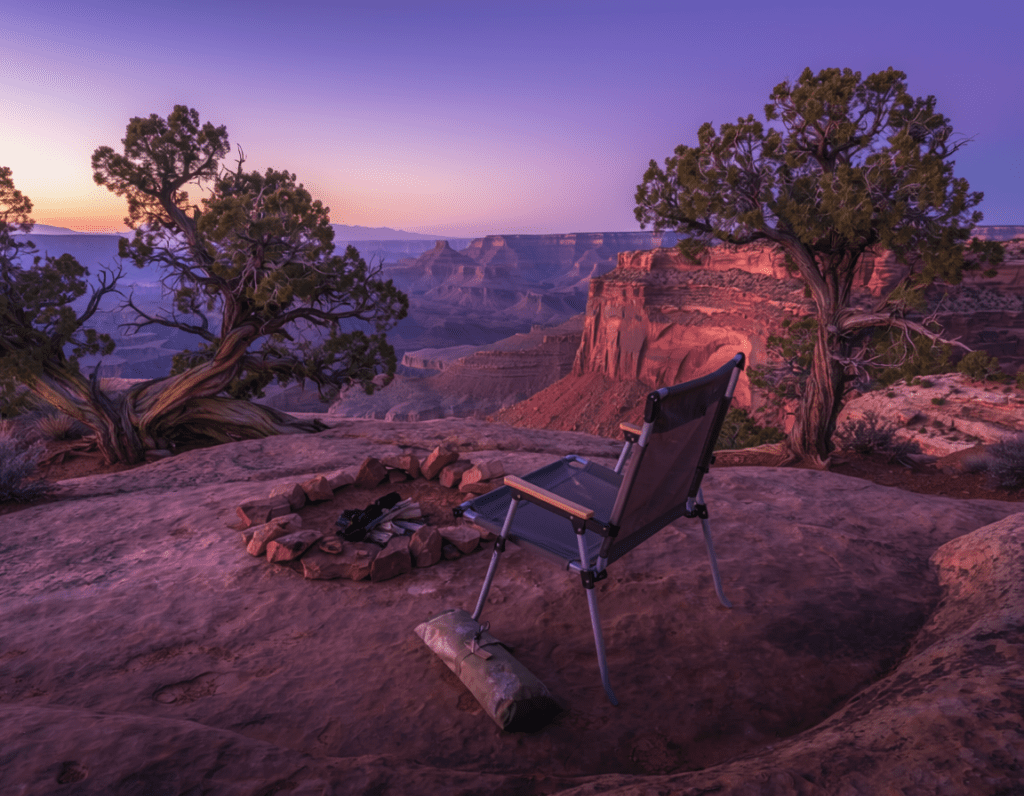
Then I would come back to Grand View Point in the last two hours before sunset, when the western light begins to build shadow into the canyon layers, and I would shoot with a telephoto — compressing the geological formations into stacked planes of color, finding the depth that the wide angle flattens. I would stay until the canyon went dark and the first stars appeared above the mesa. Canyonlands under a dark sky, with no crowds and the canyon invisible below except as a suggestion of deeper darkness — that is the version of the park I want to sit inside.
The Light I’m Curious About
It is the storm light.
The Colorado Plateau in spring and fall produces weather that moves fast across an enormous sky — fronts building over the Henry Mountains, rain curtains visible from the rim twenty miles away, clouds breaking apart to send shafts of light down into specific sections of the canyon while the rest stays in shadow. From the Grand View Point overlook, you can watch a weather system moving across the landscape in real time. You can see, sometimes, exactly where the light is going to land before it lands.
That is the image I am most curious about at Canyonlands — not the clear-sky sunrise, which is reliable and beautiful and well documented. The storm-break light that illuminates a single butte a thousand feet below while everything around it stays dark. The kind of light that has nothing to do with planning and everything to do with being in the right place and not leaving when the weather looks uncertain.
Canyonlands is a patient park. It rewards the photographers who stay longer than they planned, who sit at the rim past the comfortable hour, who understand that the landscape is not performing for them and that the light will arrive on its own schedule. I am looking forward to learning that patience at the edge of something this large.
A Deeper Exploration
This article is part of my ongoing project documenting and photographing all 63 national parks across the United States.
Along the way, I’m creating deeper guides that explore photography locations, travel planning, seasonal light conditions, and personal reflections from the road. Canyonlands closes the Utah cluster alongside Zion, Bryce Canyon, and Arches — four parks that together cover the full range of the Colorado Plateau, from intimate slot canyons to the widest view in the American Southwest.
Because sometimes the best way to understand a landscape is to stop trying to capture all of it, sit at the rim, and let the scale do its work.
One more thing — just between us.
Canyonlands is already one of the less crowded parks in the Utah circuit, but the Island in the Sky overlooks and Mesa Arch draw the bulk of the visitors. Here are three ways to find more of the park and the surrounding landscape with fewer people in the frame.
The Needles District — Canyonlands’ southeastern section — is a completely different park from Island in the Sky, with close-range canyon hiking through colored sandstone spires and almost none of the overlook crowd. It requires a separate drive but the same entry fee covers it.
Within Island in the Sky, the White Rim Road — a 100-mile dirt road loop on the bench between the rim and the river — is one of the great 4WD photography routes in the American West. You need a permit, a high-clearance vehicle, and several days. What you get in return is the canyon completely to yourself at sunrise and sunset with no other photographers anywhere near your composition.
And just outside the park, Anticline Overlook in the Canyon Rims Recreation Area east of Moab offers a canyon view as dramatic as anything on Island in the Sky — free, no entry required, almost completely unknown. The Colorado River gorge from this overlook in the evening light is a photograph most Canyonlands visitors never know exists.