A Photographer’s Return to the North Dakota Badlands — This Time With a Longer Lens
Some landscapes become part of our imagination long before we ever visit them. Theodore Roosevelt National Park is not one of those. It tends to arrive as a surprise — a park most people haven’t thought much about, sitting in the North Dakota badlands along the Little Missouri River, named for the president who spent formative years in this exact landscape and credited it with saving his life after the deaths of his wife and mother on the same day in 1884.
I stopped here during my 50 at 60 journey through the Dakotas. And I have to tell you — the prairie dogs nearly stole the entire trip.
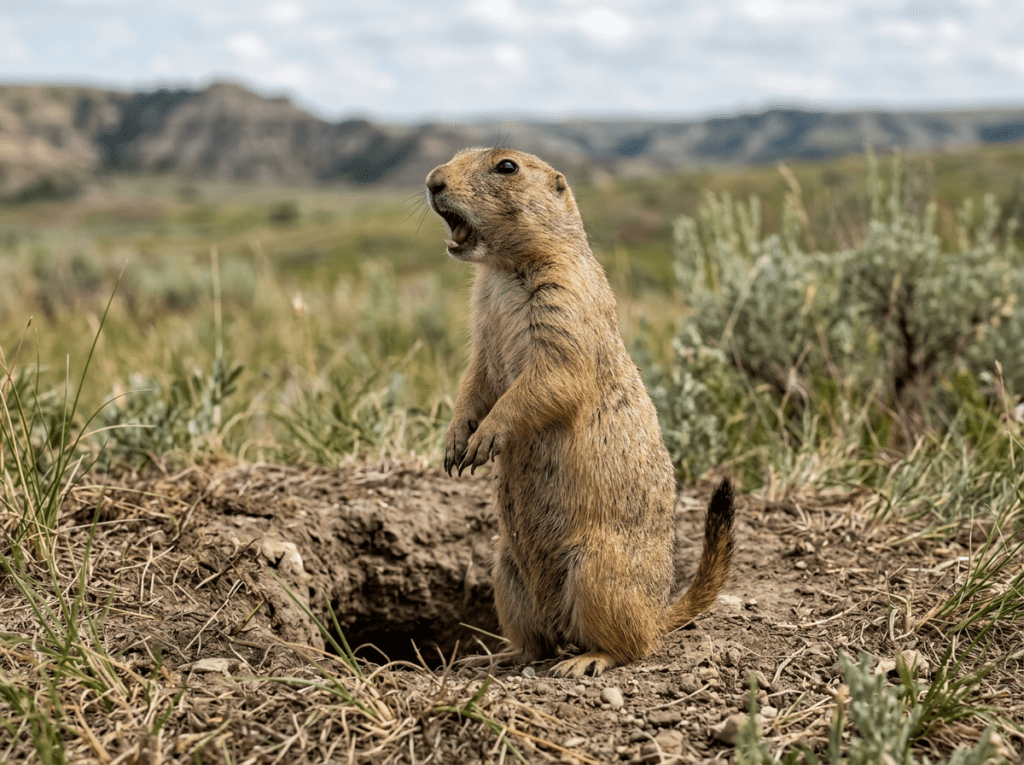
I was working with a 70-200mm lens and I found myself at a prairie dog town somewhere along the park road, and those little animals were absolutely magnetic. Popping up from their burrows, standing sentinel, barking their alarm calls, completely unaware that a photographer was pushing the absolute limits of a focal length that was not quite long enough for the shots I wanted. I came home with some decent images and a very clear equipment note for the return trip: 200-600mm minimum. The prairie dogs deserve better glass.
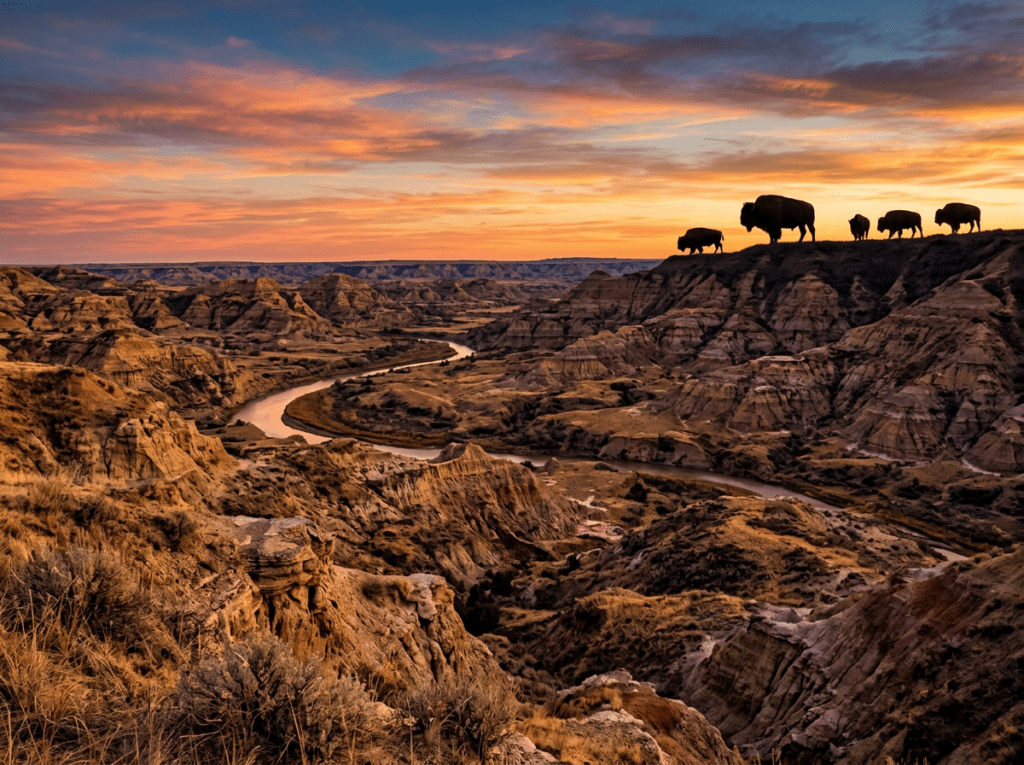
But the prairie dogs were not the only thing. The badlands of the North Dakota unit have a character that the South Dakota badlands — more visited, more dramatic in raw geological scale — do not. The landscape here is softer, more intimate, the colors warmer. The bison herds move through it with an ease that suggests they have been here forever, which they essentially have. The light in the late afternoon on the painted badlands formations, the river winding through the valley below, the Great Plains sky doing what Great Plains skies do — that is the landscape I want to return to with more time and better glass.
The Landscape That Draws People Here
Theodore Roosevelt National Park is divided into three separate units in western North Dakota. The South Unit, near the town of Medora, is the most visited and most accessible — the 36-mile Scenic Loop Drive winds through the badlands formations, past prairie dog towns, bison grazing areas, and the Painted Canyon overlook that provides the park’s most sweeping vista. The North Unit, 70 miles north along Highway 85, is quieter and wilder — a different section of the Little Missouri badlands with a more remote character and a canoe put-in on the river for those who want to experience the landscape from water level. The Elkhorn Ranch Unit, accessible only by dirt road, is the site of Roosevelt’s actual cattle ranch and the most historically significant of the three — almost no visitors, genuine solitude, and the sense of standing where the future president stood when he decided what kind of man he wanted to become.
The badlands formations here are sedimentary geology — layers of siltstone, mudstone, and lignite coal eroded by the Little Missouri River and its tributaries into the buttes, ridges, and coulees that define the landscape. The color palette is warmer than the South Dakota badlands — more tan and gold and rust, with streaks of black lignite coal visible in the formation walls and the distinctive blue bentonite clay that swells when wet and turns the trail surfaces into something approaching quicksand after rain. The park is not trying to be dramatic in the way the Grand Canyon is dramatic. It is doing something quieter and more personal — telling the story of a landscape that shaped a president and a conservation movement.
The wildlife list at Theodore Roosevelt is unexpectedly comprehensive. Free-ranging bison herds — descended from animals reintroduced in 1956 — move through both units and regularly appear on or near the park road. Feral horses, descendants of ranch horses abandoned in the early 20th century, roam the South Unit in small bands and are one of the park’s most distinctive photography subjects. Elk, bighorn sheep, white-tailed and mule deer, coyotes, and the prairie dog colonies that stretch along the valley floors complete a wildlife portfolio that belies the park’s modest national profile.
The Photographer’s Chase
The prairie dog towns are the wildlife photography subject I am most motivated to return to with better reach. The colonies along the South Unit loop road are remarkably habituated to vehicle traffic — parking along the road near an active town and shooting from inside the vehicle, which functions as an effective blind, produces behavioral portraits at distances that a 400mm or longer lens can work with properly. The prairie dogs at the burrow entrance, standing upright on alert, making their alarm bark — that is the shot. A 500 or 600mm focal length, shot from a beanbag on the car window at eye level with the burrow entrance, is the setup. I know this now. I did not have it on the first visit.
The feral horses are the other wildlife target that requires patience and positioning rather than luck. The bands move through the South Unit in patterns that park rangers and regular visitors track — asking at the visitor center which areas have had recent horse activity is the most reliable way to position yourself. The horses in the badlands landscape, with the formation walls behind them and the grass of the river valley below, produce a combination of wildness and history that is specific to this park and unavailable anywhere else in the national park system.
The Painted Canyon overlook — accessible from its own exit off I-94 before you even enter the main park — provides the sweeping badlands vista that orients you to the landscape’s full scale. It is the establishing shot of the park, and the late afternoon light from the west, raking across the formation faces and building deep shadow into the coulees, is when the colors separate most dramatically. The overlook is also the position for the storm light photography that the Great Plains delivers with regularity — a front moving across the badlands, the formations under a dark sky with a shaft of sun breaking through, is the image that justifies staying when the weather looks uncertain.
The North Unit, 70 miles north, rewards the extra drive with a solitude and a wildness that the more visited South Unit cannot match on a summer weekend. The Oxbow Overlook at the end of the North Unit road provides a view of the Little Missouri River making a sweeping bend through the badlands below — one of the finest overlook compositions in the park, consistently uncrowded, and accessible in about 45 minutes from the North Unit entrance.
Visiting the Park
Theodore Roosevelt is open year-round and the South Unit is accessible in all seasons — the Scenic Loop Drive remains open through winter, and the park in snow, with the badlands formations dusted white and the bison moving through the cold, is extraordinarily photogenic and almost completely uncrowded. No timed entry reservations are required. The entrance fee applies; an America the Beautiful pass covers it.
Late spring and fall are the primary photography seasons. May and June bring wildflowers to the prairie and the most active wildlife period — bison calves born in late spring, the horses moving to the greener valley areas. September and October bring the lower-angle autumn light that does the most interesting things to the warm-toned badlands formations, the elk rut, and the first possibility of early snow on the North Unit’s higher terrain. Summer is manageable — the park never reaches the crowd levels of the more famous badlands and canyon parks — but the midday heat and the overhead light are the same obstacles they are everywhere.
The town of Medora, immediately outside the South Unit entrance, is a small western heritage town that has built a tourism identity around its Roosevelt and ranching history — the Medora Musical, the Rough Riders Hotel, and the Chateau de Mores historic site make it a more substantive gateway than most national park entrance towns. Worth an evening rather than just a fuel stop.
Where to Stay
The Rough Riders Hotel in Medora — a historic property renovated to a comfortable standard — is the primary lodging option near the South Unit entrance. Its location in Medora puts the park entrance within easy walking distance and the Painted Canyon overlook about ten minutes by car. The Medora Campground and several private properties in the area provide additional options.
Inside the South Unit, Cottonwood Campground sits in the river valley near the Scenic Loop — one of the most pleasantly situated campgrounds in the Great Plains parks, with the Little Missouri River audible from the sites and the badlands rising on both sides. The North Unit’s Juniper Campground provides the remote camping experience that the South Unit cannot match — fewer sites, more wildlife activity, and the genuine quiet of a park section that most visitors never reach.
For RV travelers, both Cottonwood and Juniper campgrounds accommodate standard rigs. Medora has private campgrounds with full hookups for those who prefer the town base. The park roads are well-maintained and suitable for most RV sizes through the main loop; the Elkhorn Ranch Unit dirt road is not suitable for large rigs.
If I Were Planning My First Visit
The first visit was made during the 50 at 60 journey and it gave me the prairie dogs and the badlands light and the clear understanding that I had not brought enough lens. The return trip corrects that specific failure and adds the North Unit that the first visit did not reach.
Two nights based in Medora or at Cottonwood Campground inside the park. First morning on the South Unit loop before sunrise — the Painted Canyon light at dawn, the bison on the ridge, the prairie dog towns worked from the car window with the longer glass I should have had the first time. An afternoon drive to the North Unit for the Oxbow Overlook in the late light.
And at least one afternoon where I stay at the Painted Canyon overlook long enough to see what the Great Plains sky does when weather moves through. The storm light over these formations — the dark front, the shaft of sun, the warm badlands colors against a dramatic sky — is the Theodore Roosevelt photograph I have been thinking about since I left. The prairie dogs were wonderful. But the storm light is what I came back to in my imagination.
The Light I’m Curious About
It is the storm light on the painted formations — the specific condition that the Great Plains produces better than almost anywhere in the national park system.
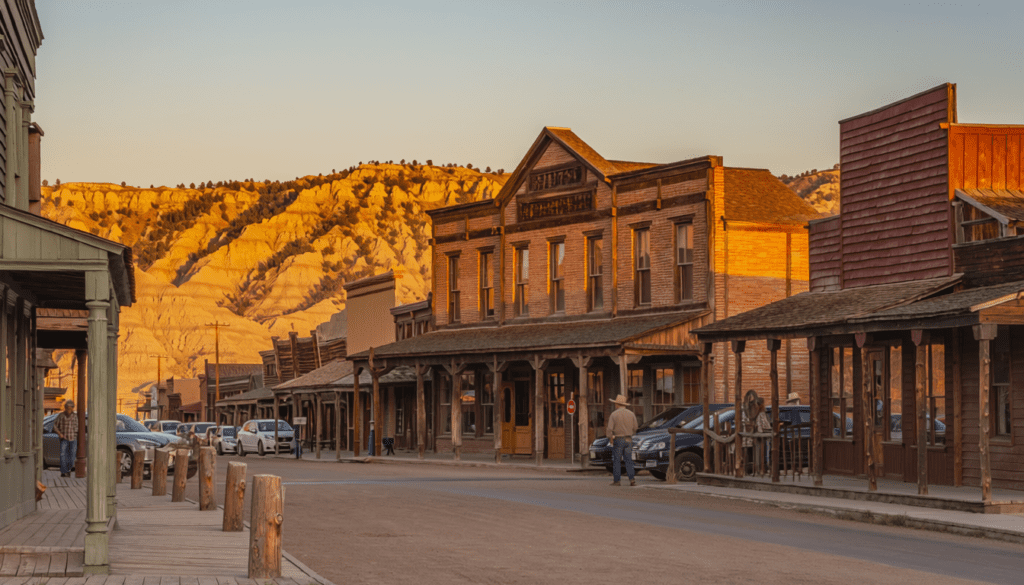
The badlands formations here are warm-toned in a way the South Dakota badlands are not — more gold and rust, less gray and lavender — and that warmth responds to storm light differently. A front moving across from the west, the sky going dark behind the formations while the sun finds a gap and illuminates the coulees and the ridge faces in a sharp, directional light that the flat midday sun cannot produce. The bison on the ridge in that light. The feral horses in the valley below. The Little Missouri River catching the sky.
Theodore Roosevelt came to this landscape broken and left it restored. The place did something for him that the more famous landscapes of his era could not. I think about that when I think about why this park stays with me — it is not the most dramatic park in the system, but it has a personal quality, a human scale, that the canyon parks and the mountain parks cannot quite replicate. The storm light on the formations is the photography. The feeling of the place is something else, and it is worth going back for both.
A Deeper Exploration
This article is part of my ongoing project documenting and photographing all 63 national parks across the United States.
Along the way, I’m creating deeper guides that explore photography locations, travel planning, seasonal light conditions, and personal reflections from the road. Theodore Roosevelt is the park that surprised me most on the 50 at 60 journey — the prairie dogs, the feral horses, the badlands light, and the quiet sense that this is a place where something important happened to someone who mattered. Worth more time than most itineraries give it.
Because the prairie dogs will be there. And next time I will have the right lens for them.
One more thing — just between us.
Theodore Roosevelt already runs quieter than most national parks, but the South Unit loop gets the bulk of the traffic. Here are three places worth knowing when you want the North Dakota badlands with even more room to breathe.
The North Unit is the most underused section of the park — 70 miles north of Medora, wilder in character, and the Oxbow Overlook at its end delivers a river bend view that most South Unit visitors never see. The drive filters out casual visitors and rewards those who make it with genuine solitude.
Just outside the park, the Little Missouri National Grassland surrounds the park on all sides and contains badlands formations, prairie wildlife, and river access that are indistinguishable from the park itself — with no entrance fee and almost no other visitors. The grassland roads require a good map and some navigation confidence but deliver the feeling of the 1880s Dakota Territory that Roosevelt himself would recognize.
And for a completely different North Dakota experience nearby, Chateau de Mores — the restored 1883 home of the Marquis de Mores just outside the park in Medora — provides the historical photography and storytelling context that connects the badlands landscape to the cattle ranching era Roosevelt lived in. The chateau on the bluff above the river at golden hour is the image that tells the full story of what this place was before it became a national park.