The National Parks

  • Storm Light in Hawai’i Volcanoes National Park

    Some landscapes carry more personal history than others. Hawai’i is one of those for me — not one visit but several, each belonging to a different chapter. A honeymoon. A family trip with a daughter in her early teens, watching her see the islands for the first time. And then the final state of my 50 at 60 journey, the trip that closed a year of travel through all fifty states — a stay in Waikiki, the most visited corner of the most visited island, surrounded by everything that Hawaiian tourism has built around the experience of being there.

  • Inside Wind Cave National Park

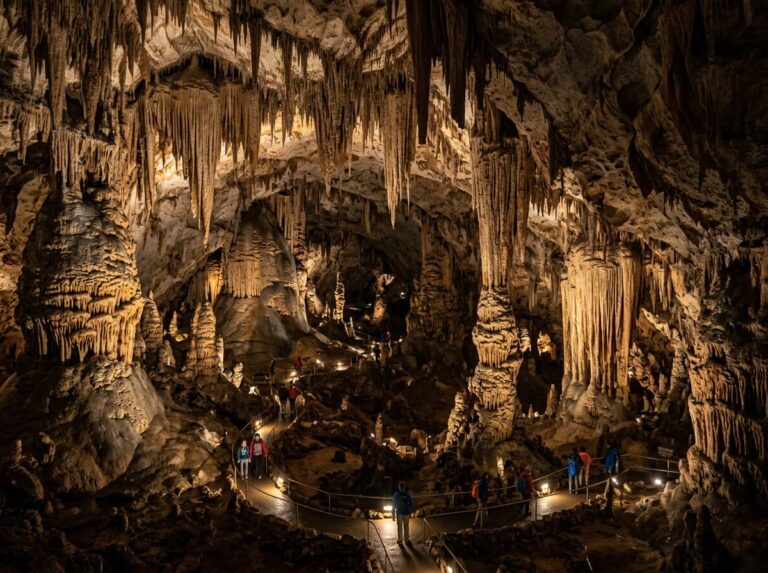
    Every photographer eventually builds a list of places they almost visited. Wind Cave National Park went on that list during my 50 at 60 journey through the Dakotas — I was in the area, saw it on the map, noted it as somewhere I should head. I was tight on time. I kept moving. The park stayed on the map and in the back of my mind, which is exactly where unfinished business tends to live.

  • Finding Light in Lassen Volcanic National Park

    The Manzanita Lake reflection is the primary sunrise target and it operates on the same wind-and-calm logic as every mountain lake reflection in the park system. The window is pre-dawn, before the morning breeze develops on the lake surface — typically the first 30 to 45 minutes of light, when the peak catches the alpenglow above and the reflection below holds the color of the pre-dawn sky. The campground at Manzanita Lake puts you at the lake shore without a commute, which is the practical advantage for the 5am start the reflection requires.

  • Chasing Light in Virgin Islands National Park

    Some landscapes become part of our imagination through work rather than vacation. I have spent time in the Caribbean on projects — a week living in an Airbnb in the Bahamas while lighting a high-end wedding, three containers of equipment shipped to the island, a golf cart as the primary mode of transportation between the venue and wherever the light needed to be. That week taught me something that no amount of travel photography research can substitute for: the Caribbean has a pace, and the pace is the point.

  • Inside Indiana Dunes National Park

    When planning a visit to America’s national parks, Indiana is not usually the first state that comes to mind. Most people, if asked to name a national park in Indiana, would pause. Some would guess incorrectly. The existence of Indiana Dunes National Park — on the southern shore of Lake Michigan, about 50 miles from downtown Chicago — genuinely surprises people, and that surprise is worth examining because it says something about how we think about what a national park is supposed to be.

  • First Light at Sequoia National Park

    The question of how Sequoia differs from the Redwoods is worth answering directly, because it comes up for anyone who has visited one and is planning the other. The coast redwoods are the tallest trees — they grow in a narrow coastal fog belt in northern California and reach heights up to 380 feet. The giant sequoias are the largest trees by volume — they grow on the western slopes of the Sierra Nevada between 5,000 and 7,000 feet and reach trunk diameters of up to 40 feet. The redwood forest feels like a cathedral of vertical space. The sequoia grove feels like standing among ancient monuments. Both are extraordinary. They are not the same experience.

  • Finding Light in Gateway Arch National Park

    I have not visited Gateway Arch as a national park. I have seen it from a distance — from a highway, from across the river, the way most people encounter it. Seeing it properly, on foot, with a camera and an intention to understand what it actually is as a photography subject, is a different proposition. This is the park in the 63-park series that most challenges the conventional definition of what a national park is supposed to be — and that challenge is worth engaging honestly.

  • The Light at Crater Lake National Park

    I have not been to Crater Lake. It is one of the parks I most want to correct that about, and the research I have done in preparation has only deepened the anticipation. The lake sits in the caldera of Mount Mazama, a volcano that erupted catastrophically approximately 7,700 years ago and then collapsed into itself, leaving a bowl six miles across and 2,000 feet deep that slowly filled with water over centuries. The Klamath people witnessed that eruption. Their oral traditions describe it. The geology and the human history are both extraordinary — and both visible in a single view from the rim.

  • Chasing Light in Big Bend National Park

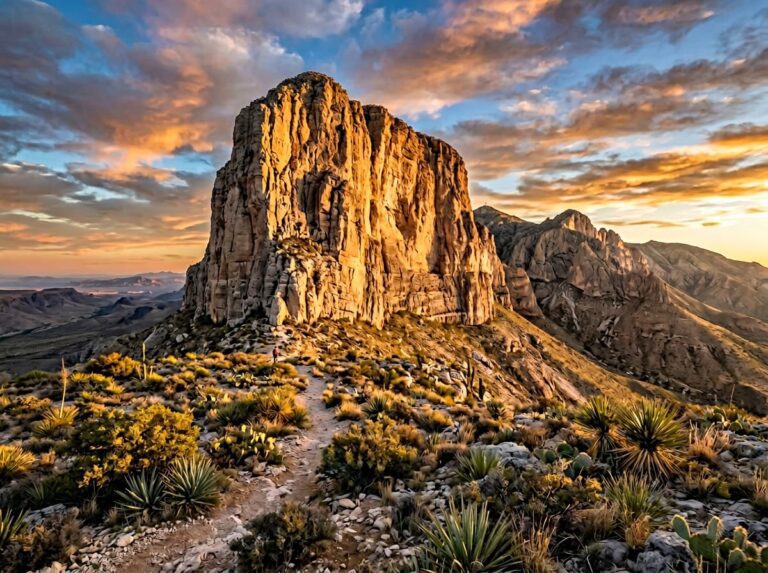
    Big Bend National Park sits in the southwestern corner of Texas where the Rio Grande makes its great southward bend before turning north again — 801,000 acres of Chihuahuan Desert, the Chisos Mountains rising from the desert floor to 7,800 feet, and 118 miles of river forming the international boundary with Mexico. The nearest commercial airport is four hours away. The nearest large city is farther than that. There is one gas station inside the park. Cell service is essentially nonexistent beyond the Panther Junction visitor center area.

  • Finding Light in National Park of American Samoa

    Some landscapes become part of our imagination long before we ever visit them. The National Park of American Samoa has been in mine for years — not because of famous photographs or Instagram posts, but precisely because of the absence of those things. It is the national park that almost nobody talks about, that almost nobody visits, and that sits further from the continental United States than any other unit in the system — 2,600 miles southwest of Hawaii, deep in the South Pacific.