A Photographer’s First Look at the Unlikely National Park on Lake Michigan’s Southern Shore
When planning a visit to America’s national parks, Indiana is not usually the first state that comes to mind. Most people, if asked to name a national park in Indiana, would pause. Some would guess incorrectly. The existence of Indiana Dunes National Park — on the southern shore of Lake Michigan, about 50 miles from downtown Chicago — genuinely surprises people, and that surprise is worth examining because it says something about how we think about what a national park is supposed to be.
Indiana Dunes became a national park in 2019, elevated from national lakeshore status, and it is the second most biodiverse national park in the system after the Great Smoky Mountains — a fact that stops most people mid-sentence when they hear it. Fifty miles from one of the largest cities in the country, within an hour’s drive of 7 million people, the park contains more than 1,100 plant species, 350 bird species, and ecological communities that range from active sand dunes to black oak savannas to tamarack bogs to lakeside marshes to beech-maple forest — all within a narrow strip of land between the industrial corridor of northwest Indiana and the open water of Lake Michigan.
I have not been. The research I have done in preparation has consistently surprised me — this is a more interesting park than its Midwest industrial neighbor reputation suggests, and the photography potential is considerably more varied than sand dunes on a lakeshore. The light on Lake Michigan at sunrise is the image I keep coming back to. Getting there to find out if it lives up to the anticipation is the plan.
The Landscape That Draws People Here
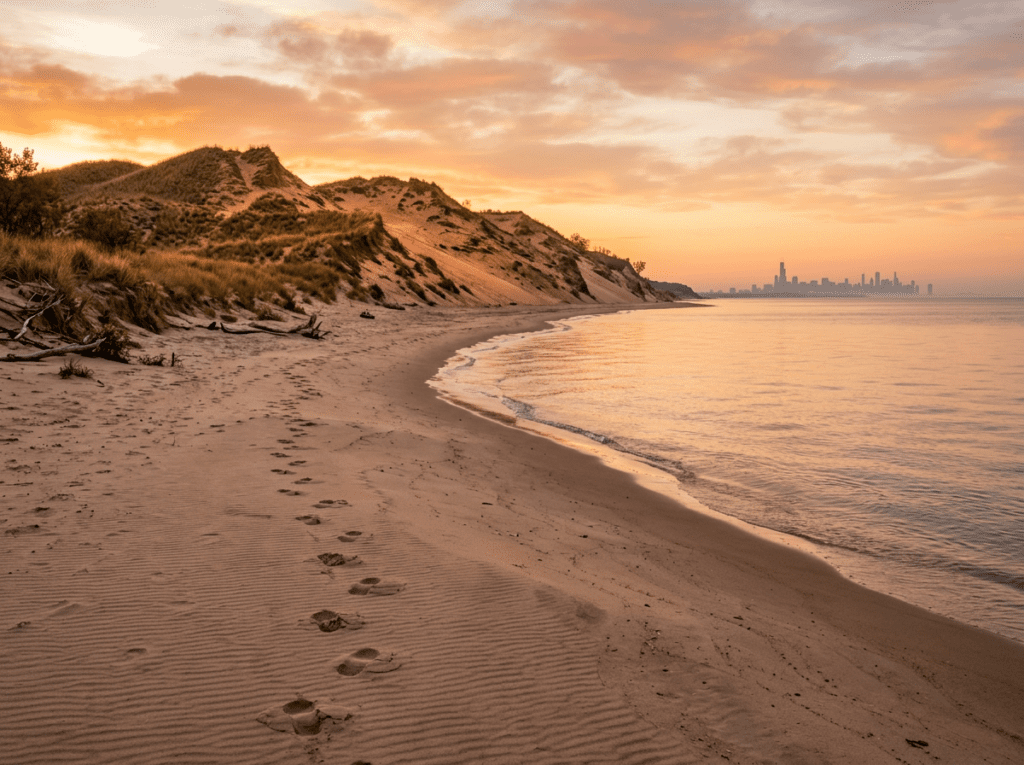
The park’s 15 miles of Lake Michigan shoreline is the primary draw and the primary photography subject — a beach backed by dunes that rise as high as 200 feet above the lake, with the Chicago skyline visible on the horizon to the northwest on clear days. That skyline is one of the park’s most distinctive compositional elements — the wilderness foreground of the dune beach and the urban skyline of one of America’s great cities sharing the same frame in a juxtaposition that is specific to this place and available nowhere else in the national park system.
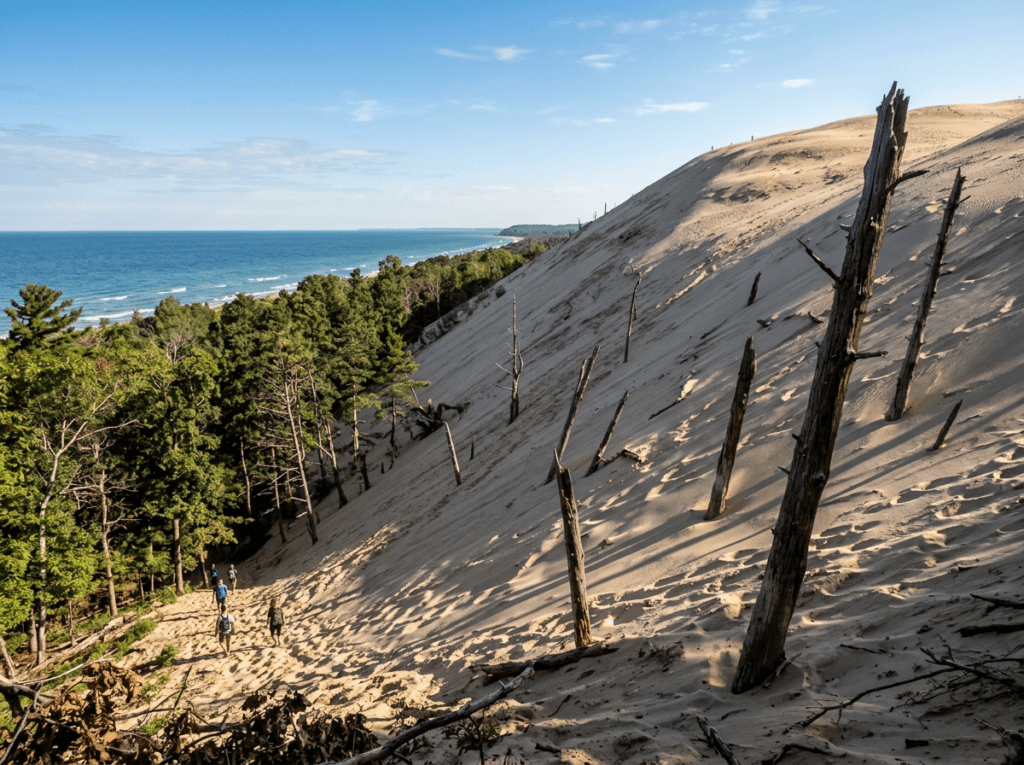
The dunes themselves are active geological formations — sand continuously moved by wind and wave into configurations that change seasonally and even daily. The foredunes along the waterline, the blowouts carved by wind into the older dunes behind them, and the ancient dunes further inland that have stabilized under vegetation tell a geological timeline of lake level changes and wind patterns that is readable in the landscape for those who know how to look. Mount Baldy, the park’s largest active dune at 126 feet, is a migrating dune — it moves inland at a rate of about four feet per year, slowly burying the forest behind it. The trees emerging from the sand on Mount Baldy’s leeward face, partially buried and dead, are one of the park’s most photographically distinctive subjects.
The inland ecosystems are where the biodiversity lives and where the photography becomes interesting in ways the beach cannot offer. The Pinhook Bog — a glacially formed kettle hole bog accessible by guided tour — contains carnivorous plants, tamarack trees, and sphagnum moss in a habitat that belongs ecologically to northern Canada but sits in Indiana due to the particular microclimate the lake creates. The Cowles Bog area, named for the ecologist Henry Chandler Cowles who studied plant succession here in the early 1900s and established the field of plant ecology in the process, contains the full ecological sequence from open dune to mature forest compressed into a short hiking distance.
The Photographer’s Chase
The Lake Michigan sunrise is the primary photography target and the image that most clearly defines the park’s visual identity. Lake Michigan is large enough to behave like an ocean in terms of weather and light — the lake effect that drives the park’s extraordinary biodiversity also produces dramatic cloud formations, lake fog, and storm light that the inland Midwest cannot replicate. A sunrise on the Indiana Dunes shoreline, with the lake stretching north and west to the horizon and the Chicago skyline visible in the distance on a clear morning, is a photograph that surprises people when they learn where it was taken.
The Chicago skyline from the beach is the compositional element that makes Indiana Dunes unique in the park system. West Beach and Central Beach provide the best westward sightlines toward the city — a long lens compresses the skyline against the lake foreground in a way that makes the urban and the natural feel equally present in the same image. The skyline is most visible on low-humidity days in fall and winter when the air is clear; summer haze frequently obscures it. A telephoto from the waterline at sunset, with the Chicago towers silhouetted against the western sky, is the specifically Indiana Dunes image that no other park in the system can produce.
Mount Baldy is the dune photography subject — the active, migrating dune with the dead tree trunks emerging from its leeward face as the sand buries the forest behind it. The dune face in raking early morning light, the sand textures and the shadow patterns building three-dimensionality into the surface, with the dead snags providing the vertical elements that anchor the composition — this is desert photography logic applied to a freshwater shoreline, and it produces images that look like neither the beach nor the dune parks of the Southwest.
The birding at Indiana Dunes is world-class by any measure — the park sits on a major migration corridor and the spring and fall migration seasons bring concentrations of warblers, shorebirds, raptors, and waterfowl that draw birder-photographers from across the Midwest. The Dunes Nature Preserve and the West Beach lagoon area are the primary birding positions. A 400mm lens in October, when the hawk migration peaks and the shorebird activity on the beach is at its highest, produces wildlife photography that the summer beach visitor never experiences.
Visiting the Park
Indiana Dunes is the most accessible major national park in the country for a large portion of the American population — within a two-hour drive of Chicago, Indianapolis, Milwaukee, and Detroit, and served by the South Shore Line commuter rail from Chicago’s Millennium Station directly to the Dune Park station inside the park. The rail option is genuinely practical for a day trip from Chicago and eliminates the parking challenge that summer weekends create at the beach access points.
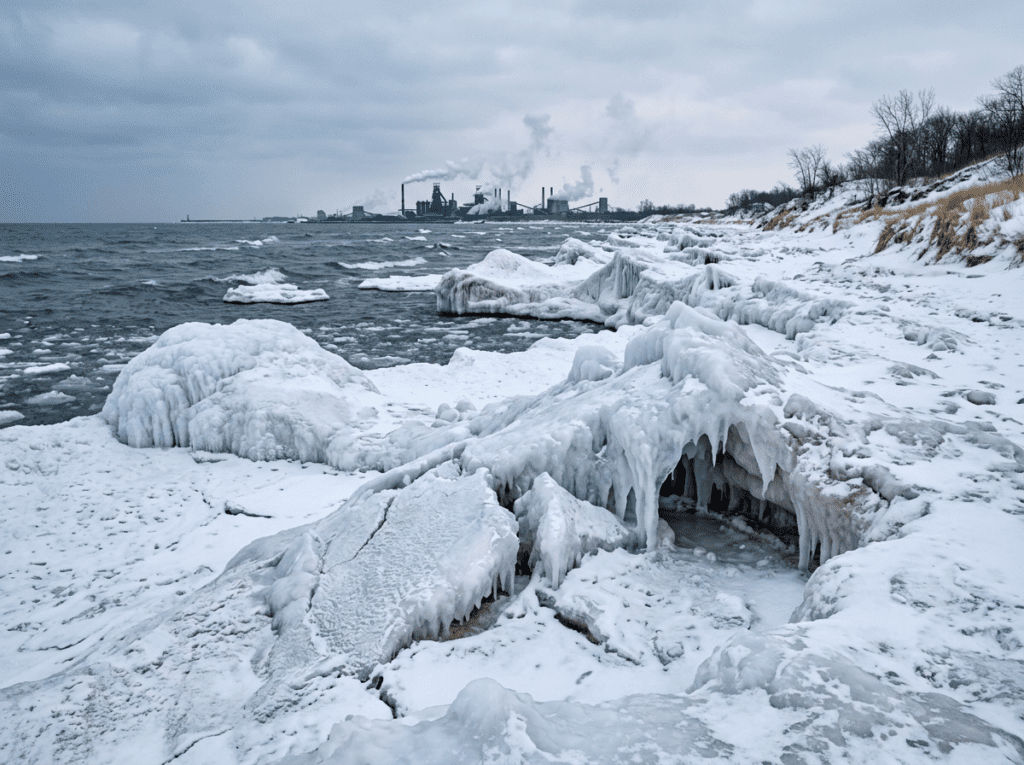
The park is open year-round and the photography conditions change dramatically by season. Summer brings the beach crowds that turn the shoreline into a full-capacity recreational destination — the photography window is early morning before the crowds arrive, same discipline as every busy park in the system. Fall is the photography sweet spot — the hawk migration, the fall color in the beech-maple forest, the clearer air that reveals the Chicago skyline, and the thinning crowds after Labor Day. Winter produces the ice formations on the shoreline — ice caves and ice mounds built by the wave action along the beach — that are among the most unusual and most photographed natural formations in the Midwest. Spring brings the warbler migration and the wildflowers in the forest understory.
No timed entry reservations are currently required for most of the park, though the beach parking areas fill on summer weekends and early arrival is essential. The Mount Baldy area requires a ranger-guided tour to protect the dune’s fragile surface — check current tour availability at nps.gov/indu before planning a Baldy visit.
Where to Stay
The towns immediately adjacent to the park — Chesterton, Porter, and Michigan City — provide the closest lodging. Chesterton is the most charming of the three, a small Indiana town with an independent dining scene and the Westchester Public Library’s Carnegie building as evidence of a community with more going on than its size suggests. The Inn at Aberdeen in Valparaiso, about 15 minutes south, is the most distinctive lodging option in the area — a Victorian bed and breakfast with genuine character.
For photographers targeting the sunrise beach sessions, a Chesterton or Porter hotel puts the West Beach and Central Beach access points within 10 to 15 minutes — practical for a 5am departure without feeling heroic. Michigan City, on the park’s eastern edge, provides additional lodging and access to the Washington Park Beach area with its own lighthouse photography subject.
Dunewood Campground inside the park is the in-park camping option — reservable through recreation.gov for peak season, with sites in the forested dune environment rather than on the beach itself. For RV travelers, the campground accommodates standard rigs and provides the practical access to early morning beach starts that gateway town hotels cannot match. The Indiana Dunes State Park campground adjacent to the national park provides additional camping with full hookups.
If I Were Planning My First Visit
October is the month. The hawk migration, the fall color in the inland forest, the clearer air quality that makes the Chicago skyline photography viable, and the beach crowds reduced to a manageable level after the summer season. Two nights in Chesterton or at Dunewood Campground.
First morning at West Beach before sunrise — in position on the shoreline before the light arrives, the long lens aimed northwest toward the Chicago skyline, waiting for the moment when the city emerges from the predawn darkness and the lake surface catches the first color of the sky. That photograph exists. I want to make it.
Second morning at Mount Baldy for the dune face in raking early light — the sand textures, the dead tree snags, the shadow patterns that only the low-angle morning sun can build into that surface. Then a slow afternoon walk through the Cowles Bog area and the inland forest, looking for the fall color in the beech-maple canopy and the macro subjects on the forest floor. This park rewards slow walking as much as any wilderness park in the system. The biodiversity is there. Finding it requires patience and a close eye.
The Light I’m Curious About
It is the Lake Michigan sunrise light — specifically the October version, when the air is clear enough to reveal the Chicago skyline on the northwestern horizon and the lake surface is still and dark and the first color of the sky builds in the east while the city lights are still visible to the west.
That moment — the transition between city night and lake morning, the skyline and the wilderness beach in the same frame, the light not yet fully committed to one or the other — is the photograph that Indiana Dunes is uniquely positioned to produce. No other national park has a major American city on its horizon. No other park offers this specific visual argument about what nature and civilization look like when they sit 50 miles apart and share a shoreline.
Indiana Dunes is not the park people think of first when they plan a national park trip. It is the park that surprises them when they go. The biodiversity, the geology, the migration, the ice formations, and that skyline on the horizon — all of it inside an hour of Chicago, all of it waiting for the photographer who shows up before sunrise and pays the kind of attention the place deserves.
A Deeper Exploration
This article is part of my ongoing project documenting and photographing all 63 national parks across the United States.
Along the way, I’m creating deeper guides that explore photography locations, travel planning, seasonal light conditions, and personal reflections from the road. Indiana Dunes is the second urban-adjacent park in this series after Gateway Arch, and it makes the same argument more quietly: that light falls on dunes and lakeshore the same way it falls on canyon walls, and that the discipline of showing up early and paying attention works everywhere — even in Indiana.
Because the second most biodiverse national park in the system is 50 miles from Chicago. That sentence should be more widely known than it is.
One more thing — just between us.
Indiana Dunes is accessible enough that summer weekends bring genuine crowds to the beach access points — but a few minutes of extra driving puts you somewhere much quieter.
Indiana Dunes State Park— adjacent to the national park and managed separately by Indiana — has its own beach, its own dune trails, and a campground that takes pressure off the national park facilities. The state park’s Waverly Beach area is consistently less crowded than the national park’s main beach access points and produces the same Lake Michigan sunrise.
For something completely unexpected in the region, Warren Dunes State Park across the Michigan border about 40 miles northeast has even larger dunes — some rising 260 feet — with far fewer visitors and a wild lakeshore character that the more developed Indiana side cannot match.
And for the photography trip that combines the national park with the city, a morning on the Chicago lakefront trail shooting back toward the skyline from the water’s edge completes the visual argument the park makes from the Indiana side — same lake, same light, different shore. The two together tell a story neither one tells alone.