A Photographer’s First Look at Maine’s Rocky Coast and the First Sunrise in America
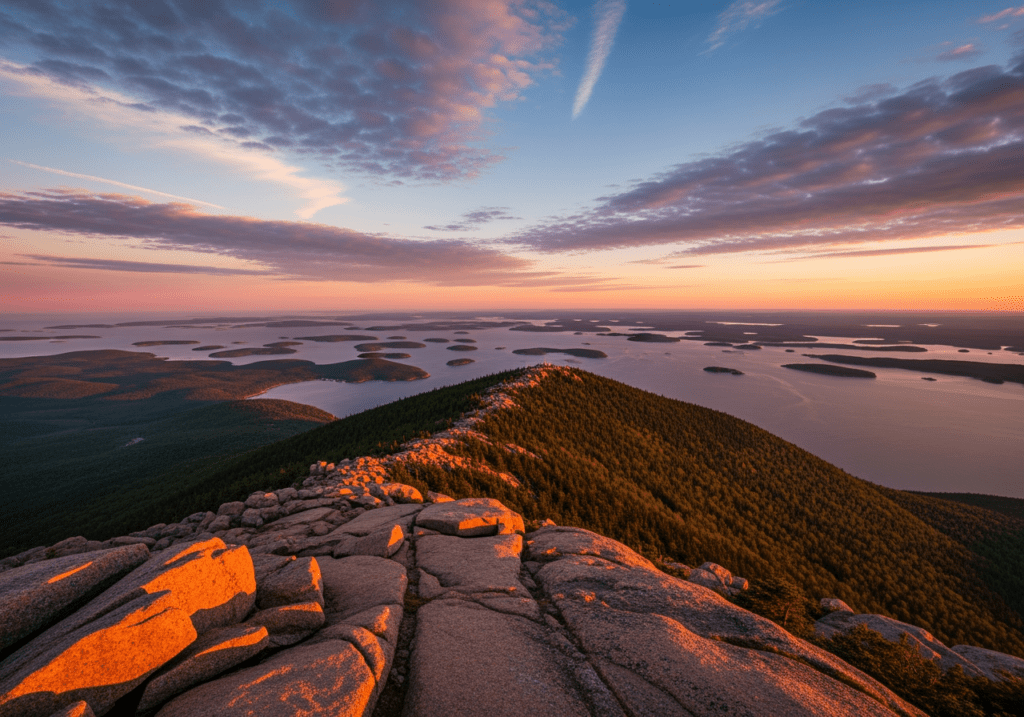
When planning a visit to America’s national parks, some destinations stop you with a single detail. For Acadia National Park, that detail is this: on the summit of Cadillac Mountain, from early October through early March, you are standing at the first place in the United States to receive the light of the rising sun.
The first light in America. There is something about that fact that goes beyond the photographic. It is the kind of thing that makes you want to be there before dawn, in the dark and the Maine cold, waiting.
Acadia is the only national park in the northeastern United States, and it occupies a landscape unlike anything else in the park system — granite peaks rising directly from the Atlantic Ocean, pink granite shoreline meeting cold surf, spruce and fir forest covering the hillsides in a dense dark green that the western parks cannot match. The light here is an Atlantic light. Coastal, variable, frequently dramatic, capable of turning a gray morning into something extraordinary with almost no warning. For photographers trained on the warm reds of the desert Southwest or the granite gold of the Sierra Nevada, Acadia is a recalibration.
The Landscape That Draws People Here
Acadia sits primarily on Mount Desert Island off the coast of Maine, connected to the mainland by a short causeway. The park covers about half the island — the eastern half, including Cadillac Mountain, the highest peak on the eastern seaboard at 1,530 feet, and the rugged Atlantic coastline of the Otter Cliffs and Thunder Hole. The western half of the island, around the town of Southwest Harbor, has a quieter character and a different photographic personality.
Bar Harbor, the gateway town on the island’s northeastern shore, is small, walkable, and genuinely charming — the kind of New England coastal town that has not yet been entirely consumed by tourism, though it comes close in the peak of summer. The park loop road connects the major photography locations in a 27-mile circuit that can be driven in under an hour but rewards much slower exploration.
The defining photography locations form a clear sequence: Cadillac Mountain summit for the sunrise, Thunder Hole for the wave and surf photography, Otter Cliffs for the coastal granite and Atlantic horizon, Jordan Pond for the still-water reflection of the Bubble mountains, and the carriage roads — 45 miles of broken-stone paths built by John D. Rockefeller Jr. — for the intimate forest and bridge photography that the shoreline cannot offer. Each one is a different expression of the same island, and a serious photography visit needs all of them.
The Photographer’s Chase
The Cadillac Mountain sunrise requires a timed entry reservation during peak season — the summit road fills before dawn and the NPS manages access through recreation.gov. Check current requirements before planning. The reservation is worth the effort: being on the summit as the first light breaks over the Atlantic, with the islands and the Maine coastline spread below and the sky going from deep indigo to the first warm gold of the sun clearing the horizon, is one of the genuinely singular photography experiences in the national park system.
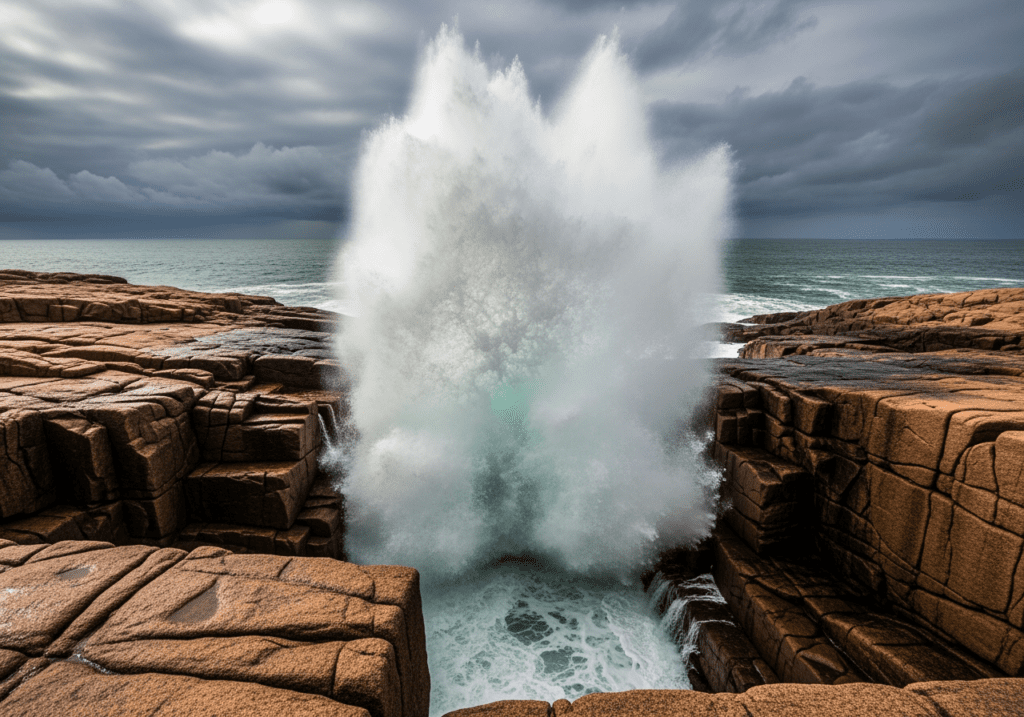
The coastal photography at Otter Cliffs and Thunder Hole is the other primary target, and it operates on a completely different logic from the summit sunrise. Here the light is secondary to the water. Thunder Hole — a narrow granite slot in the shoreline where incoming waves compress and explode upward — produces its best photography on an incoming tide with moderate surf, when the wave energy is channeled into the slot and the water erupts eight to forty feet into the air. The timing is tidal, not solar. Check the tide chart the night before, position yourself at mid-incoming tide, and be prepared to get wet.
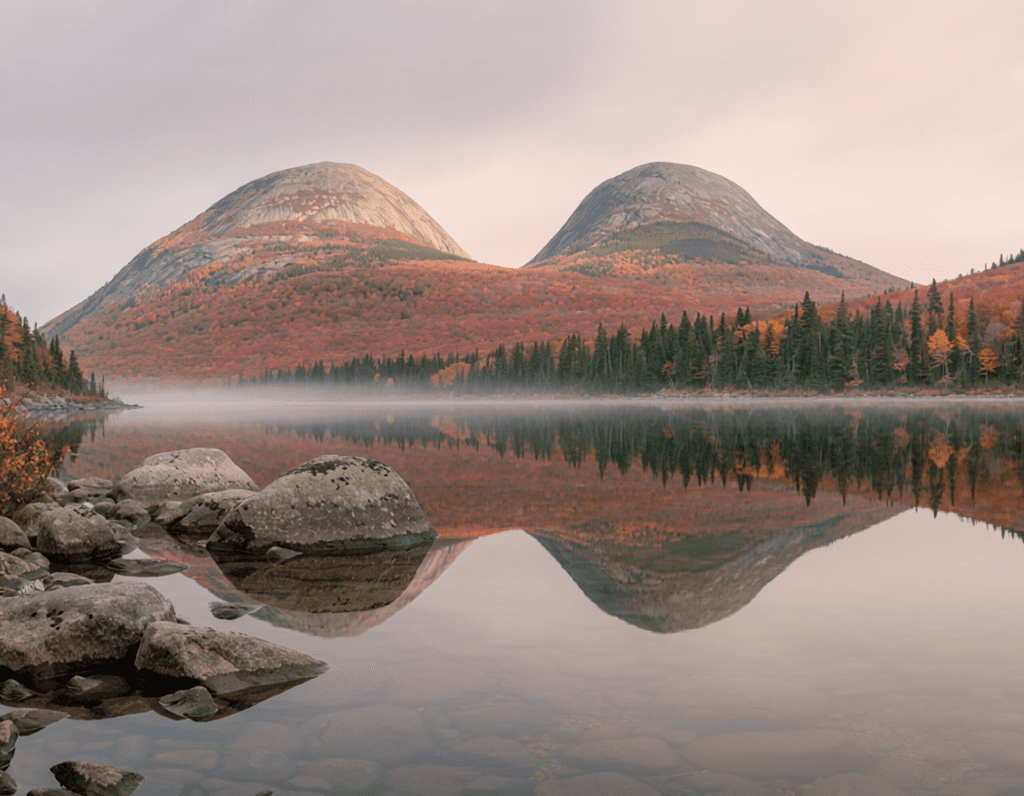
Jordan Pond is the quiet counterpoint to the Atlantic drama — a clear glacial lake with two rounded hills called the Bubbles reflected in still water on calm mornings. The reflection photography here, in the early morning before the wind comes up and breaks the surface, has a softness and intimacy that the granite coast cannot offer. A wide lens low to the water surface, with the Bubbles framed symmetrically above their reflection — this is the interior Acadia image that visitors who spend all their time on the shore never find.
Fall color arrives in Acadia in late September and peaks in mid-October — earlier than most of New England due to the coastal location and the elevation. The carriage roads through the forest in peak fall color, with the stone arch bridges Rockefeller built as part of the road system, produce the woodland photography that the open summit and shoreline cannot. The combination of granite arch, fall color, and the soft diffused light of an overcast October morning is specifically and beautifully Acadian.
Visiting the Park
Acadia is a three-season park for most visitors — late spring through fall — with winter offering solitude and a dramatically different atmosphere for those willing to manage the cold and the reduced services. The park loop road and most facilities close in winter, but the carriage roads remain accessible for cross-country skiing and snowshoeing, and the shoreline photography in winter light and occasional snow is extraordinary.
The primary season runs late June through October, with September and October being the strongest photography months — the summer crowds thin after Labor Day, the fall color peaks in mid-October, and the light takes on the lower, more angled quality that the coastal landscape responds to particularly well. The Cadillac Mountain summit reservation system is in effect during peak season; check current dates and booking windows at nps.gov/acad before finalizing trip dates.
A park pass is required for entry. The Island Explorer bus system — free and well-organized — connects Bar Harbor, the campgrounds, and the major park destinations without requiring a car for every move. For photographers working early mornings on the summit and late afternoons on the shore, having a vehicle is practically essential, but the bus fills useful gaps in between.
Where to Stay
Bar Harbor is the natural base — a compact walkable town with a genuine range of lodging from budget inns to the historic Bar Harbor Inn on the waterfront. The town is lively in summer and quieter in September and October, which is when it’s most pleasant to be there. Staying in Bar Harbor puts the park entrance within a few minutes’ drive and the town’s restaurants within walking distance after long shooting days.
Southwest Harbor, on the quieter western side of the island, offers a more local feel and access to the less-visited western sections of the park — Acadia Mountain, Echo Lake, and the quieter carriage roads that the Bar Harbor-side crowds rarely reach. For photographers interested in the full range of the island, splitting time between the two sides is worth considering.
For campers, Blackwoods Campground on the eastern shore of the island is the most centrally located — close to Otter Cliffs, Thunder Hole, and the loop road photography. Seawall Campground on the quieter southwestern shore offers a more remote feel. Both are reservable through recreation.gov and fill quickly for peak season. RVs are accommodated at both campgrounds; check current size limits before booking, as the loop road has some tight sections.
If I Were Planning My First Visit
I would go in October. The fall color at peak, the crowds thinned, the light at its lowest and most directional angle of the season. I would book the Cadillac Mountain sunrise reservation for the first morning and be on the summit before it was fully dark — standing at the highest point on the eastern seaboard, facing east over the Atlantic, waiting for the first light in America to arrive.
After the summit, I would check the tide chart and plan a Thunder Hole visit for the afternoon incoming tide. Then Jordan Pond the following morning — calm water, the Bubbles reflected, a wide lens low to the surface. Then a full afternoon on the carriage roads in the fall color, finding the stone bridges and the forest light that most visitors drive past on the loop road.
What I would not do is rush. Acadia is a compact park geographically, which creates the illusion that it can be seen quickly. It cannot. The light changes constantly here — coastal weather moves fast, the ocean shifts the mood of every location within minutes, and the difference between a flat gray morning and a dramatic one is often a single break in the cloud cover that lasts twenty minutes. The photographers who stay and wait are the ones who find it.
The Light I’m Curious About
It is the storm light off the Atlantic.
Maine weather is not polite. Fronts move through quickly and with force, and the light that appears in the breaks between storm systems — when the clouds are dramatic and moving fast and the sun comes through at a low angle and lights up the pink granite and the white surf against a dark sky — is the most specific and unrepeatable light that Acadia produces. It is not the sunrise light, which is reliable and beautiful on a clear morning. It is the weather light, the light that arrives as a surprise and lasts fifteen minutes before the next cloud bank moves in.
Standing at Otter Cliffs in that light — the granite pink and warm, the Atlantic dark and active, the sky doing something dramatic behind you — is the image I have been imagining since I started planning this project. It cannot be scheduled. It can only be waited for, by someone who is already there and already paying attention.
That is what the 63 parks project asks of me, park by park. Show up. Stay longer than is comfortable. Let the light find you.
A Deeper Exploration
This article is part of my ongoing project documenting and photographing all 63 national parks across the United States.
Along the way, I’m creating deeper guides that explore photography locations, travel planning, seasonal light conditions, and personal reflections from the road. Acadia opens the Eastern cluster — a group of parks that trade the grand geological scale of the West for something more intimate, more weather-dependent, and in its own way just as extraordinary.
Because sometimes the best light in America is the Atlantic light on a Maine morning when the weather can’t decide what it wants to do — and you’re already there with a camera, waiting to find out.
One more thing — just between us.
Acadia is a small park geographically and the Cadillac Mountain road and the Ocean Path draw the bulk of the traffic — which means the rest of the island and the mainland section of the park are genuinely quiet by comparison. Here are three places worth finding.
The Schoodic Peninsula — the only mainland section of Acadia, about an hour from Bar Harbor by road or reachable by ferry — has dramatic granite coastline, tide pools, and Atlantic views with a fraction of the island crowds. The exposed granite slabs at Schoodic Point during a storm swell produce some of the most powerful coastal photography in the Northeast, and you will often have the point nearly to yourself.
On the quieter western side of Mount Desert Island, Southwest Harbor and the less-visited carriage roads and trails of the western park section — Acadia Mountain, Echo Lake, Beech Cliff — offer the same old-growth forest and granite landscape as the eastern section with a local pace that Bar Harbor’s summer energy cannot match.
And for a completely different Maine coast experience just outside the park, the Seal Cove area on the island’s western shore has quiet tidal coves and working lobster boat harbors that tell a completely different story about coastal Maine — one that the Cadillac Mountain sunrise crowd never sees.