A Photographer’s First Look at California’s Galapagos — and How to Have a Genuinely Unique Experience There
When planning a visit to America’s national parks, some destinations require a boat rather than a road. Channel Islands National Park joins Dry Tortugas, American Samoa, and the Virgin Islands in the growing list of parks in this series where the vehicle stays on the mainland and the adventure begins at a harbor. The RV stays home. The camera bag gets lighter. The Pacific Ocean provides the commute.
I have driven the Pacific Coast Highway and remember islands visible from the road — though whether those were the Channel Islands or the more prominent Catalina Island closer to shore is genuinely uncertain from memory. The Channel Islands sit further out, 25 miles offshore from Ventura, and their distance from the coast is precisely what makes them extraordinary. Twenty-five miles of open Pacific creates a separation from the California mainland that feels, once you arrive on the islands, like a complete departure from the world you left behind at the harbor.
The Channel Islands are called the Galapagos of North America — a comparison that is not hyperbole. The islands’ isolation has produced endemic species found nowhere else on earth, marine mammal populations of extraordinary density, and an ecological character that the adjacent California coast lost to development long ago. The question of how to create a unique experience here has a clear answer: go further than the day trip allows. The visitors who experience the Channel Islands most completely are the ones who camp on the islands overnight, or who go to the outer islands that most visitors never reach, or who get into the water rather than staying above it. The 25-mile crossing filters out the casual visitor. What you do with the island once you arrive determines what kind of experience you have.
The Landscape That Draws People Here
Channel Islands National Park protects five of the eight Channel Islands off the Southern California coast — Anacapa, Santa Cruz, Santa Rosa, San Miguel, and Santa Barbara — along with the surrounding one nautical mile of ocean. The islands range from the small and accessible Anacapa, just 14 miles from Oxnard, to the remote and wind-scoured San Miguel, 55 miles offshore and accessible only in favorable weather. Each island has a distinct character: Anacapa for the iconic arch and the seabird colonies, Santa Cruz for the hiking and the sea caves, Santa Rosa for the Torrey pines and the undeveloped interior, San Miguel for the pinniped rookeries and the extreme remoteness, Santa Barbara for the tiny size and the overwhelming seabird density.
The marine environment is the park’s most extraordinary feature and the one that the above-ground visit only hints at. The cold California Current meeting the warmer nearshore waters creates an upwelling of nutrients that supports one of the most productive marine ecosystems on the Pacific Coast — kelp forests of extraordinary density, harbor seals and California sea lions hauled out on every suitable rock, northern elephant seals in their largest mainland-adjacent rookery at San Miguel, blue and humpback whales feeding in the Santa Barbara Channel, and the largest congregations of western gulls and Brandt’s cormorants and brown pelicans in the region all concentrated on islands that the mainland development cannot reach.
The land birds are the biological curiosity that makes the Channel Islands specifically Galapagos-like — the island scrub-jay, found only on Santa Cruz Island and nowhere else on earth, is the most famous endemic. The island fox, a miniaturized version of the mainland gray fox that evolved in island isolation over thousands of years, has recovered from near-extinction through a captive breeding program and is now frequently seen on the islands. These endemic species exist because the islands have been isolated long enough for evolution to produce something genuinely new — the photography of an island scrub-jay or an island fox is the photography of a creature that exists nowhere else.
The Photographer’s Chase
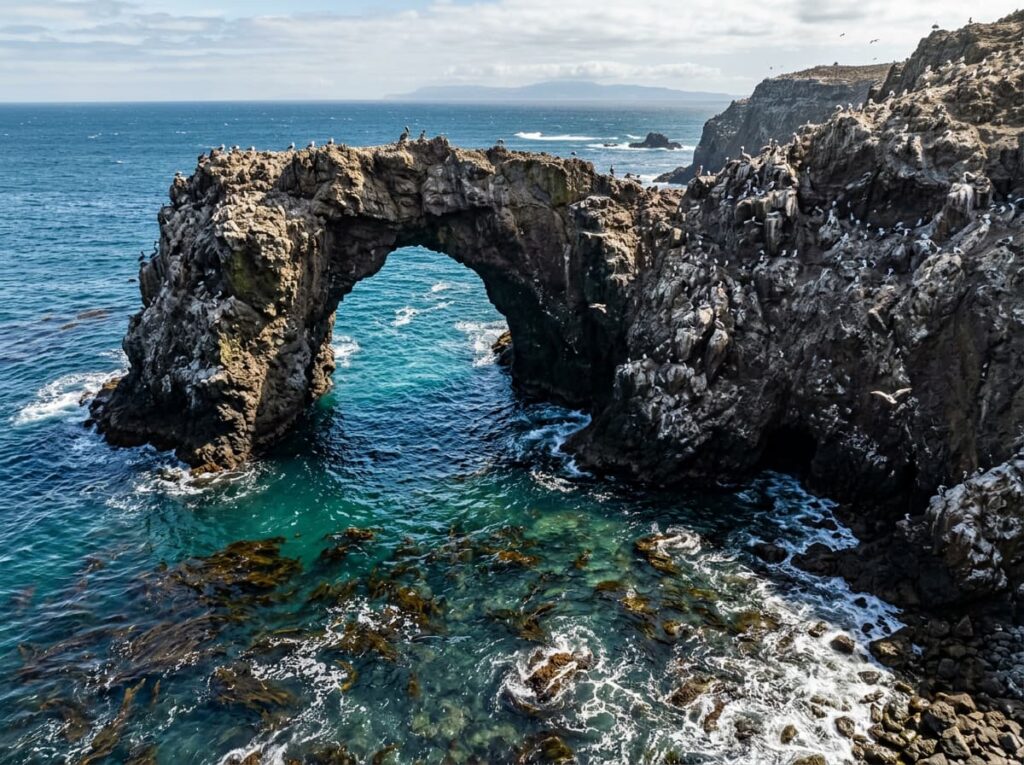
The unique experience question frames the photography planning directly. A day trip to Santa Cruz or Anacapa delivers the classic Channel Islands experience — the Anacapa Arch, the sea lion haul-outs, the island views back toward the California mainland. It is rewarding and it is what most visitors do. The photography that is genuinely distinctive — the images that could only have been made by someone who went further — requires one of three approaches: camping overnight on the island, visiting one of the outer islands, or getting into the water.
Camping on Santa Cruz or Santa Rosa puts you on the island at dawn and dusk — the two light windows that the day trip boat schedule eliminates entirely. The morning light on the island’s sea cliffs, with the mainland not yet visible through the morning haze and the island fox moving through the campsite at dawn, is the Channel Islands photography that the day visitor never experiences. The sunset from the island’s high points, with the Pacific extending to the horizon in every direction and the California coast a faint line to the east, is the perspective that communicates what island isolation actually feels like. A single overnight camping trip changes the photographic yield of a Channel Islands visit completely.
The sea cave kayaking on Santa Cruz — guided tours through the largest sea cave system in the world, including the 1,215-foot Painted Cave — is the above-water version of the unique experience. The caves are accessible by kayak in calm conditions and the interior photography — the cave walls, the light penetrating from the cave mouth, the kayakers dwarfed by the cave scale — is specific to this park and unavailable anywhere on the California mainland. Island Packers and Channel Islands Adventure Company both offer guided kayak cave tours; booking well in advance for summer season is essential.
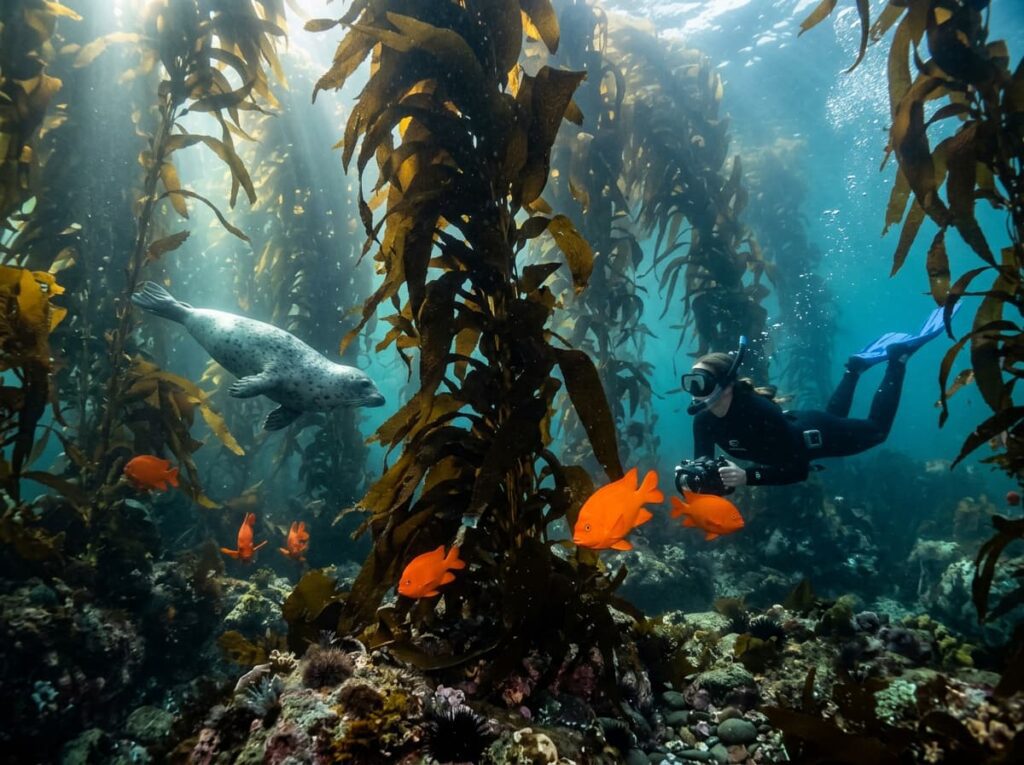
The snorkeling and diving in the kelp forest is the underwater photography equivalent of the cave kayaking — the California kelp forest, with the giant kelp rising 100 feet from the seafloor in cathedral columns, with the garibaldi fish in their brilliant orange against the green kelp, with the harbor seals playing in the current — is the Channel Islands underwater experience that the surface visit can only suggest. The water is cold — a 5mm wetsuit minimum — and the visibility varies with conditions, but the kelp forest on a calm clear morning is one of the finest temperate marine photography environments on the Pacific Coast.
Visiting the Park
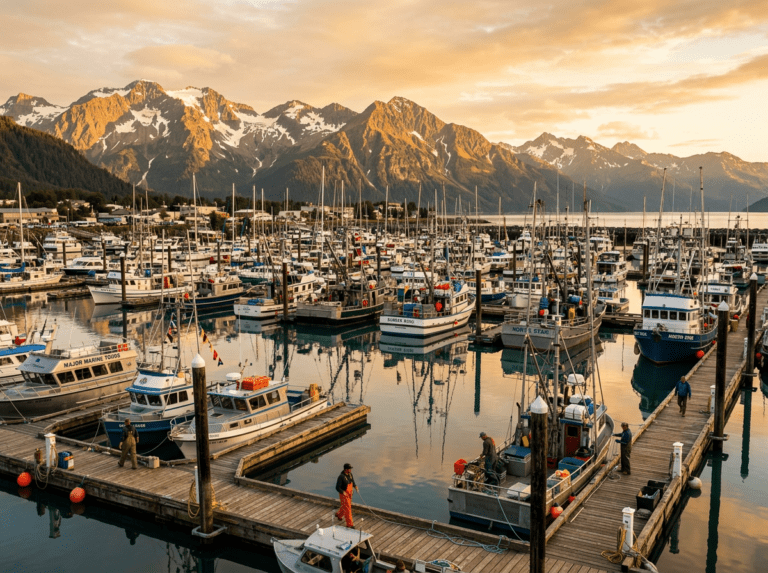
All access to Channel Islands National Park requires a boat or floatplane. Island Packers Cruises, operating from Ventura Harbor and Oxnard, is the primary concessionaire — offering day trips and camping transport to all five islands on a seasonal schedule. The crossing time ranges from about an hour to Anacapa to over three hours to San Miguel; sea conditions on the Santa Barbara Channel can be rough and seasickness is a genuine consideration for the outer island trips. Check current island access and weather conditions before any trip.
The primary season runs from late spring through fall, when the weather is most stable, the whale migration is active in the channel, and all five islands are accessible. San Miguel, the most remote island, has access trips scheduled only a few times per month and requires favorable weather — its itinerary is the most likely to be canceled. Spring brings the elephant seal pupping season at San Miguel and the wildflower bloom on the island interiors; summer brings the driest, most stable weather and the peak whale watching; fall is the transition season with thinning crowds and the possibility of the clearest air quality and the longest mainland visibility.
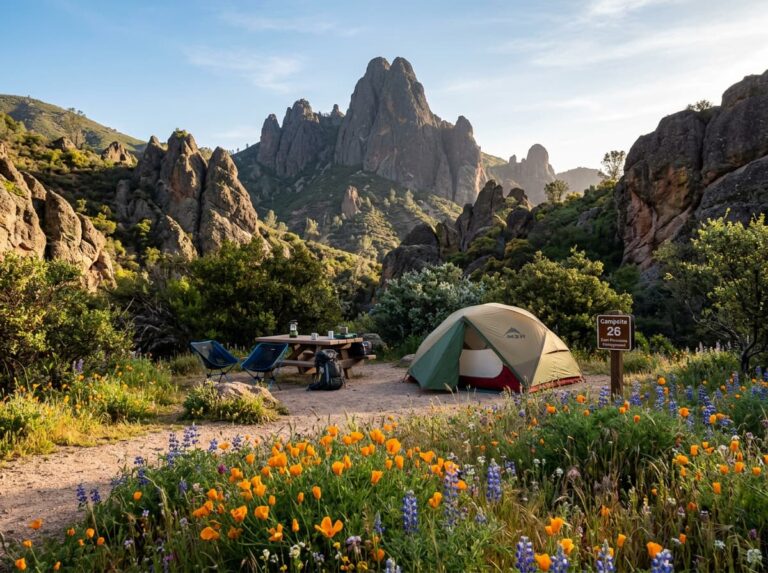
Camping reservations on the islands are made through recreation.gov and sell out quickly for summer season — particularly the Santa Cruz and Santa Rosa campgrounds. The camping gear must be carried from the boat landing, sometimes over significant terrain, and everything packed out. There are no services on the islands beyond basic restrooms at the established campgrounds. Water must be carried in. The logistics require planning that a national park hotel reservation does not.
Where to Stay
On the mainland, Ventura is the primary base — a pleasant Southern California coastal city with good independent lodging and dining, a waterfront that includes the Island Packers harbor, and a character that is less developed and less crowded than the Santa Barbara to its north or the Los Angeles sprawl to its south. The Ventura Harbor area puts the boat departure within minutes of the hotel door, which is the practical advantage for the early morning departure times that the crossing schedule requires.
Santa Barbara, about 35 miles north, provides the most atmospheric mainland base — one of the finest small cities in California, with a Spanish colonial architecture, the Santa Barbara Mission, and a food and wine scene that makes the mainland portion of the trip genuinely enjoyable rather than purely logistical. The Funk Zone, Santa Barbara’s arts and wine district adjacent to the waterfront, is worth an evening before or after the island trip.
On the islands themselves, primitive camping is the only accommodation — no lodges, no huts, nothing beyond what you carry. The Scorpion Ranch campground on Santa Cruz and the Santa Rosa campground are the most established, with water available seasonally. San Miguel’s campground is primitive and exposed to the wind that scours the western island almost constantly. There is no RV access to any of the islands — this is a tent, sleeping bag, and dry bag situation from the moment the boat leaves the dock.
If I Were Planning My First Visit
Two nights camping on Santa Cruz — the largest and most varied island, with the most hiking, the sea caves, and the island scrub-jay. The overnight ferry transport booked through Island Packers well in advance, the camping gear packed light and waterproofed.
First morning on the island before sunrise — the dawn light on the sea cliffs with the mainland not yet visible through the haze, the island fox at the campsite edge, the seabirds beginning their morning activity on the cliff faces. That morning is available only to campers and it is the answer to the unique experience question.
The Painted Cave kayak tour on the second day — into the largest sea cave in the world, the cave walls and the filtered light and the scale that makes a kayak feel very small. The snorkel in the kelp forest in the afternoon. And the sunset from Cavern Point, the headland above the sea caves, with the Pacific extending to the horizon and the California coast visible to the east as a reminder of what 25 miles of ocean separates.
A day trip to Anacapa on a separate visit — the arch, the seabird colony, the lighthouse — for the classic Channel Islands image. And eventually San Miguel, the outer island, when the schedule allows and the weather cooperates. The most remote, the most wild, the most specifically Channel Islands experience available. The unique experience is always further out.
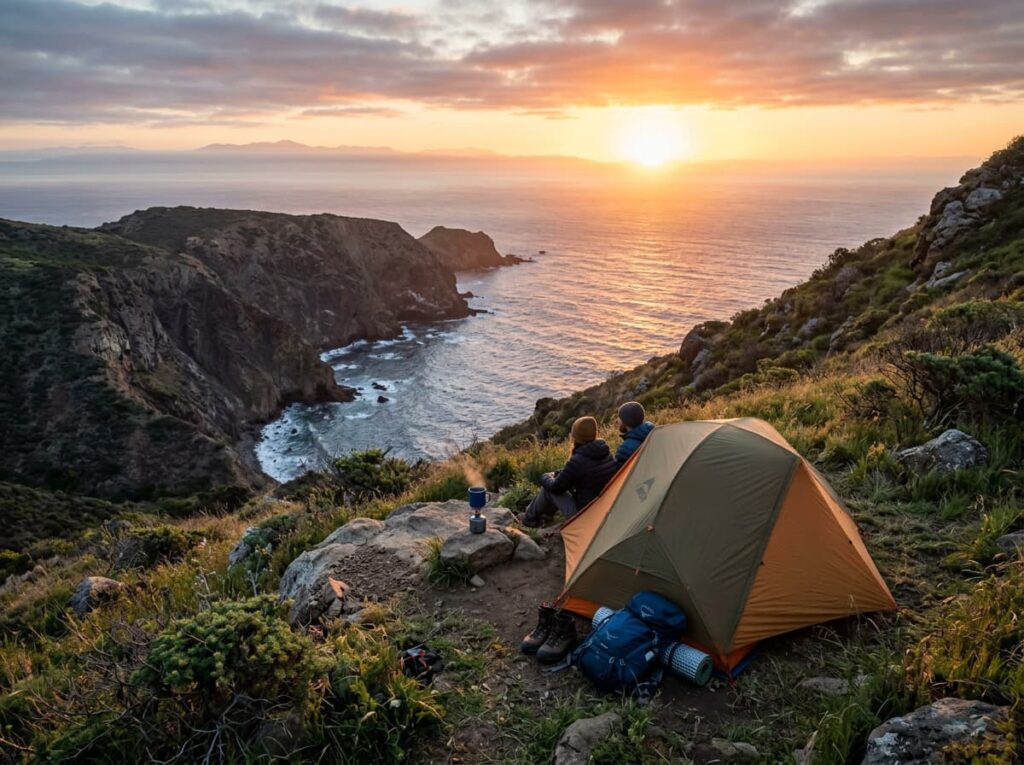
The Light I’m Curious About
It is the dawn light on the island sea cliffs — the specific quality of first light on a Pacific island when the mainland has disappeared in the night and the ocean extends to every horizon and there is nothing between the cliff edge and Japan except open water and the morning coming from the east.
That light is not available from the mainland. It is not available from the day trip boat that arrives at 10am and departs at 3pm. It belongs specifically and exclusively to the people who camped the night before and were already on the island when it arrived. The island scrub-jay in the first light, the elephant seals calling from the rocks below the cliff, the pelicans beginning their morning patrol above the kelp — all of it in a light that the California coast, 25 miles east, has not yet seen because the sun is still low enough to illuminate the island before it clears the mainland hills.
That is the Channel Islands photograph. The boat gets you to the island. The tent gets you the light.
A Deeper Exploration
This article is part of my ongoing project documenting and photographing all 63 national parks across the United States.
Along the way, I’m creating deeper guides that explore photography locations, travel planning, seasonal light conditions, and personal reflections from the road. Channel Islands is the California park that the Pacific Coast Highway passes without fully revealing — the islands visible from the road, the crossing too far for a casual stop, the experience requiring a commitment that the drive-by cannot accommodate.
Because the unique experience is always further out. Twenty-five miles of open Pacific, a tent on a cliff, and a sunrise that the mainland does not share. That is the Channel Islands answer.
One more thing — just between us.
Channel Islands rewards the visitor who goes further in every direction — further offshore, further into the caves, further into the water. Here are three extensions worth knowing.
San Miguel Island — the westernmost and most remote of the five park islands — hosts the Point Bennett pinniped rookery where five species of seals and sea lions haul out simultaneously in the largest concentrations on the Pacific Coast. Up to 30,000 animals on a single beach. The ranger-led hike to Point Bennett is the most extraordinary wildlife photography experience in the Channel Islands and one of the most remarkable in the national park system — but San Miguel access is weather-dependent and trips are frequently canceled. Book the trip, accept the uncertainty, and go if it runs.
On the mainland side, Ventura Harbor Village the evening before departure is worth an unhurried dinner at one of the waterfront restaurants — watching the harbor activity, the boats coming in, the light on the water before the crossing.
And for the whale watching that the channel produces in volume, the Island Packers whale watching trips in February through April — when the gray whale migration passes through the Santa Barbara Channel — deliver blue whale and humpback sightings in water that is as productive as any whale watching in California. The crossing to the islands and the whale watching are not mutually exclusive; the channel delivers both on the same boat ride if the conditions cooperate.