A Photographer’s First Look at the Most Remote National Park in the System — and Why It’s Worth Every Mile
Some landscapes become part of our imagination long before we ever visit them. The National Park of American Samoa has been in mine for years — not because of famous photographs or Instagram posts, but precisely because of the absence of those things. It is the national park that almost nobody talks about, that almost nobody visits, and that sits further from the continental United States than any other unit in the system — 2,600 miles southwest of Hawaii, deep in the South Pacific.
This is the first park in this series that I have not visited. Every post up to this point has been written from some combination of personal memory and photographic intention — the rushed stop I want to return to properly, the early morning walk I want to repeat with better light, the lens I should have brought. American Samoa is different. It is entirely forward-facing — a park I am planning to visit within the next couple of years, researching seriously, and thinking about in the way that a photographer thinks about a place they have studied but not yet stood inside.
That planning process is worth sharing, because American Samoa rewards research more than almost any other park in the system. Getting there requires real commitment — a long flight to Honolulu, a connecting flight to Pago Pago, and an arrival in a territory that operates on its own cultural rhythms and its own relationship with visitors. The park itself is unlike anything else in the national park system: tropical rainforest, coral reef, volcanic coastline, and a Samoan culture that has been living alongside this landscape for 3,000 years and is very much still present in it. Understanding all of that before you arrive is not optional. It is the difference between a tourist passing through and a photographer who comes home with something meaningful.
The Landscape That Draws People Here
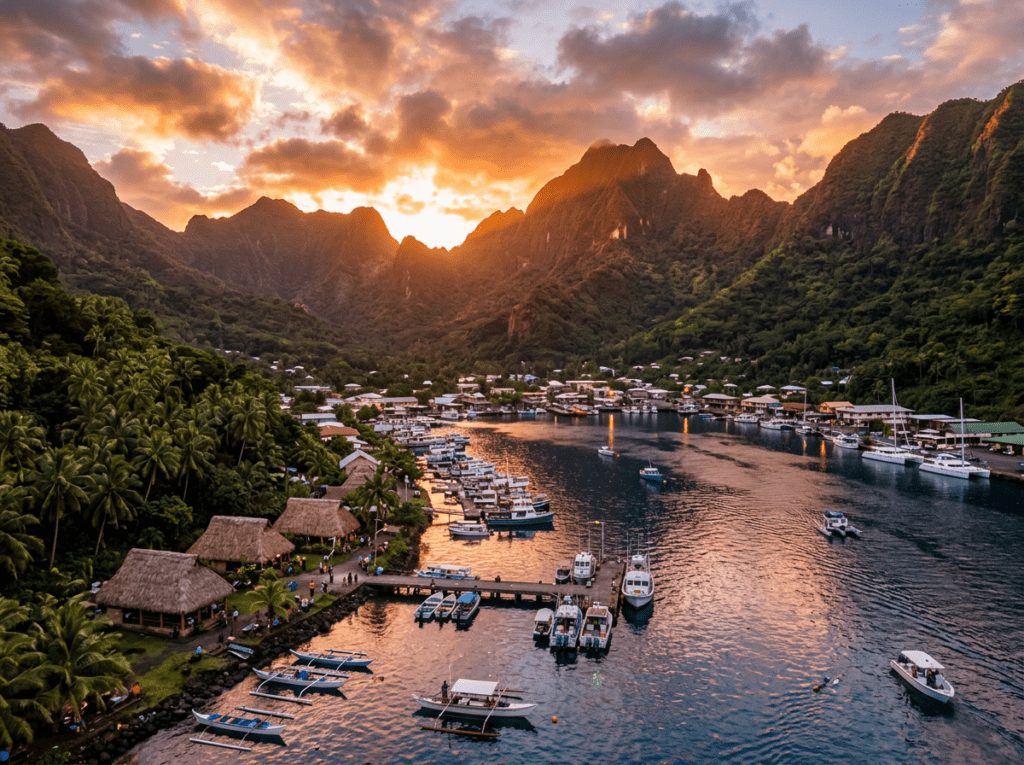
The National Park of American Samoa protects land and ocean across three islands in the Samoan archipelago: Tutuila, the main island where Pago Pago is located; Ofu, a small island in the Manu’a group about 60 miles east; and Ta’ū, the largest of the Manu’a islands. Each island is a different expression of the same volcanic Pacific geology — steep jungle-covered peaks dropping directly to the ocean, fringing coral reefs of extraordinary health and biodiversity, and coastlines of black volcanic rock and white coral sand that have no equivalent in the continental park system.
The Tutuila unit, accessible from Pago Pago, contains the Mount Alava trail — a strenuous ridge hike to 1,610 feet with views across Pago Pago Harbor and the surrounding rainforest that constitute the primary photography experience on the main island. The trail passes through one of the last remaining examples of American tropical rainforest — dense, layered, ancient, loud with birds and insects in a way that temperate forests are not. Flying foxes — large fruit bats with wingspans approaching three feet — roost in the forest canopy and are one of the park’s most unusual and most photogenic wildlife subjects.
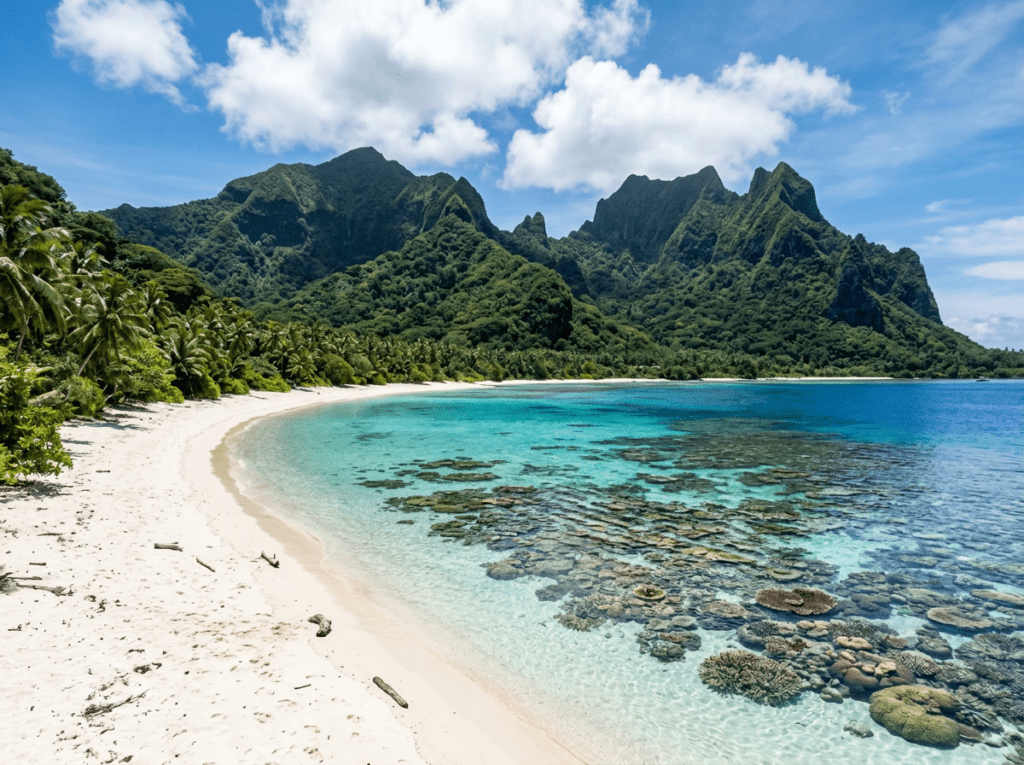
Ofu island is where the coral reef photography happens — and the Ofu reef is widely considered one of the healthiest and most biodiverse coral ecosystems in the American Pacific, partly because of its remoteness and partly because of the warming resilience some of its coral species have demonstrated. The beach on Ofu’s southern shore, with the reef just offshore and the volcanic peaks rising behind the beach, is one of the most beautiful and least photographed landscapes in the entire national park system. Getting there requires a small interisland flight from Pago Pago — a 20-minute journey that most visitors to the main island never make.
The Photographer’s Chase
The photography at American Samoa requires thinking in three distinct environments simultaneously — rainforest, reef, and coastline — each with its own light logic and its own equipment demands. This is not a park where a single lens covers the primary subjects. It is a park where the wide angle that handles the coastal landscape is completely wrong for the macro coral photography, which is completely different from the telephoto work the flying fox colonies require.
The rainforest photography is the most challenging of the three. Tropical forest light is dim, contrasty, and filtered through a dense canopy that eliminates the sky almost entirely. The subject matter — the flying foxes in the canopy, the forest floor detail, the hanging vines and the mosses and the extraordinary bird life that includes the rare tooth-billed pigeon — requires patience, high ISO capability, and the willingness to work in conditions that most landscape photographers find uncomfortable. The reward is images that look like nothing else in the 63-park series — a visual register that is entirely specific to the South Pacific tropics.
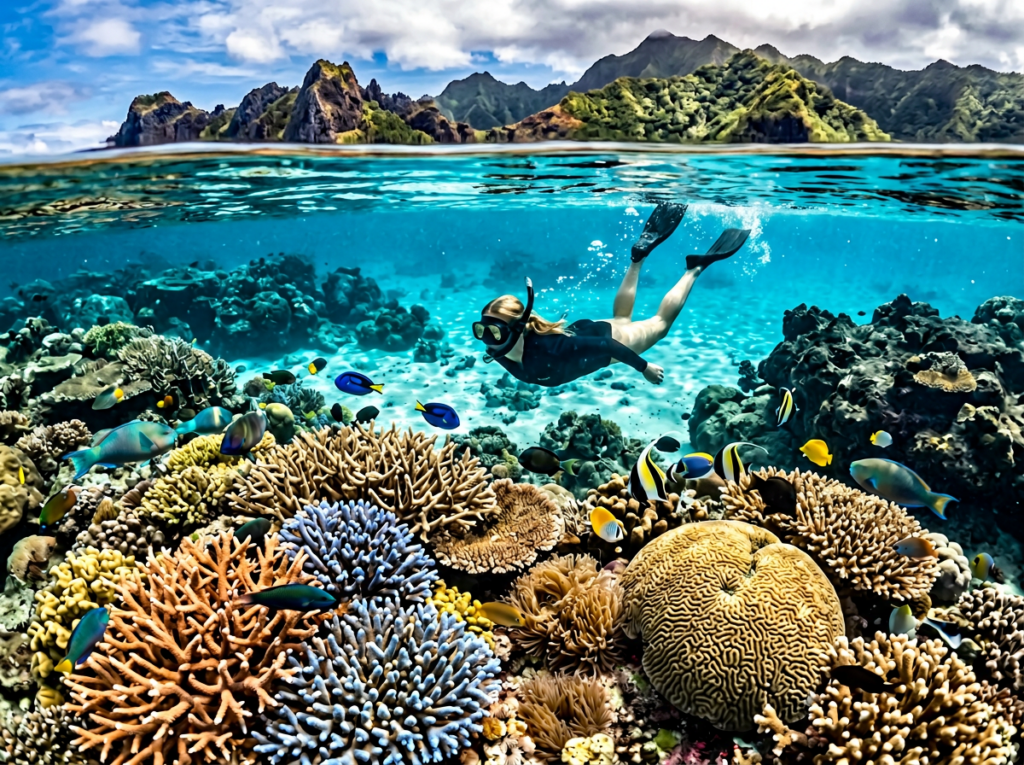
The reef photography at Ofu is the subject I am most anticipating. Snorkeling or free diving with an underwater housing — the reef is shallow enough that much of the finest coral is accessible without scuba certification — produces close-range coral and fish photography in water clarity that the more visited Pacific reefs cannot consistently offer. The early morning reef photography, before the wind comes up and the water surface becomes choppy, provides the best light penetration into the water column. A mirrorless body in an underwater housing with a wide rectilinear lens is the setup I am planning for this section of the trip.
The coastline photography — the black volcanic rock meeting the turquoise Pacific, the waves on the reef edge, the beach at Ofu in the early morning light — is the most straightforward of the three environments and the most immediately rewarding. The color palette of this landscape is completely unlike anything in the continental parks: the deep green of the jungle, the black of the volcanic rock, the specific blue of the South Pacific lagoon, the white of the coral sand. A wide angle in the early morning, with the peaks behind the beach and the lagoon in front, is the establishing shot of the park.
Visiting the Park — What You Need to Know First
American Samoa operates on a cultural protocol that is fundamentally different from the continental national parks, and understanding it before you arrive is not optional — it is the foundation of a respectful and productive visit. The park land is owned by Samoan villages and leased to the National Park Service, which means the relationship between the park and the community is genuinely collaborative rather than the park existing independently of local life. Villages are present within the park boundaries. Fa’a Samoa — the Samoan way — governs social interactions, and visitors who approach the culture with awareness and respect will find a warmth and openness that is one of the most memorable parts of the trip. Visitors who do not will find doors closed.
Specifically: dress modestly when moving through villages — shoulders and knees covered. Ask permission before photographing people or village areas. Sunday is a day of rest and worship in Samoan culture; many activities pause and visitors should be aware of and respectful toward that rhythm. The park visitor center in Pago Pago is the essential first stop — the rangers there provide current cultural guidance, trail conditions, and the practical orientation that no guidebook can substitute for.
The logistics are genuinely complex and worth planning carefully. Flights to Pago Pago connect through Honolulu on Hawaiian Airlines — the only carrier serving the route from the US mainland. The interisland flights to Ofu and Ta’ū operate on small aircraft through Samoa Air; these flights are weather-dependent and cancellations are not uncommon. Build flexibility into the itinerary around the interisland travel. A minimum of ten days in the territory allows time to cover the main island, make the Ofu trip, and absorb the inevitable logistical adjustments that remote Pacific travel requires.
Where to Stay
Accommodation in American Samoa is limited and should be booked well in advance. Pago Pago has a small number of hotels — the Tradewinds Hotel is the most established option, a modest but functional property within reach of the park visitor center and the harbor. The Sadie’s by the Sea hotel offers a more atmospheric option on the waterfront. Neither is luxury lodging by continental standards; both are comfortable bases for a trip where the experience is entirely outside the room.
On Ofu, the accommodation situation requires specific planning. The Vaoto Lodge on Ofu beach — a small, simple property right on the lagoon — is the primary option and the base camp for the reef photography. It books out well in advance, particularly for the limited number of rooms with direct beach access. Booking Vaoto Lodge is the first logistical step after confirming flight availability to Ofu. There is no other comparable option on the island.
There is no RV travel in American Samoa — the territory’s roads, infrastructure, and logistics simply don’t support it. This is a trip planned around flights, small lodges, and the kind of travel that strips away the familiar and asks you to be genuinely present in a place that operates entirely on its own terms. That is not a limitation. For a photographer, it is the point.
If I Were Planning My First Visit
I am planning my first visit, which is what makes this section of the post different from everything that came before it in this series. Here is where I am in the planning process and what I have learned so far.
The trip requires a minimum of ten days to do properly — five or six on Tutuila and four or five on Ofu, with buffer days built around the interisland flight uncertainty. The optimal season appears to be May through October, the drier season when the rainfall is lighter, the trails are more manageable, and the reef visibility is at its best. The wet season from November through April brings heavier rain, higher humidity, and the possibility of tropical storms — not impossible to visit, but requiring more weather flexibility.
The gear list for this trip is different from any other park in the series. An underwater housing for the reef photography — either a dedicated housing for my primary body or a high-quality compact waterproof camera as a dedicated underwater tool. A fast lens for the low-light rainforest photography. A long telephoto for the flying foxes and the seabirds on the coastal cliffs. And the standard landscape kit for the coastline and the ridge trail views. This is a trip where the photography ambition has to be matched by the equipment planning.
Most importantly: I am going to read about fa’a Samoa before I arrive. The culture, the village protocols, the history of the Samoan people in this landscape. Because the photography that matters in American Samoa is not just the reef and the rainforest. It is the people and the culture that have been living alongside this landscape for 3,000 years. Arriving with that understanding changes what you see and what the camera finds.
The Light I’m Curious About
It is the early morning light on Ofu beach — the specific quality of a South Pacific dawn on a beach that has almost no visitors, with the jungle peaks behind it and the lagoon in front and the reef just offshore doing what healthy reefs do in clear shallow water when the sun is at a low angle.
I have seen this light in photographs and I cannot fully trust those photographs because South Pacific light in photographs always looks slightly unreal — the colors too saturated, the water too blue, the whole scene too perfect to be a place rather than an image. I want to stand in it and find out if it is real. I want to know what the camera does with it and what the eye does with it and whether they produce the same answer.
This is the first park in this series where the anticipation has to do the work that memory does in every other post. I do not know what American Samoa looks like from the inside. I know what I hope it looks like. The trip will settle the question — and whatever the answer is, it will be more interesting than the photographs I have studied in preparation.
That is the thing about arriving somewhere for the first time with serious photographic intention. The place is always different from what you imagined. It is always more specific, more itself, less like the photographs and more like the actual world. That specificity is what I am going to American Samoa to find.
A Deeper Exploration
This article is part of my ongoing project documenting and photographing all 63 national parks across the United States.
Along the way, I’m creating deeper guides that explore photography locations, travel planning, seasonal light conditions, and personal reflections from the road. American Samoa marks the moment in this project where the posts shift from return visits to first arrivals — and that shift changes everything about the voice. Less correction, more anticipation. Less ‘what I missed’ and more ‘what I am going to find.’ That is its own kind of interesting.
Because 38 parks remain that I have never visited. Each one is a question I have not yet answered. American Samoa is the first of them — the furthest away, the most culturally distinct, the most unlike anything else in the series. A reasonable place to begin the second half of the journey.
One more thing — just between us.
American Samoa is remote enough that the concept of ‘avoiding crowds’ barely applies — the park sees only a few thousand visitors a year. The insider tip here is less about escaping people and more about going deeper into the territory than most visitors do.
Ofu Island itself is the first and most important extension — most visitors to Pago Pago never make the interisland flight, which means the reef and the beach that constitute the park’s finest photography are essentially untouched. Make the flight. Book Vaoto Lodge. Go to the reef at dawn.
On the main island, the island of Aunu’u — a short boat ride from the eastern end of Tutuila — has a freshwater lake, red quicksand, and a pace of life that makes Pago Pago feel metropolitan. Almost no tourists ever go.
And for cultural context that deepens every photograph you take in the territory, the Jean P. Haydon Museum in Pago Pago is the essential first stop — Samoan cultural artifacts, historical context, and the kind of background that turns a landscape visit into something you actually understand. A small club makes the trip to American Samoa. An even smaller club arrives knowing what they are looking at.