A Photographer’s First Look at Brooks Falls — the Finest Bear Photography Location on Earth
When planning a visit to America’s national parks, most destinations offer a range of experiences that shift depending on the season, the weather, and what the photographer chooses to pursue. Katmai National Park in Alaska narrows that range to something more specific. You go to Katmai for the bears. And if you go at the right time with the right planning, what you find at Brooks Falls is the finest concentration of large predator wildlife photography available anywhere in the national park system — or anywhere on earth.
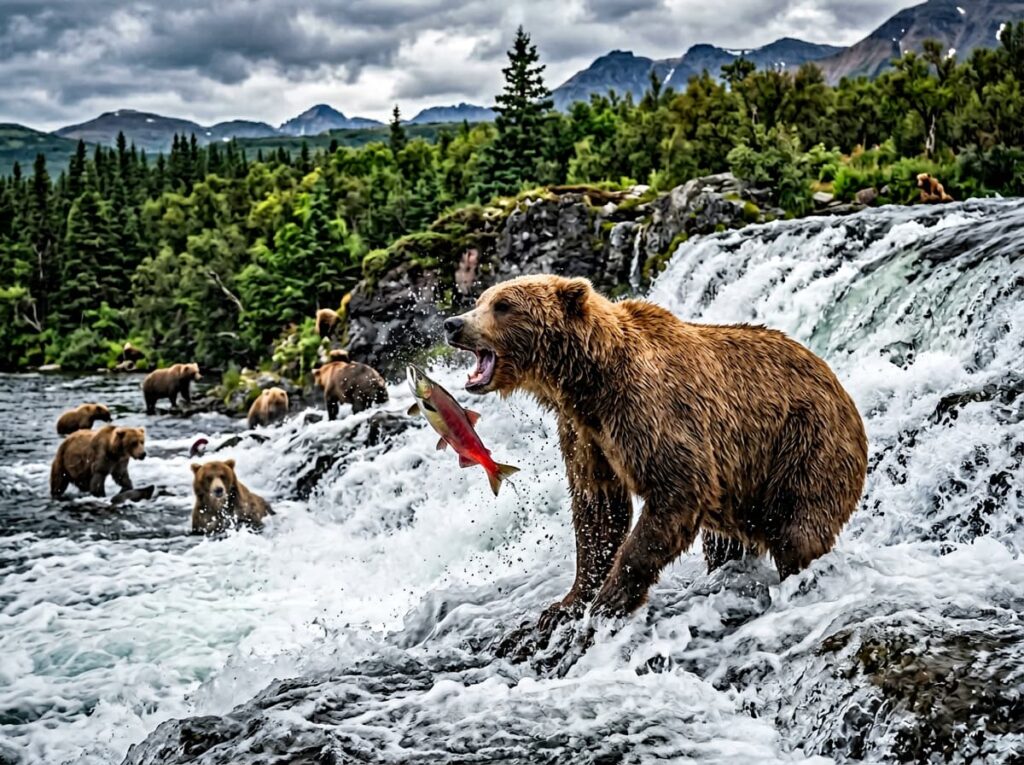
The image that has been in the wildlife photography canon for decades — the brown bear standing in the white water of a waterfall with a sockeye salmon suspended in the air before its open mouth — that image is from Brooks Falls. It is made every July by photographers who secured a viewing platform permit months in advance, flew to King Salmon, took a floatplane to Brooks Camp, walked the half mile to the falls platform, and waited. The bears do the rest. They have been doing it at this waterfall for thousands of years and they do not require any assistance from the photographer beyond being present and having a clean sensor and enough memory card space for what is about to happen.
The advance planning is not optional and it is not simple. The Brooks Falls viewing platform operates on a timed permit system through recreation.gov — the most competitive permit in the Alaska national park system and one of the most competitive in the country. Permits open months in advance and sell out rapidly. The platform holds a limited number of visitors at a time, the time slots are specific, and the bear activity at the falls is highest during the July sockeye run when the competition for permits is most intense. Planning this trip means building the permit availability into the trip design before booking any flights or lodging. The bears set the schedule. Everything else follows.
The Landscape That Draws People Here
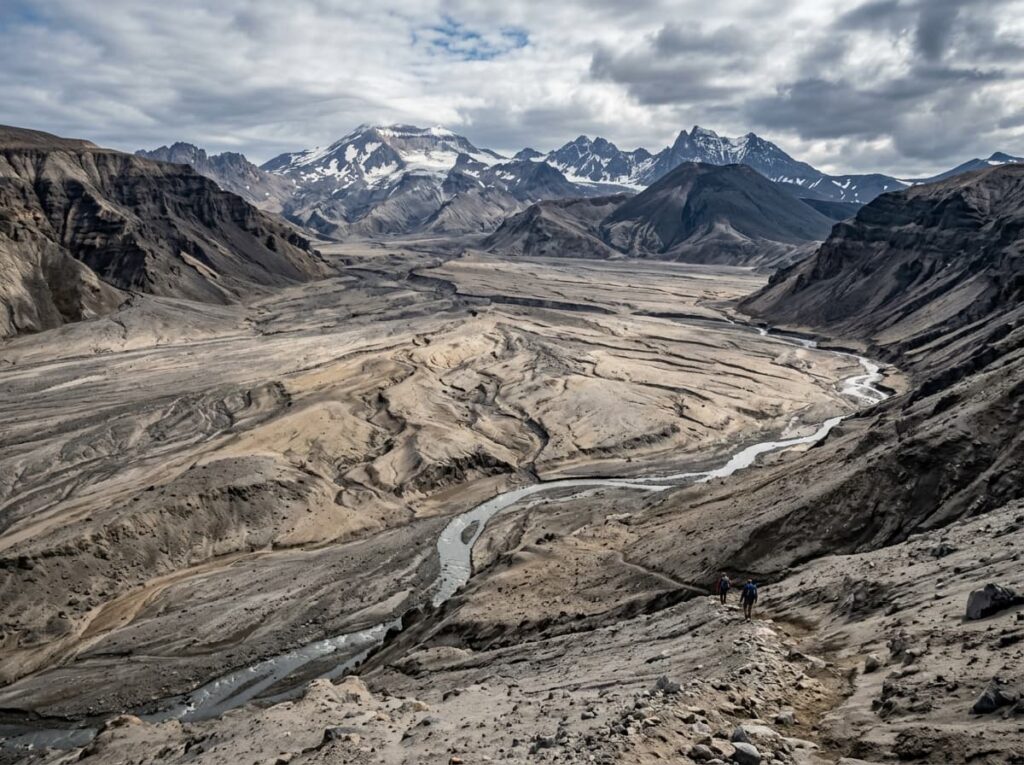
Katmai National Park and Preserve covers 4.7 million acres of the Alaska Peninsula — a vast and largely roadless wilderness of volcanic peaks, river systems, and coastline that most visitors never see beyond the Brooks Camp area. The park was established originally to protect the Valley of Ten Thousand Smokes — the ash-filled valley left by the 1912 eruption of Novarupta, one of the largest volcanic eruptions of the 20th century, which deposited ash up to 700 feet deep across a 40-square-mile valley. The valley is still visitable today by day trip from Brooks Camp, a moonscape of volcanic ash and fumaroles that tells a geological story completely different from the bear photography that now defines the park’s identity.
The brown bears of Katmai are among the largest in the world — fed by the extraordinary salmon runs that the Bristol Bay watershed produces, the Katmai bears can reach 1,000 pounds by fall, their size a direct product of the salmon calories they consume in the weeks around the Brooks Falls run. The park supports approximately 2,200 brown bears — one of the highest densities of brown bears anywhere — and the Brooks River corridor during the July and September salmon runs concentrates dozens of bears in a single accessible viewing area in a way that no other location on earth can match.
Brooks Falls itself is a four-foot drop in the Brooks River where the sockeye salmon must leap upstream to continue their spawning migration. The bears have learned — through generations of observation and practice — to position themselves in the falls and catch the leaping salmon in mid-air, or to stand below the falls and scoop them from the water, or to wait in the pool above the falls where exhausted salmon rest before attempting the jump again. Each bear has its own technique and its own preferred position. The subordinate bears watch the dominant bears. The dominant bears ignore everything except the salmon. The photographer watches all of it from the platform 50 feet away.
The Photographer’s Chase
The falls platform is the primary position and the one the permit system manages. A 400mm to 600mm telephoto is the practical minimum for the falls photography — the platform positions you at a distance where a shorter lens produces context shots rather than the close-range bear portrait that the image most people associate with Brooks Falls requires. The light at Brooks Falls is typically overcast — Alaska’s cloud cover is the default condition — which is actually favorable for wildlife photography, eliminating the harsh contrast between the white water and the dark bear fur that direct sun creates. The overcast light is the bear photography condition, and the Sony’s high ISO performance is as relevant here as it was at Carlsbad Caverns, for the same reason: making the most of available light in conditions that are not always cooperative.
The timing of the permit matters as much as the permit itself. The July sockeye run — typically peaking in the second and third weeks of July — is the primary bear activity window at the falls. The bears are most numerous, most active, and most concentrated at this time, and the salmon leap frequency is highest. A morning permit slot, before the midday activity slows and before the afternoon weather builds, is generally the most productive. The September coho run brings a second wave of bear activity with fewer visitors competing for platform time — less dramatic than July but worth considering for photographers who missed the summer permits or who prefer the September light and the early fall color in the surrounding vegetation.
Beyond the falls platform, the Brooks River trail and the lower river viewing areas provide bear encounters at closer range and in different behavioral contexts — bears fishing in the river pools below the falls, bears socializing or competing, bears simply moving through the landscape doing what 1,000-pound animals do when they are not focused on catching salmon. A bear walking the riverbank 30 feet away from the viewing platform, indifferent to the observers, is a different photograph from the falls action shot and equally worth having. The wider lens earns its place here — the bear in the landscape, the Alaska wilderness behind it, the scale of the animal in the context of the river valley.
The Valley of Ten Thousand Smokes day trip — accessible by bus from Brooks Camp to the Ukak River overlook — is the landscape photography that the bears cannot provide. The ash-filled valley, still barren more than a century after the 1912 eruption, is one of the most otherworldly landscapes in Alaska and completely unknown to most visitors who come to Katmai exclusively for the bears. The volcanic geology and the bear concentration exist in the same park and the trip is incomplete without both.
Getting There — The Logistics That Make This Trip Possible
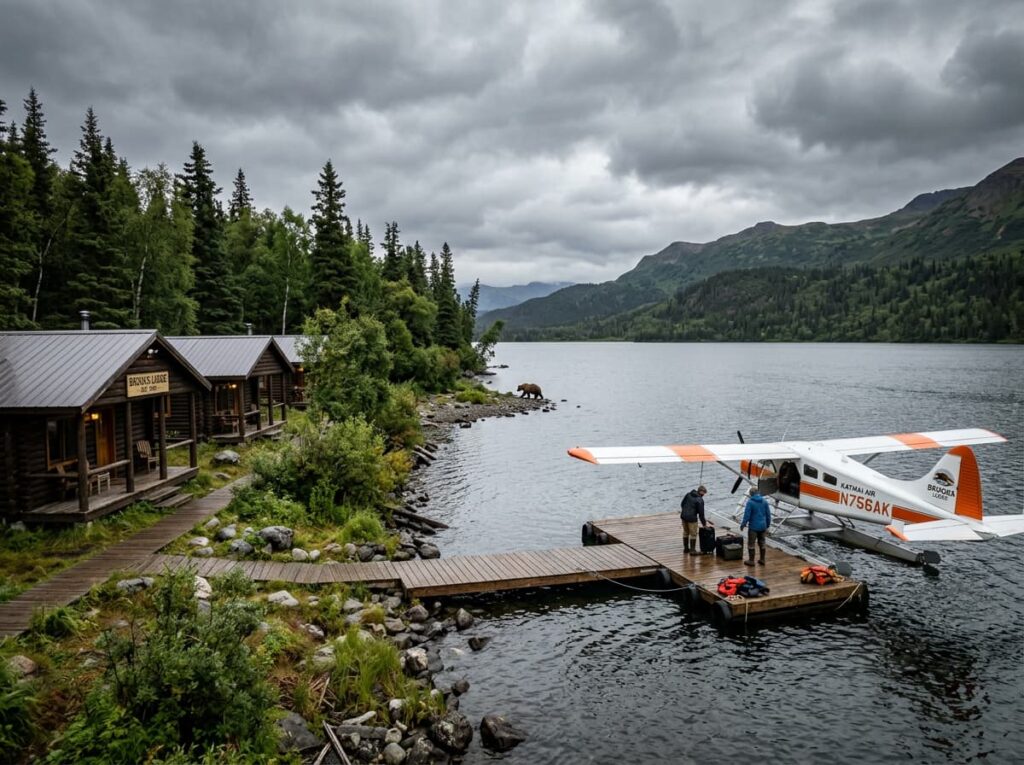
Getting to Katmai requires a commitment to Alaska logistics that makes Isle Royale look straightforward by comparison. The sequence is: fly to Anchorage from the mainland, connect to King Salmon on a commercial flight (Alaska Airlines and Ravn Alaska both serve the route), and then take a floatplane or small charter from King Salmon to Brooks Camp — a 20-minute flight over the Alaska wilderness that is itself one of the more memorable transportation experiences in the national park system. The floatplane lands on Naknek Lake at Brooks Camp and the camp is a short walk from the boat dock.
The Brooks Falls viewing platform permit is the critical first booking — secured through recreation.gov when the reservation window opens, typically in January for the coming summer season. The permits sell out within hours of becoming available for peak July slots. Set a reminder, be at the computer when the window opens, and have the dates and times ready to enter. The permit is the foundation of the entire trip plan; everything else — flights, floatplane, lodging — is built around the permit dates once secured.
Bear safety protocols at Katmai are strict and mandatory — a bear safety orientation is required for all visitors before entering the Brooks Camp area, and the rules around food storage, wildlife distance, and behavior near bears are enforced by the rangers. The bears at Brooks Camp are habituated to humans but are wild animals and the protocols exist for good reasons. Following them is not optional and not negotiable.
Where to Stay
Brooks Lodge at Brooks Camp is the only in-park lodging — a collection of cabins operated by Katmailand, the park concessionaire, with a dining room and the most direct access to the falls platform and the river viewing areas. The lodge books out for peak July season well in advance — often a year ahead — and the booking process runs through the Katmailand website rather than recreation.gov. Securing a lodge reservation and a falls platform permit for the same dates is the planning challenge that Katmai requires, and both require acting early in the calendar year for a summer visit.
Brooks Camp Campground provides the alternative — tent camping in bear country with the mandatory electric bear fence around each site and the bear safety protocols that the wilderness setting demands. The campground is reservable through recreation.gov and provides the most immersive Brooks Camp experience — being on the river at dawn before the lodge guests are up, hearing the bears in the darkness outside the bear fence at night, having the viewing platforms to yourself in the early morning. For a photographer, the campground provides access to the light windows that lodge guests sleep through.
There is no RV access to Katmai — the park is entirely fly-in, with no road connections to the outside world. King Salmon, the nearest town with commercial air service, has basic lodging for visitors who cannot secure Brooks Lodge reservations but want to be close to the floatplane connection. Anchorage provides the full range of lodging for the mainland leg of the trip.
If I Were Planning My First Visit
January — the moment the recreation.gov reservation window opens for falls platform permits. Set the alarm, have the credit card ready, know the dates. The permit is the trip. Everything else is logistics.
The second week of July for the peak salmon run. Brooks Lodge if available, the campground if not — but on the river at dawn either way, before the morning platform sessions begin, with the bears already active in the low early light before the overcast thickens. The 400mm or longer lens. Cards cleared, batteries charged, sensor clean. The bears will provide the subject matter. The photographer’s job is to be ready when they do.
The Valley of Ten Thousand Smokes day trip on a non-peak bear day — the geology, the volcanic moonscape, the landscape photography that completes the Katmai story beyond the river. And at least one evening watching the bears in the lower river pools after the falls platform session, when the light is low and the bears are still active and the Alaska evening stretches well past 10pm.
Clean the sensor. Clear the cards. Charge the batteries. Book the permit in January. The bears have been doing this for thousands of years and they will be doing it the week you arrive. Be ready.
The Light I’m Curious About
It is the overcast July light on a brown bear standing in the white water of Brooks Falls with a sockeye salmon suspended in the air between them — the specific fraction of a second that the shutter captures and that the eye processes afterward with the slow disbelief that the best wildlife photographs always produce.
The overcast Alaska light is not the dramatic light that this series has been chasing across 50 parks. It is flat and diffused and it does nothing theatrical to the landscape. What it does instead is illuminate the bear’s fur and the salmon’s scales and the white water of the falls with an evenness that reveals detail rather than creating drama — the brown of the bear’s coat, the red of the spawning sockeye, the green of the river water below the white water. The image is not about the light. The image is about the bear and the salmon and the fraction of a second they share. The light just has to be adequate. At Katmai in July, it is.
That image has been waiting at Brooks Falls for every July. It will be waiting for the July I arrive with the permit and the long lens and the cleared memory cards. The bears set the schedule. I just have to show up.
A Deeper Exploration
This article is part of my ongoing project documenting and photographing all 63 national parks across the United States.
Along the way, I’m creating deeper guides that explore photography locations, travel planning, seasonal light conditions, and personal reflections from the road. Katmai is the park that makes the most specific and the most demanding ask of the photographer in this series — the permit, the floatplane, the July timing, the long lens — and offers in return the most specific and the most irreplaceable wildlife photography subject available in the park system.
Because Brooks Falls happens every July whether or not a photographer is standing on the platform. The salmon run. The bears take their positions. The leaping and the catching and the missing and the trying again — all of it in four feet of white water in an Alaskan river that has been doing this since before the park existed. Being there for it requires advance planning. Not being there requires nothing at all. That distinction is the whole argument for booking the permit in January.
One more thing — just between us.
Katmai’s bear photography is so specific and so famous that most visitors never look beyond Brooks Falls. Here are three ways to go deeper.
The Brooks Falls bear cam — operated by the NPS and Explore.org — streams live video from the falls platform and the lower river during the salmon season. Before committing to the permit logistics, spend a few days watching the live stream to understand the bear activity patterns, the platform positions, and the light conditions at different times of day. It is also the finest pre-trip scouting tool available for any park in this series.
For the bear photography that goes beyond the falls, Geographic Harbor on Katmai’s remote coast — accessible by floatplane or boat from King Salmon — is a sea-level tidal flat where brown bears dig clams at low tide in a setting completely different from the Brooks Falls river environment. The coastal bear photography at Geographic Harbor, with the bears at the ocean edge and the volcanic Aleutian peaks behind them, is the Katmai image that the Brooks Falls visitors never make.
And for the Fat Bear Week context that has made Katmai internationally famous in a new way, the NPS Fat Bear Week bracket competition in late September and early October — when the bears are at their pre-hibernation maximum weight — is the annual event that has introduced Katmai to an audience of millions who had never heard of it before. Bear 747, the undisputed champion, weighs over 1,400 pounds at his September peak. That is the bear you want to be standing on the platform watching.